 Email:
  Telephone: +86-0514-85086085
 FAX: +86-0514-85086085
 English
 中文简体
中文简体 русский
 عربى
عربى
Content
What Is Copper Wire?
Copper wire is a single or multi-strand electrical conductor made from drawn copper metal, used to carry electrical current in circuits, systems, and installations ranging from microelectronics to high-voltage power transmission. The term "CU wire" derives from the Latin word for copper — cuprum — and the chemical symbol Cu, which appears on wiring labels, cable datasheets, and conductor specifications worldwide. When a cable is marked "CU," it identifies the conductor material as copper, as distinct from aluminum (AL) conductors used in some high-voltage transmission and building wiring applications.
Copper wire is among the oldest industrial materials in continuous use. Evidence of drawn copper wire dates to ancient Egypt and Rome, but the industrial wire-drawing process — pulling copper rod through progressively smaller dies to reduce diameter and increase length — was refined during the 19th century alongside the expansion of telegraph and electrical networks. Today, copper remains the dominant conductor material for electrical wiring globally, with approximately 65% of all copper produced worldwide consumed by the electrical and electronics industries.
Is Copper an Electrical Conductor — and Why Is It So Effective?
Copper is one of the best electrical conductors among all naturally occurring metals. Its conductivity arises from its atomic structure: each copper atom has a single valence electron in its outermost shell that is loosely bound and highly mobile. In a copper lattice, these free electrons move readily in response to an applied electric field, constituting electric current with minimal resistance to that flow.
Measured in practical terms, the electrical conductivity of pure copper at 20°C is approximately 58.0 × 10⁶ siemens per meter (S/m), which is the reference standard — 100% IACS (International Annealed Copper Standard) — against which all other conductor materials are benchmarked. Silver is the only common metal with higher conductivity (about 106% IACS), but its cost makes it impractical for most wiring applications. Aluminum sits at approximately 61% IACS, gold at 73% IACS, and iron at roughly 17% IACS.
Resistivity of a Copper Wire
Resistivity is the inverse of conductivity — it measures how strongly a material opposes the flow of electric current per unit length and cross-section. The resistivity of pure copper at 20°C is 1.72 × 10⁻⁸ ohm-meters (Ω·m), or approximately 1.72 microohm-centimeters. In practical wire calculations, this means a copper conductor with a 1 mm² cross-sectional area has a resistance of approximately 17.2 milliohms per meter of length.
Resistivity increases with temperature — copper's temperature coefficient of resistance is approximately 0.00393 per °C, meaning resistance rises about 0.4% for every 1°C increase in conductor temperature. This relationship is why ampacity ratings in wiring standards are specified at defined ambient temperatures and why conductors carrying heavy loads are sized generously to limit resistive heating.
Impurities reduce conductivity significantly. Even 0.1% of phosphorus, iron, or silicon in copper reduces conductivity by 15–30%. This is why electrical-grade copper wire is specified at a minimum purity of 99.9% (electrolytic tough pitch, ETP copper) or 99.99% (oxygen-free high conductivity, OFHC copper) for applications where maximum conductivity is critical.
Why Copper Is Used for Electrical Wiring
Copper's dominance in electrical wiring is not attributable to conductivity alone. It is the combination of multiple favorable properties — electrical, mechanical, and practical — that makes copper the preferred conductor material across nearly all wiring applications.
- High conductivity — second only to silver among practical metals, allowing smaller conductor cross-sections for a given current-carrying capacity compared to aluminum or other alternatives.
- Excellent ductility — copper can be drawn into wire as fine as 0.02 mm without breaking, and can be bent, coiled, and routed through conduit repeatedly without work-hardening to the point of fracture.
- Corrosion resistance — copper forms a stable, adherent oxide layer (patina) that inhibits further corrosion without significantly increasing contact resistance at terminals. Aluminum, by contrast, forms an insulating oxide layer that creates connection resistance problems at joints and terminals over time.
- Mechanical strength — with tensile strength of 200–250 MPa in annealed form and up to 400 MPa in hard-drawn grades, copper wire withstands installation stresses, vibration, and mechanical loading without requiring the heavier conductor cross-sections that aluminum demands.
- Solderability and termination compatibility — copper bonds reliably to solder alloys, crimp terminals, screw clamps, and mechanical connectors. Its compatibility with the full range of electrical termination methods makes it uniquely versatile.
- Thermal stability — copper maintains its mechanical and electrical properties across a wide temperature range, from cryogenic applications to continuous service at 75°C, 90°C, or 105°C depending on insulation type.
Copper used to make electrical wires is a pure substance — specifically, refined elemental copper at 99.9% or greater purity in commercial electrical grades. It is not a mixture or an alloy in standard wiring applications, though copper alloys (bronze, brass) are used in specialized connectors, contact springs, and bus bars where specific strength or spring properties are required alongside reasonable conductivity.
Different Types of Copper Wire and Cable
Copper wire is manufactured in a wide range of configurations optimized for different electrical, mechanical, and environmental requirements. The distinctions between types matter significantly for application selection, installation code compliance, and long-term performance.
By Conductor Construction
- Solid copper wire — a single, continuous copper strand. Offers maximum conductivity per cross-section and excellent termination stability (no strand spreading at terminals), but is stiffer and less flexible. Used in fixed building wiring (household branch circuits, in-wall runs) in gauges up to AWG 10 (5.26 mm²). At larger gauges, solid wire becomes impractically rigid for installation.
- Stranded copper wire — multiple thin copper strands twisted together. Greater flexibility than solid wire, superior resistance to fatigue failure from repeated bending, and easier to route through conduit and around obstacles. The standard choice for panel wiring, appliance cords, portable cables, and any application requiring frequent movement or routing through tight bends.
- Bunched / fine-stranded wire — very high strand counts (Class 5 and Class 6 per IEC 60228) providing extreme flexibility. Used in welding cables, trailing cables for mobile machinery, and flexible cords subjected to continuous flexing.
- Rope-lay and concentric-lay stranded — large conductors built by stranding groups of stranded conductors together. Used in high-current power cables, shipboard wiring, and industrial feeder cables where very large cross-sections must remain manageable during installation.
By Copper Grade and Surface Treatment
- Bare copper wire — uncoated copper, used in grounding conductors, bus bars, overhead transmission lines, and applications where the copper surface is exposed intentionally. The most conductive form; oxidation on the surface is typically not a concern for grounding or high-current applications.
- Tinned copper wire — copper strands coated with a thin layer of tin (typically 1–3 µm). Tin coating improves solderability, inhibits oxidation, and provides corrosion resistance in humid or marine environments. Tinned copper is the standard in marine wiring, audio equipment, and RF signal cables where reliable solder joints and long-term surface integrity are required.
- Silver-plated copper wire — copper coated with silver, primarily used in high-frequency RF and microwave applications where the skin effect concentrates current flow on the conductor surface. The silver plating provides a higher-conductivity surface layer than copper oxide would offer, maintaining signal integrity at high frequencies.
- Nickel-plated copper wire — used in high-temperature environments where tin's low melting point would be unsuitable. Found in aerospace wiring, engine compartment cables, and industrial furnace control wiring rated for continuous service above 150°C.
- Oxygen-free copper (OFC / OFHC) — manufactured without oxygen exposure during casting to prevent internal oxide inclusions. Provides marginally higher conductivity and significantly better performance in high-purity signal applications. Widely specified in high-end audio cables, medical equipment, and semiconductor manufacturing.
By Insulation and Cable Type
- THHN / THWN — thermoplastic insulation, heat-resistant, suitable for conduit installation in dry or wet locations. The most common building wire type in North America.
- NM-B (Romex) — non-metallic sheathed cable containing two or three insulated copper conductors plus a bare copper ground, used for residential branch circuit wiring in the US.
- MC cable (Metal Clad) — insulated copper conductors in a spiral armor jacket, used in commercial construction where mechanical protection without rigid conduit is required.
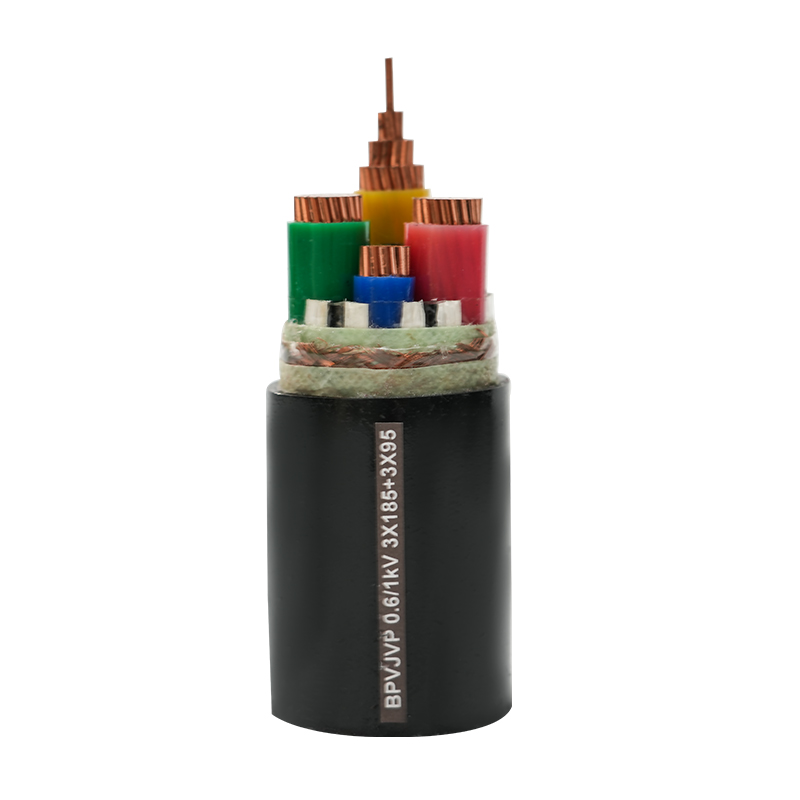
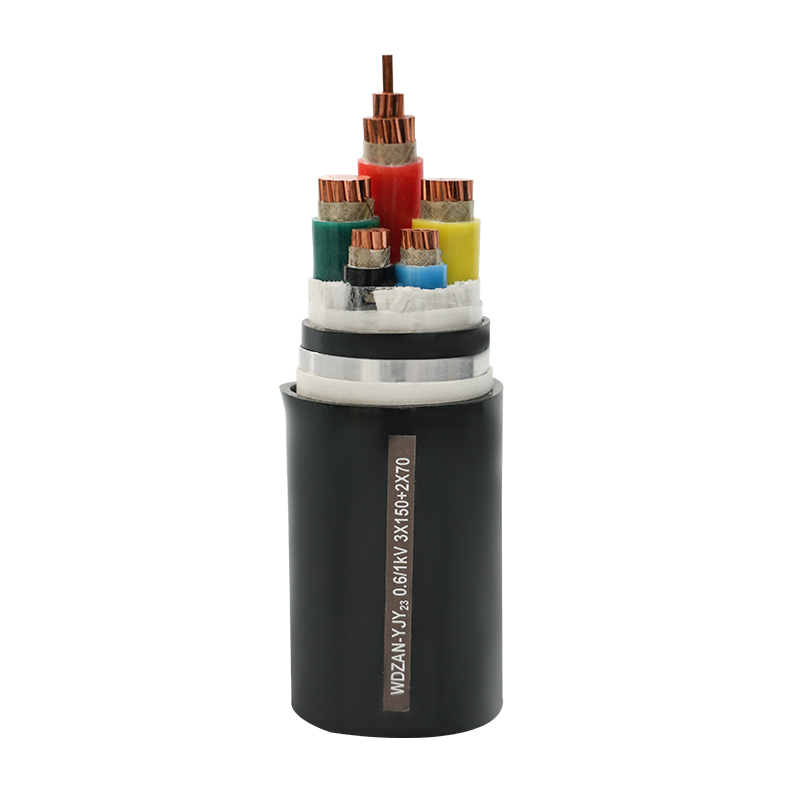
- Coaxial cable — a center copper conductor surrounded by dielectric insulation, a braided copper shield, and an outer jacket. Used for RF signal transmission in television, satellite, broadband internet, and antenna systems.
- Twisted pair — pairs of insulated copper conductors twisted together to cancel electromagnetic interference. The foundation of structured data cabling (Cat5e, Cat6, Cat6A) and telephone wiring.
- Welding cable — highly flexible, fine-stranded copper with thick rubber or EPDM insulation, rated for the high current and extreme flexibility demands of arc welding equipment.
| Wire / Cable Type | Conductor Form | Typical Application |
|---|---|---|
| Solid THHN | Solid | Building branch circuits in conduit |
| NM-B (Romex) | Solid | Residential in-wall wiring |
| Tinned stranded | Stranded, tinned | Marine, audio, RF cabling |
| Coaxial (RG-6, RG-58) | Solid center / braided shield | TV, broadband, antenna |
| Cat6A twisted pair | Solid or stranded | Ethernet data networks |
| Welding cable | Fine-stranded | Arc welding, portable power |
| OFC audio cable | Fine-stranded, oxygen-free | High-fidelity audio systems |
What Are Copper Wires Used For?
The range of applications for copper wire spans virtually every sector of the modern economy. Its uses extend well beyond simple power delivery:
Power Generation, Transmission, and Distribution
Copper windings in generators, transformers, and motors convert mechanical energy to electrical energy and vice versa. Distribution transformers stepping voltage down for residential neighborhoods contain hundreds of kilograms of copper winding wire. Household branch circuit wiring, service entrance cables, and meter socket connections are almost universally copper in residential and light commercial construction.
Electric Motors and Transformers
Every electric motor — from the tiny motor in a smartphone vibrator to the multi-megawatt drives in industrial compressors — contains copper windings. A single electric vehicle contains approximately 2.5 to 4 kg of copper wiring, and the motor itself accounts for a substantial portion of that. As electrification accelerates across transportation, HVAC, and industrial equipment, copper demand from motor manufacturing grows proportionally.
Telecommunications and Data Infrastructure
Structured cabling systems in commercial buildings — the Cat6 and Cat6A twisted-pair networks that carry Ethernet data between network switches and workstations — are almost entirely copper. Telephone networks historically ran entirely on copper pair wiring, and despite fiber optic displacement at long-haul distances, copper twisted pair remains dominant in the "last mile" connection to premises and within buildings.
Electronics Manufacturing
Printed circuit boards use copper traces etched from copper-clad laminate to interconnect components. Integrated circuit bonding wires, once predominantly gold, increasingly use copper bonding wire for cost and performance reasons. Copper is also the plated conductor material in PCB vias, connecting circuit traces between board layers.
Renewable Energy Systems
Solar photovoltaic installations use copper wiring throughout — from the module-level DC interconnects and string cables to the inverter output and grid interconnection conductors. Wind turbines contain large quantities of copper in their generators and in the power export cables running down the tower. Energy storage systems use copper busbars and cabling for cell interconnection and system integration.
Grounding and Lightning Protection
Bare copper conductor is the preferred material for electrical system grounding, equipment bonding, and lightning protection systems. Its corrosion resistance ensures long-term ground continuity in direct-buried and exposed applications, and its high conductivity dissipates fault currents and lightning strike energy rapidly without dangerous voltage rise.
Where Can You Find Copper Wire?
Copper wire is embedded in virtually every built environment and manufactured product that uses electricity. In practical terms, it is found in:
- Within walls and ceilings of every residential, commercial, and industrial building — branch circuit wiring, lighting circuits, outlet runs, and service entry conductors.
- Inside every appliance and motor — washing machines, refrigerators, air conditioners, electric ranges, fans, pumps, and compressors all contain copper winding wire.
- In vehicles — the average internal combustion vehicle contains 20–45 meters of copper wiring; electric vehicles 2–3 times more.
- In electronic devices — computers, phones, televisions, and audio equipment all use copper circuit board traces, connectors, and internal wiring harnesses.
- In utility infrastructure — overhead distribution lines (where not aluminum), underground residential distribution cables, transformer windings, and substation equipment.
- In telecommunications infrastructure — telephone junction boxes, DSL lines, structured cabling in office buildings, and legacy coaxial cable television systems.
The ubiquity of copper wire in the built environment also makes it a significant target for theft — copper's commodity value and the density of its presence in infrastructure make electrical copper one of the most commonly recovered and recycled metals globally. Recycled copper retains 100% of its electrical properties and accounts for approximately 35–40% of global copper supply, making copper wire among the most successfully circular industrial materials in use today.
 Email:
 Telephone:+86-0514-85086085
 FAX:+86-0514-85086085
 Phone:+86-15861389306