 Email:
  Telephone: +86-0514-85086085
 FAX: +86-0514-85086085
 English
 中文简体
中文简体 русский
 عربى
عربى
Content
- 1 Polarized vs. Non-Polarized Power Cords: What the Difference Actually Means
- 2 When Polarization Is Required and When It Is Not
- 3 Common Types of Cords Used in Electrical Applications
- 4 Different Types of Power Cables by Construction and Rating
- 5 Power Cable Comparison by Application
- 6 How to Read a Power Cord or Cable Designation
Polarized vs. Non-Polarized Power Cords: What the Difference Actually Means
The difference between polarized and non-polarized power cords comes down to whether the plug can be inserted into an outlet in only one orientation or either orientation. A polarized plug has two blades of unequal width — the neutral blade is slightly wider than the hot blade — so it can only fit into a polarized outlet one way. A non-polarized plug has two blades of identical width and can be inserted in either direction.
This distinction matters because AC power in a standard two-wire circuit is not symmetrical. One conductor is the hot wire (carrying live voltage, typically 120V in North America) and the other is the neutral wire (at or near ground potential). In a polarized connection, the hot wire always connects to the hot terminal of the device and the neutral to the neutral terminal. In a non-polarized connection, reversing the plug reverses which internal terminal receives live voltage — a condition called reverse polarity.
For many simple resistive loads — incandescent light bulbs, heating elements, basic motors — reverse polarity has no functional effect and poses no additional hazard. For devices with switches, fuses, or accessible conductive parts, polarity matters significantly. A lamp with a polarized cord, for example, ensures the switch interrupts the hot wire, so the socket shell is at neutral potential when the lamp is off — reducing shock risk when changing a bulb. If the same lamp used a non-polarized cord inserted in reverse, the socket shell would remain live even with the switch off.
In North American wiring practice, the neutral blade of a polarized plug corresponds to the wider slot in a standard NEMA 1-15 or NEMA 5-15 outlet. The neutral conductor in the cord is identified by a ribbed texture or white/gray insulation; the hot conductor is smooth or black. Grounded three-prong plugs (NEMA 5-15P and similar) are inherently polarized by the ground pin, so the blade-width distinction applies specifically to two-prong ungrounded cords.
When Polarization Is Required and When It Is Not
Electrical codes and product safety standards specify which appliances require polarized cords. Under UL and NEC guidelines in the United States, polarized cords are required for:
- Luminaires (lamps and light fixtures) with Edison-screw sockets, where the shell must be neutral
- Appliances with single-pole switches that must interrupt the hot conductor
- Devices where one terminal is accessible and could be touched during normal use
Non-polarized cords are acceptable for:
- Double-insulated power tools and appliances where internal circuitry is isolated from accessible surfaces regardless of polarity
- Devices with transformers or switching power supplies where AC polarity at the input is irrelevant to output behavior
- Class II (double-insulated) devices certified not to require a grounded or polarized connection for safety
Outside North America, the polarization distinction is less significant in practice because most international plug standards (IEC 60083, BS 1363, CEE 7/4, etc.) use three-pin grounded plugs or shrouded pin designs that enforce correct polarity by geometry, making separate blade-width encoding unnecessary.
Common Types of Cords Used in Electrical Applications
The term "cord" in electrical usage refers specifically to a flexible, multi-conductor assembly intended for connection of portable or semi-portable equipment to a power source. Cords are distinguished from fixed wiring by their flexibility, portability, and the presence of a molded or attached plug. The most common cord types encountered in residential, commercial, and light industrial settings are:
Lamp Cord (SPT-1 / SPT-2)
The lightest-duty cord type, consisting of two parallel conductors with a thermoplastic jacket, used in lamps, small appliances, and decorative lighting. SPT-1 has thinner insulation (0.030 inch wall); SPT-2 has thicker insulation (0.045 inch wall) and higher abrasion resistance. Both are rated 300V and are typically 18 AWG. Polarized versions have a ribbed neutral conductor for identification.
Appliance Cord (SVT / SJT / ST)
A broad category covering medium-duty cords for household appliances, power tools, and equipment. SVT (vacuum cleaner cord type) is a three-conductor thermoplastic cord rated 300V. SJT is a junior hard-service cord with thicker individual conductor insulation, rated 300V, used in appliances and portable equipment. ST (hard service) is a heavier-gauge cord rated 600V, suitable for more demanding portable equipment and outdoor use.
Extension Cord
An extension cord is a cord assembly with a plug on one end and one or more receptacles on the other, used to extend reach from a fixed outlet. Extension cord safety depends critically on gauge matching — using an undersized extension cord with a high-current appliance causes resistive heating that can exceed the cord's thermal rating. For high-wattage appliances (space heaters, power tools), a 14 AWG or 12 AWG cord is required; 16 AWG is the minimum for most general use.
Detachable Appliance Coupler Cord (IEC Cord)
A standardized removable cord with an IEC 60320 connector on the appliance end, used on computers, monitors, printers, audio equipment, and power supplies. The IEC C13/C14 combination (the standard "kettle lead" connector pair) is the most common, rated 10A at 250V. C15/C16 is a higher-temperature variant used in kettles and some server equipment. C19/C20 is a heavy-duty 16A version for rack-mounted power distribution units.
Retractile Cord
A coiled cord that stretches under tension and retracts when released, used in telephone handsets, cash registers, medical equipment, and industrial tools where a tidy cord management is important. Rated for frequent flexing cycles.
Different Types of Power Cables by Construction and Rating
Power cables are the broader category that includes both flexible cords and fixed wiring. The key variables that define a power cable type are conductor material and gauge, insulation material and voltage rating, jacketing for environmental protection, and whether the assembly is intended for fixed installation or portable use. The principal types found across commercial, industrial, and infrastructure applications are:
Non-Metallic Sheathed Cable (NM / Romex)
The standard cable type for residential fixed wiring in North America. Consists of two or three insulated conductors plus a bare ground wire enclosed in a thermoplastic outer sheath. Rated 600V, available in 14 AWG through 6 AWG for branch circuit applications. Not suitable for wet locations, direct burial, or exposed conduit runs.
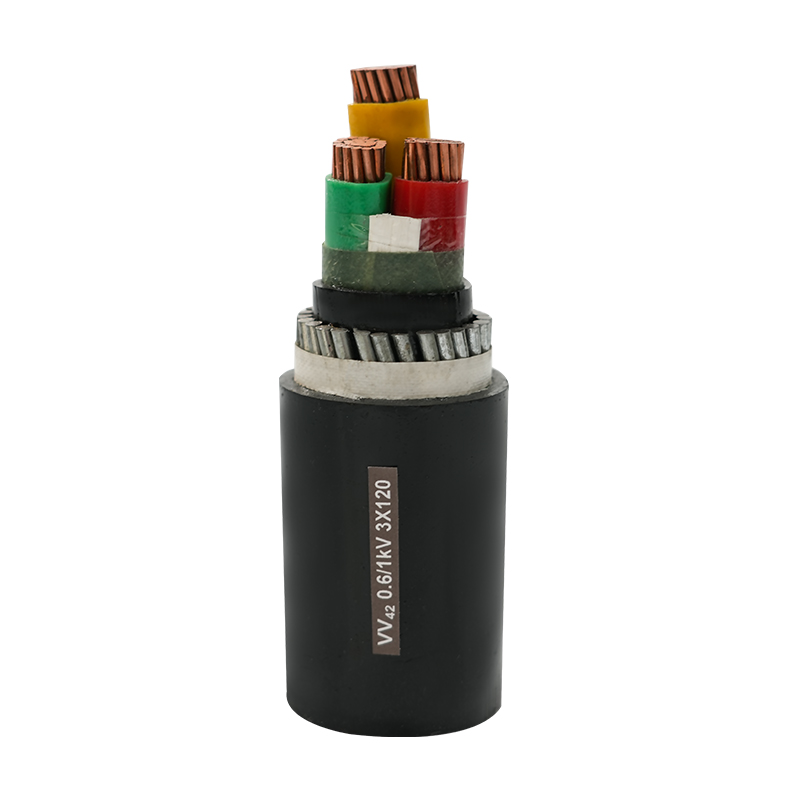
Armored Cable (AC / BX) and Metal-Clad Cable (MC)
Fixed wiring cables with a spiral-wound metal armor over insulated conductors, providing mechanical protection and some EMI shielding. AC cable uses the metal armor as the ground path; MC cable includes a dedicated green insulated ground conductor inside the armor. Used in commercial construction, industrial facilities, and locations where NM cable is not permitted by code.
THHN / THWN Wire in Conduit
Individual insulated conductors pulled through metallic or PVC conduit. THHN (thermoplastic high heat-resistant nylon-coated) is rated 90°C dry; THWN adds wet location suitability. This is the dominant wiring method in commercial and industrial construction due to its flexibility in routing and ease of conductor replacement. Available from 14 AWG to 1000 kcmil for large feeder applications.
USE-2 / URD Direct Burial Cable
Underground service entrance and underground residential distribution cables designed for direct burial without conduit. USE-2 is rated 90°C wet and dry; URD is a concentric neutral design used by utilities for underground residential power distribution. Both use moisture-resistant insulation systems able to withstand soil chemistry and ground moisture indefinitely.
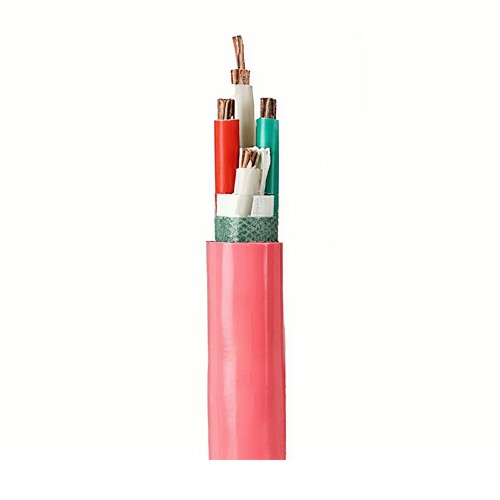
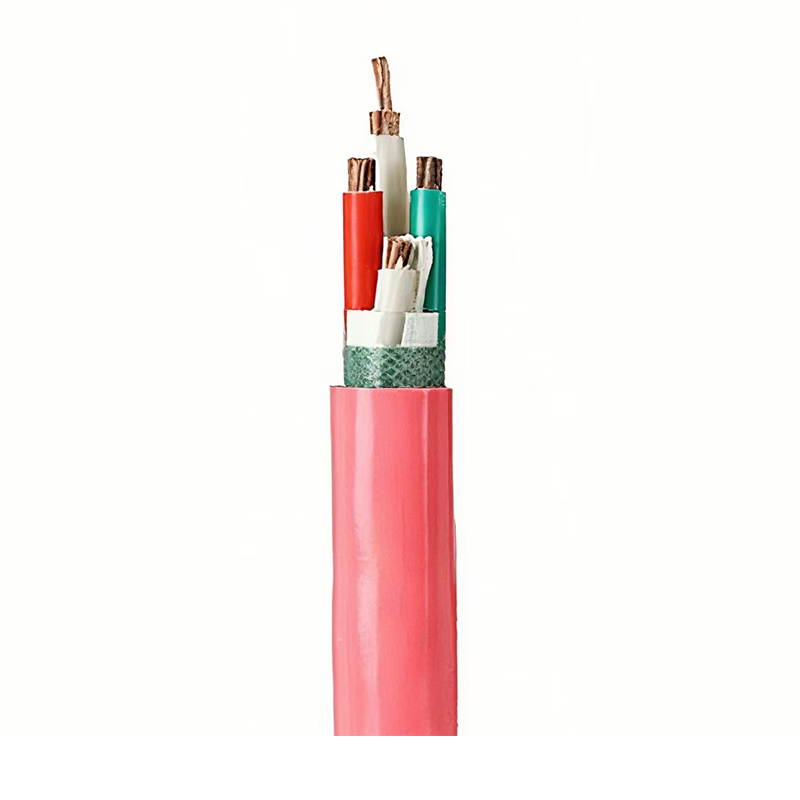
SOOW / SJOOW Portable Power Cable
Heavy-duty portable power cables used for temporary power on construction sites, in theaters and events, and for industrial machinery that requires frequent repositioning. The designation encodes the jacket type (S = hard service), oil resistance (OO = oil-resistant jacket and insulation), and wet location rating (W). Rated 600V, available in 18 AWG through 2 AWG, with four-conductor versions (for 240V or three-phase applications) also common.
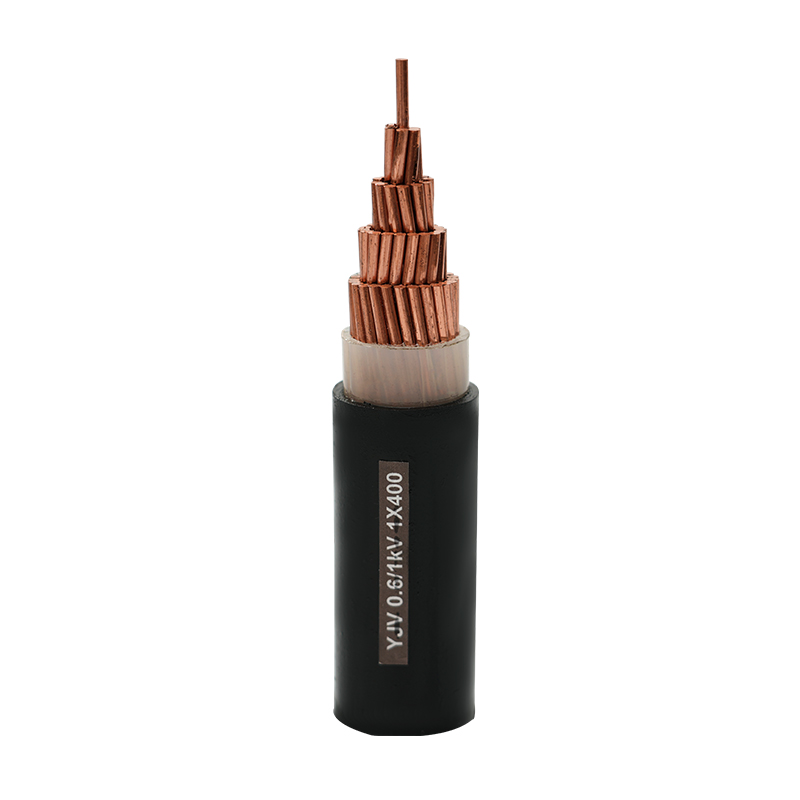
Medium Voltage and High Voltage Cable
Power cables for distribution at 5kV, 15kV, 35kV, and above use cross-linked polyethylene (XLPE) or ethylene-propylene rubber (EPR) insulation with semiconducting stress control layers, metallic shielding, and armored outer jackets. These are utility and industrial infrastructure cables used for substation feeders, underground distribution circuits, and industrial plant power distribution above 600V.
Power Cable Comparison by Application
| Cable Type | Voltage Rating | Fixed or Portable | Typical Use |
|---|---|---|---|
| SPT-1 / SPT-2 (lamp cord) | 300V | Portable | Lamps, small appliances |
| SJT / SVT (appliance cord) | 300V | Portable | Household appliances, power tools |
| IEC C13/C14 cord | 250V | Detachable / portable | Computers, AV equipment, PDUs |
| NM (Romex) | 600V | Fixed | Residential branch circuits |
| MC cable | 600V | Fixed | Commercial / industrial wiring |
| SOOW | 600V | Portable | Construction, events, industrial equipment |
| USE-2 / URD | 600V | Fixed (buried) | Underground residential / service entrance |
| XLPE MV cable | 5–35kV+ | Fixed | Utility distribution, industrial HV feeders |
How to Read a Power Cord or Cable Designation
North American power cord and cable designations follow a letter-code system standardized by UL and referenced in the NEC. Understanding the code avoids selecting an undersized or inappropriate cord for a given application. The main elements are:
- S — Hard service (heavier insulation and jacket). Absence of S indicates junior or light service (e.g., SJ prefix vs. S prefix).
- J — Junior hard service (300V rated vs. 600V for non-J hard service cords).
- O — Oil-resistant jacket; OO — oil-resistant jacket and conductor insulation.
- W — Suitable for wet locations and outdoor use.
- T — Thermoplastic insulation; P — parallel (flat) construction; V — vacuum cleaner cord construction.
- Conductor count and AWG — Expressed as, e.g., "3/14" meaning three conductors at 14 AWG. Smaller AWG numbers indicate larger, higher-current-capacity conductors.
A cord marked SJOOW 3/12, for example, is a junior hard-service cord with oil-resistant jacket and insulation, wet-location rated, with three 12 AWG conductors — suitable for a medium-duty portable tool or equipment connection in a wet or oily industrial environment.
 Email:
 Telephone:+86-0514-85086085
 FAX:+86-0514-85086085
 Phone:+86-15861389306