 Email:
  Telephone: +86-0514-85086085
 FAX: +86-0514-85086085
 English
 中文简体
中文简体 русский
 عربى
عربى
Content
High Voltage Electrical Wire: Definition and Key Characteristics
High voltage electrical wire refers to any conductor and its associated insulation system rated to carry voltages above a defined threshold — the exact boundary varies by regulatory framework, but the most widely applied standard is IEC 60038, which classifies systems above 1,000 V AC (or 1,500 V DC) as high voltage. In transmission engineering, the term is further subdivided: medium voltage (MV) covers 1 kV to 35 kV, high voltage (HV) spans 35 kV to 230 kV, extra-high voltage (EHV) runs from 230 kV to 800 kV, and ultra-high voltage (UHV) applies to systems above 800 kV — the class used in China's long-distance transmission grid, the most extensive UHV network in the world.
The fundamental engineering challenge of high voltage wiring is managing the electrical stress placed on insulating materials. Voltage does not flow through a conductor — it creates an electric field across the insulation between the conductor and any adjacent grounded surface. At elevated voltages, this field is strong enough to cause partial discharge (localized ionization within the insulation), treeing (progressive degradation pathways that grow through the dielectric over time), or full dielectric breakdown — all of which lead to insulation failure and potentially catastrophic faults.
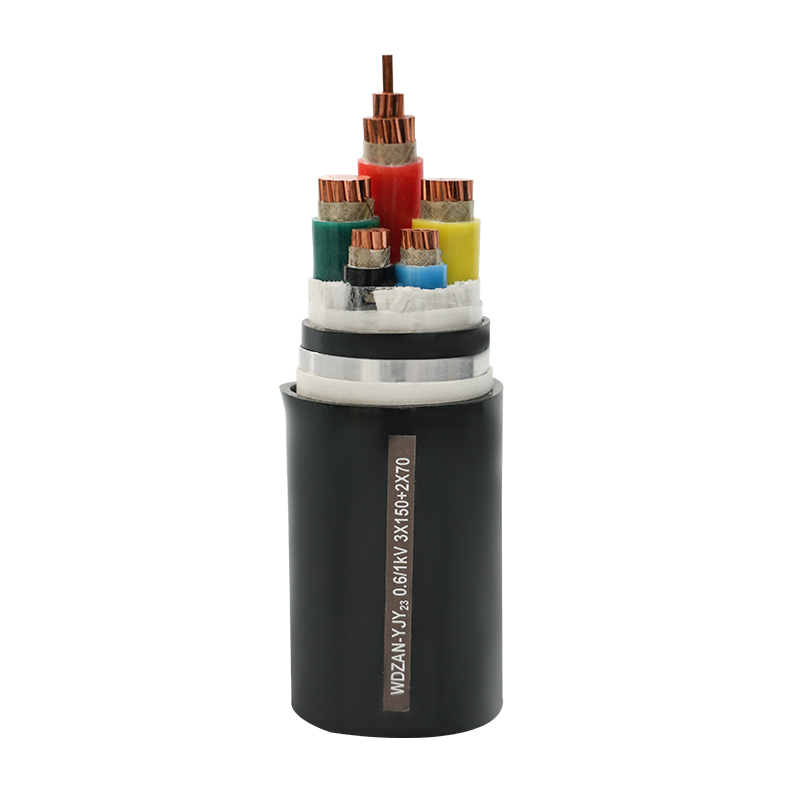
High voltage wire is therefore distinguished from low voltage wire not primarily by its conductor — copper and aluminum remain the dominant conductor materials across all voltage classes — but by the thickness, composition, and layered architecture of its insulation system. A 400 kV transmission cable may carry the same copper conductor cross-section as a 415 V distribution cable, but its insulation, semiconductor screens, metallic sheath, and outer jacket together account for the majority of the cable's diameter and cost.
Types of Electrical Wires and Cables
The terms "wire" and "cable" are frequently used interchangeably but carry a technical distinction in the industry. A wire is a single conductor — solid or stranded — with or without a simple insulating jacket. A cable is an assembly of two or more conductors (or one conductor with a complex multi-layer insulation system) bound together within an overall sheath. Understanding the main types across both categories is essential for specification, installation, and compliance.
By Conductor Structure
- Solid wire: A single, undivided conductor of circular cross-section. Rigid and inexpensive to manufacture; used in fixed building wiring (e.g., NM-B / Romex in residential applications) and low-frequency power distribution. Not suitable for applications requiring repeated flexing.
- Stranded wire: Multiple smaller conductors twisted together to form a single functional conductor. More flexible than solid wire of equivalent cross-section; standard for appliance cords, control cables, and any application involving movement or vibration. Stranding class (e.g., Class 2 through Class 6 per IEC 60228) defines the number and diameter of individual strands.
- Rope-lay and bunch-stranded: Higher-flexibility constructions using groups of stranded bundles twisted together; used in welding cables, drag chains, and continuous-flex robotic applications where wire fatigue is the primary design constraint.
By Application and Construction
- Overhead transmission conductors (ACSR / ACCC / HTLS): Bare or minimally insulated conductors used on overhead power transmission lines. Aluminum Conductor Steel Reinforced (ACSR) is the global standard — aluminum strands carry the current while a steel core provides tensile strength. Advanced conductors such as ACCC (carbon-fiber composite core) offer higher ampacity at the same sag profile.
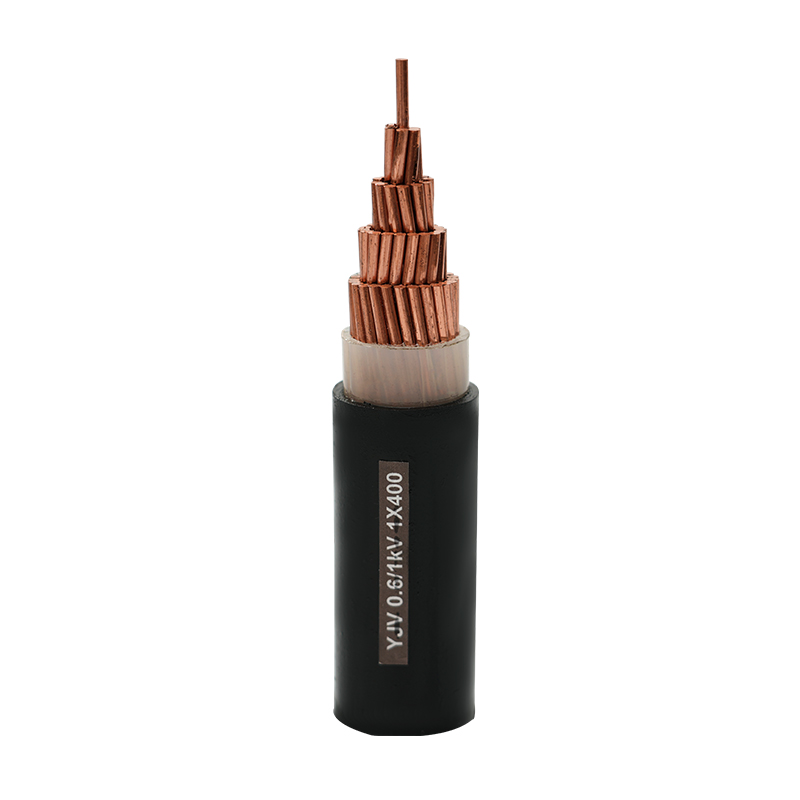
- Underground power cables (XLPE / EPR insulated): Fully insulated cables designed for direct burial or duct installation, carrying medium to extra-high voltages. Cross-linked polyethylene (XLPE) is the dominant insulation for new installations above 1 kV due to its thermal stability and low dielectric losses.
- Building wire (THHN / THWN / NYY): Single-conductor or multi-conductor cables for fixed wiring within structures. Rated for low voltage (typically 600 V in North America, 1,000 V in IEC markets); insulation and jacket compounds selected for flame retardance, moisture resistance, and compliance with national wiring codes.
- Instrumentation and control cables: Multi-pair cables carrying low-level signals (4–20 mA, 0–10 V, digital bus protocols) in industrial environments. Key requirements are shielding effectiveness against EMI and consistent characteristic impedance for data integrity over long runs.
- Coaxial cable: A center conductor surrounded by a dielectric, a braided or foil shield, and an outer jacket — all sharing the same geometric axis. Used for RF signal transmission in broadcast, telecommunications, CCTV, and antenna feed applications where controlled impedance (typically 50 Ω or 75 Ω) and shielding integrity are critical.
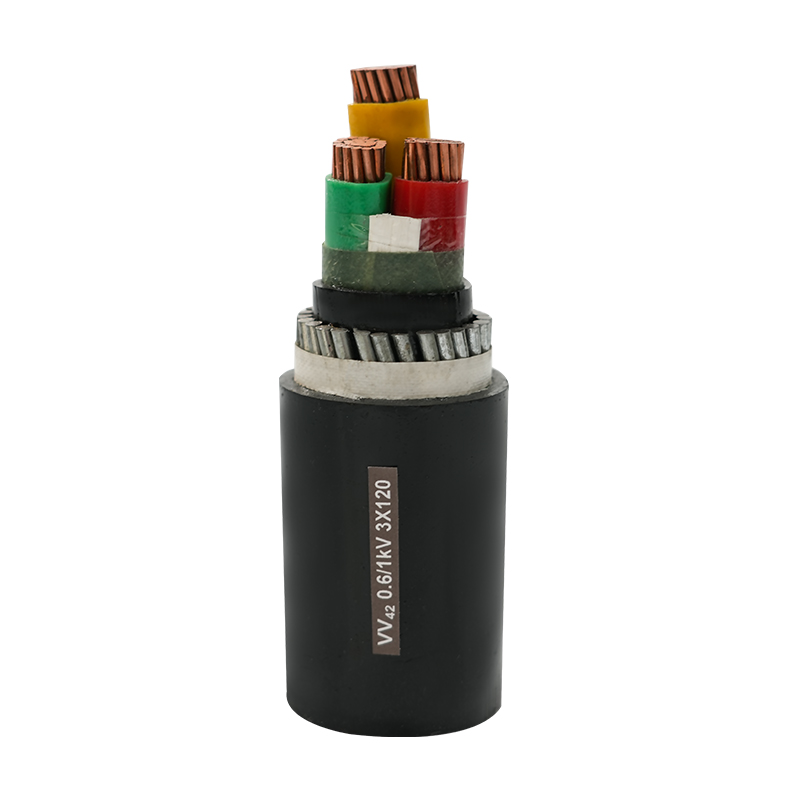
- Armored cable (SWA / MC cable): Power or control cables with a mechanical protection layer — typically steel wire armor (SWA) or interlocked aluminum — applied over the insulated cores before the outer sheath. Used in direct burial, industrial tray, and exposed installation environments where physical damage risk is elevated.
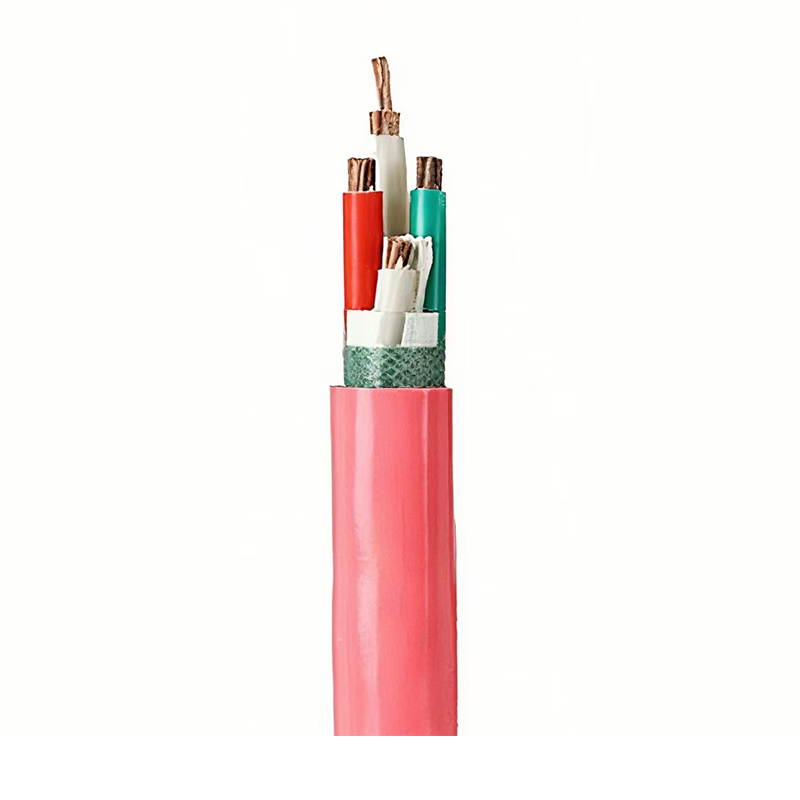
- Fire-resistant and fire-retardant cables (FRC / LSZH): Cables engineered to maintain circuit integrity during a fire (fire-resistant) or to limit flame propagation and toxic gas emission (low smoke zero halogen / LSZH). Mandatory in tunnels, high-rise buildings, naval vessels, and any application where evacuation safety is a design priority.
Various Types of Cables by Function and Industry
Beyond the structural classifications above, cables are frequently categorized by the industry or functional role they serve. The table below summarizes the principal cable categories encountered across key sectors:
| Cable Category | Voltage Range | Key Feature | Typical Sector |
|---|---|---|---|
| Power transmission cable | 66 kV – 500 kV+ | XLPE insulation, metallic screen, lead or aluminum sheath | Utility grid, offshore wind |
| Distribution cable | 1 kV – 33 kV | Direct burial or duct; armored variants common | Urban power networks |
| Submarine / subsea cable | Up to 525 kV DC | Pressure-resistant, armored, corrosion-protected | Offshore energy, island interconnects |
| Automotive / EV cable | 12 V – 800 V DC | Oil and fluid resistance, compact stranding, high-flex | Automotive, EV drivetrains |
| Fiber optic cable | N/A (optical) | Glass or plastic fiber cores; immune to EMI | Telecommunications, data centers |
| Welding cable | Up to 600 V | Extreme flexibility, abrasion-resistant rubber jacket | Fabrication, construction |
3 Types of Cable Insulation
Cable insulation is the dielectric layer applied directly over the conductor to prevent current leakage, withstand electrical stress, and protect the conductor from its environment. Insulation selection is the single most consequential engineering decision in cable design — it determines voltage rating, temperature rating, chemical resistance, flexibility, and service life. The three principal insulation material families used across the industry are:
1. Cross-Linked Polyethylene (XLPE)
XLPE is the dominant insulation material for medium and high voltage power cables globally, having largely displaced paper-oil insulation since the 1970s. It is produced by chemically or radiation cross-linking standard polyethylene — creating covalent bonds between polymer chains that fundamentally change the material's performance profile.
The cross-linking process raises XLPE's maximum continuous operating temperature from 70°C (for standard PE) to 90°C, with emergency ratings up to 130°C and short-circuit ratings up to 250°C. It also eliminates the thermoplastic flow behavior of uncrosslinked PE, meaning XLPE retains its geometry under sustained mechanical and thermal load. Key properties include very low dielectric loss (tan δ typically below 0.001), excellent moisture resistance, and strong resistance to partial discharge tracking. XLPE cables are used from 1 kV distribution up to 500 kV+ transmission and are the insulation of choice for modern submarine HVDC interconnectors.
2. Ethylene Propylene Rubber (EPR / EPDM)
EPR (ethylene propylene rubber) and its terpolymer variant EPDM (ethylene propylene diene monomer) are elastomeric insulation materials that combine good dielectric properties with outstanding flexibility and environmental resistance. Where XLPE is rigid at low temperatures and can crack if flexed in cold conditions, EPR remains pliable down to –50°C or below depending on formulation — a critical advantage in arctic installations, mining cables, and shipboard wiring.
EPR has slightly higher dielectric losses than XLPE (tan δ around 0.003–0.005) but superior resistance to water treeing — a degradation mechanism that affects XLPE in wet environments over extended service periods. This makes EPR the preferred insulation for medium voltage cables in wet or submerged locations, nuclear power plant cabling (where radiation resistance is required), and portable power cables in mining and construction where repeated coiling and mechanical abuse demand elastomeric resilience.
3. PVC (Polyvinyl Chloride)
PVC is the most widely used insulation material in the world by volume, dominating the low voltage building wire, appliance cord, and control cable markets. Its commercial success is built on a combination of low raw material cost, ease of processing on standard extrusion equipment, inherent flame retardance (chlorine content suppresses combustion), and acceptable electrical properties across the 0–1,000 V range.
Standard PVC insulation is rated for continuous operation at 70°C (90°C for heat-resistant grades). Its limitations are significant at higher voltages and temperatures: dielectric losses increase with temperature, plasticizers can migrate over time causing embrittlement, and combustion produces hydrogen chloride gas — a toxic and corrosive hazard that has driven a shift toward LSZH (low smoke zero halogen) compounds in safety-critical applications. Despite these constraints, PVC remains the cost-optimized default for the vast majority of fixed and flexible low voltage wiring installed globally each year, and ongoing compound development continues to improve its environmental and performance profile.

 Email:
 Telephone:+86-0514-85086085
 FAX:+86-0514-85086085
 Phone:+86-15861389306