 Email:
  Telephone: +86-0514-85086085
 FAX: +86-0514-85086085
 English
 中文简体
中文简体 русский
 عربى
عربى
Content
Underground Electrical Wire Types: A Practical Overview
Underground electrical wiring must withstand a fundamentally different set of stresses than above-ground installations — sustained soil pressure, moisture ingress, temperature fluctuations, and in some cases direct contact with corrosive soil chemicals. Selecting the correct cable type is a safety and compliance requirement, not merely a specification preference. The most commonly specified underground electrical wire types include:
- UF-B (Underground Feeder) Cable — a solid-core cable with a moisture-resistant PVC outer jacket, rated for direct burial without conduit. Commonly used for residential outdoor circuits such as garden lighting, outbuildings, and landscape power. Voltage rating is typically 600V, and it is listed under UL 493.
- USE-2 (Underground Service Entrance) Cable — rated for direct burial and wet locations, with a thermoset insulation jacket tolerant of higher operating temperatures (up to 90°C). Frequently used for service entrance applications connecting utility transformers to residential meter panels.
- THWN-2 / XHHW-2 Wire in Conduit — individual conductors pulled through PVC or rigid metal conduit buried underground. THWN-2 uses thermoplastic insulation; XHHW-2 uses cross-linked polyethylene (XLPE). Both are rated for wet locations and 90°C. This method offers easier future replacement of conductors without excavation.
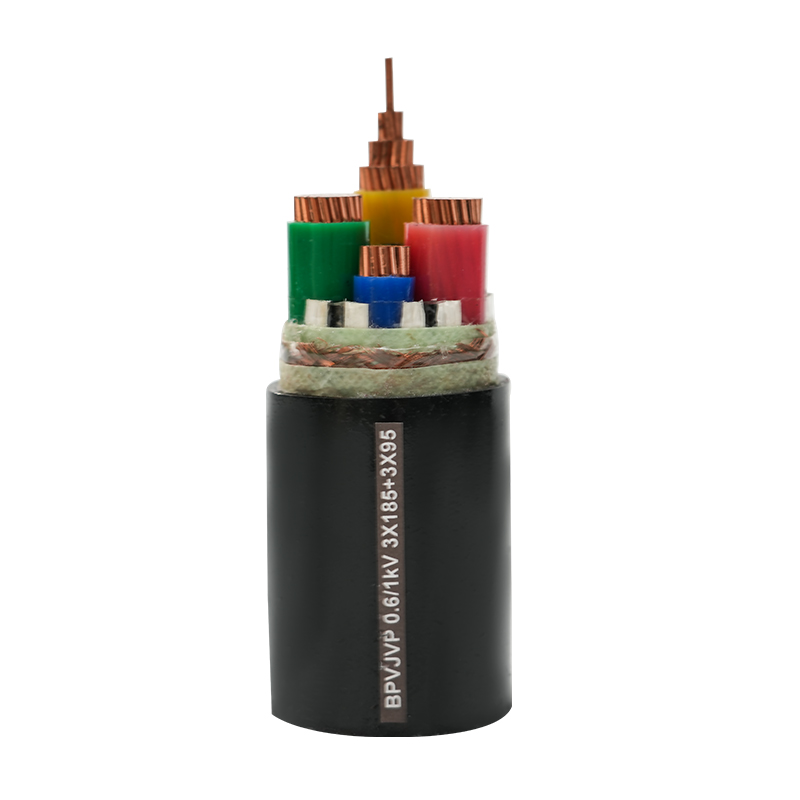
- MV (Medium Voltage) Cable — for utility distribution and industrial applications operating at 5kV to 35kV. Typically uses XLPE insulation over a stranded copper or aluminum conductor, with a concentric neutral and outer jacket rated for direct burial.
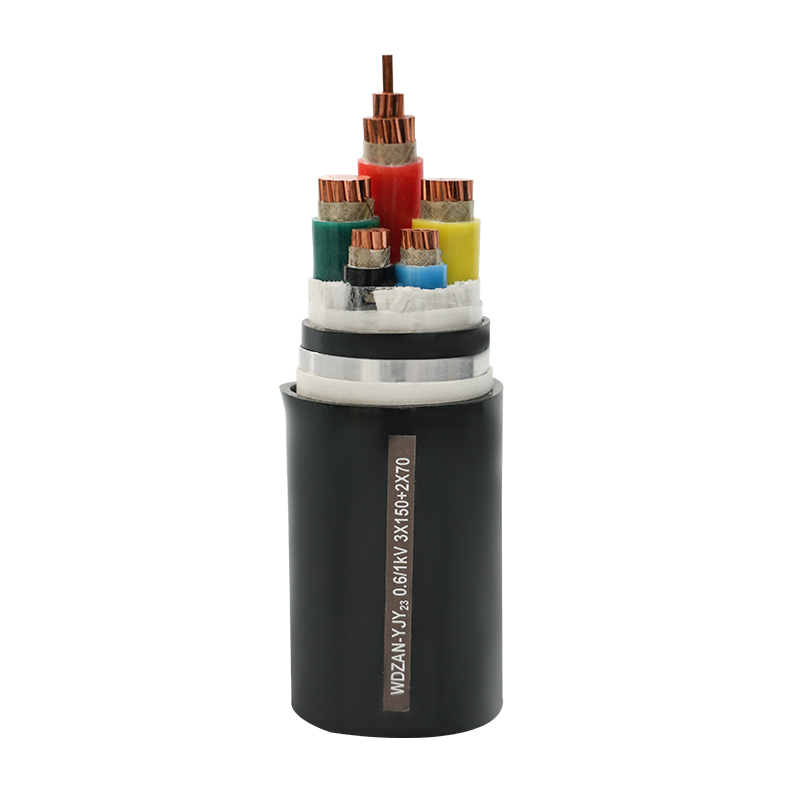
- Armored Cable (SWA / AWA) — steel wire armoured or aluminum wire armoured cables provide mechanical protection against accidental dig-in and rodent damage. Common in European standards (IEC) and industrial installations worldwide.
Burial depth requirements vary by cable type and jurisdiction. In the United States, NEC Article 300.5 specifies a minimum burial depth of 24 inches for direct-buried conductors on residential 120/240V circuits, reduced to 12 inches when enclosed in rigid metal or intermediate metal conduit. Always verify local amendments before installation.
Polyvinyl Chloride Wire Insulation: Properties, Grades, and Limitations
Polyvinyl chloride (PVC) wire insulation is the most widely used dielectric material in the global wire and cable industry. Its dominance comes from a combination of low raw material cost, straightforward extrusion processing, and a broad spectrum of achievable electrical and mechanical properties through compounding.
Core Electrical Properties
PVC is an effective electrical insulator with a dielectric strength typically in the range of 15–40 kV/mm, depending on compound formulation. Volume resistivity exceeds 10¹² Ω·cm in standard grades, making it suitable for low- and medium-voltage applications up to 1,000V AC. Its dielectric constant (permittivity) of approximately 3.0–8.0 is acceptable for power wiring but limits its use in high-frequency signal applications where materials like PTFE or polyethylene are preferred.
Temperature Rating and Thermal Limitations
Standard PVC insulation compounds are rated for continuous operation at 60°C to 90°C, depending on the specific formulation and listing. At temperatures above 105°C, PVC begins to soften, plasticizer migration accelerates, and long-term insulation integrity degrades. This thermal ceiling is the primary reason PVC is not used in high-temperature industrial environments or engine compartments, where cross-linked polyethylene (XLPE) or silicone insulation is preferred.
Low-Temperature Performance
Conventional PVC becomes brittle below approximately -10°C to -20°C, which limits its use in cold-climate outdoor installations. Low-temperature PVC compounds, formulated with higher plasticizer loading, extend flexibility down to -40°C but at increased cost and with some reduction in mechanical hardness.
Flame Retardancy and Smoke
PVC is inherently flame-retardant due to its chlorine content, which acts as a halogen-based flame suppressant. This is a significant advantage in building wiring applications. However, when PVC does burn, it produces hydrogen chloride (HCl) gas and dense smoke, which are corrosive to electronic equipment and hazardous in confined evacuation scenarios. This drove the development of LSZH (Low Smoke Zero Halogen) compounds for tunnels, data centers, and public transport infrastructure.
| Property | Standard PVC | XLPE | LSZH |
|---|---|---|---|
| Max. Continuous Temp. | 60–90°C | 90–105°C | 70–90°C |
| Flame Retardant | Yes (halogenated) | Requires additive | Yes (halogen-free) |
| Smoke Emission | High, corrosive | Moderate | Very low |
| Chemical Resistance | Good | Excellent | Good |
| Relative Cost | Low | Medium | Medium–High |
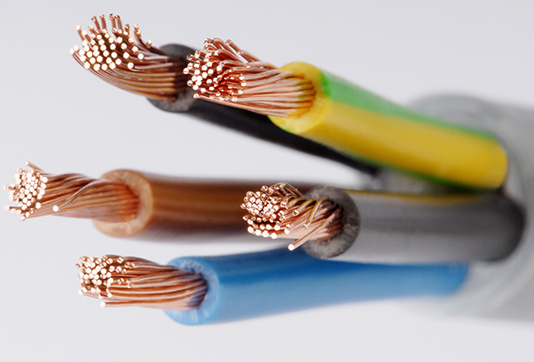
What Is PV Wire? Definition, Standards, and Why It Differs from Standard Cable
PV wire — short for photovoltaic wire — is a single-conductor cable specifically engineered for use in solar photovoltaic systems, primarily to connect solar panels to combiners, inverters, and other balance-of-system components. It is not interchangeable with general-purpose building wire, and using incorrect cable types in PV installations creates both code violations and long-term reliability risks.
Key Standards and Listings
In the United States, PV wire is listed under UL 4703, which defines the construction, insulation material, and testing requirements. It is rated for:
- Voltage: 600V or 1000V systems (with 1500V variants increasingly available for utility-scale installations)
- Temperature: 90°C in wet locations, 150°C in dry locations — significantly higher than standard THWN-2 wire
- Sunlight resistance: rated for prolonged UV exposure without insulation degradation
- Direct burial: permitted when the cable's listing specifies it, making it suitable for runs between ground-mounted array combiner boxes and inverters
Insulation and Jacket Construction
PV wire uses a cross-linked polyethylene (XLPE) or cross-linked thermoplastic elastomer (XLTE) insulation system, which provides the thermal performance and UV stability that PVC cannot match under continuous outdoor exposure. The conductor is typically fine-stranded tinned copper, which improves flexibility during installation across large roof or ground arrays and resists corrosion in humid environments.
Unlike USE-2, which is also permitted in some PV applications, PV wire under UL 4703 is single-conductor only and does not require a separate outer jacket — the insulation itself serves as the outer layer. This reduces diameter and weight, an advantage when routing through racking systems.
PV Wire vs. USE-2: What the NEC Allows
NEC Article 690.31 permits both UL 4703-listed PV wire and USE-2 for exposed outdoor wiring on the DC source and output circuits of photovoltaic systems. However, PV wire is the more commonly specified option in modern utility and commercial installations because its higher temperature rating allows greater ampacity in the conduit fill calculations, reducing the number of conductors or conduit runs needed for a given system output. For utility-scale projects, this translates directly into material and labor cost savings.
Choosing Between Wire Types: Underground and Solar Applications Side by Side
Projects that combine underground runs with solar generation — such as ground-mounted PV arrays feeding a building subpanel — require careful coordination of wire types across system segments. A typical ground-mount installation might use:
- PV wire (UL 4703) from panel string outputs to combiner boxes, routed through the racking structure and exposed to sun
- USE-2 or PV wire in conduit for the underground DC run from the combiner box to the inverter building
- THWN-2 in conduit for the AC output run from inverter to the utility interconnection point or building panel
- UF-B for any auxiliary low-voltage branch circuits (security lighting, monitoring equipment enclosures) if direct burial without conduit is preferred
Mismatching wire types across these zones — for example, using standard THHN wire exposed outdoors on a PV array — creates code non-compliance and accelerated insulation degradation from UV exposure and thermal cycling. Always verify that each conductor's listing matches its installation environment before finalizing the design.
For procurement decisions, buyers should request cable test reports confirming UL listing status, conductor purity (bare or tinned copper), and strand count. For underground installations in corrosive or high-moisture soils, specifying tinned conductors and verifying jacket compound compatibility with local soil chemistry adds meaningful long-term reliability with minimal additional cost at the design stage.
 Email:
 Telephone:+86-0514-85086085
 FAX:+86-0514-85086085
 Phone:+86-15861389306