 Email:
  Telephone: +86-0514-85086085
 FAX: +86-0514-85086085
 English
 中文简体
中文简体 русский
 عربى
عربى
Content
What Are Power Cables?
Power cables are insulated electrical conductors designed to transmit electrical energy from a source to a load — whether that load is a building, a machine, a piece of infrastructure, or a consumer device. Every power cable performs two functions simultaneously: conducting current with minimal resistive loss, and containing that current safely within an insulated and protected structure that prevents contact with people, equipment, or the environment.
At the most basic level, a power cable consists of a conductor and an insulation layer. In practice, most cables used in industrial, commercial, and infrastructure applications are considerably more complex — incorporating multiple conductors, semiconducting screens, metallic shields, armoring layers, and outer sheaths, each serving a defined mechanical or electrical purpose. The construction of a cable is determined by the voltage it must carry, the current it must handle, the installation environment it will operate in, and the mechanical stresses it will encounter over its service life.
Power cables are classified by voltage rating into three broad categories: low voltage (LV) cables rated up to 1 kV, used for building wiring, appliance connections, and light industrial distribution; medium voltage (MV) cables rated from 1 kV to 36 kV, used for industrial power distribution and utility feeders; and high voltage (HV) cables rated above 36 kV, used in transmission grids and large-scale power infrastructure. Each voltage class has its own conductor sizing standards, insulation thickness requirements, and installation codes that govern its design and use.
Conductor materials are almost universally either copper or aluminum. Copper offers superior conductivity (approximately 58 MS/m vs aluminum's 35 MS/m), higher tensile strength, and better resistance to corrosion at connection points, making it the preferred conductor for most fixed wiring and flexible cable applications. Aluminum is significantly lighter and lower in cost per unit of conductivity, which is why it dominates overhead transmission lines and large-section underground distribution cables where weight and material cost are primary considerations.
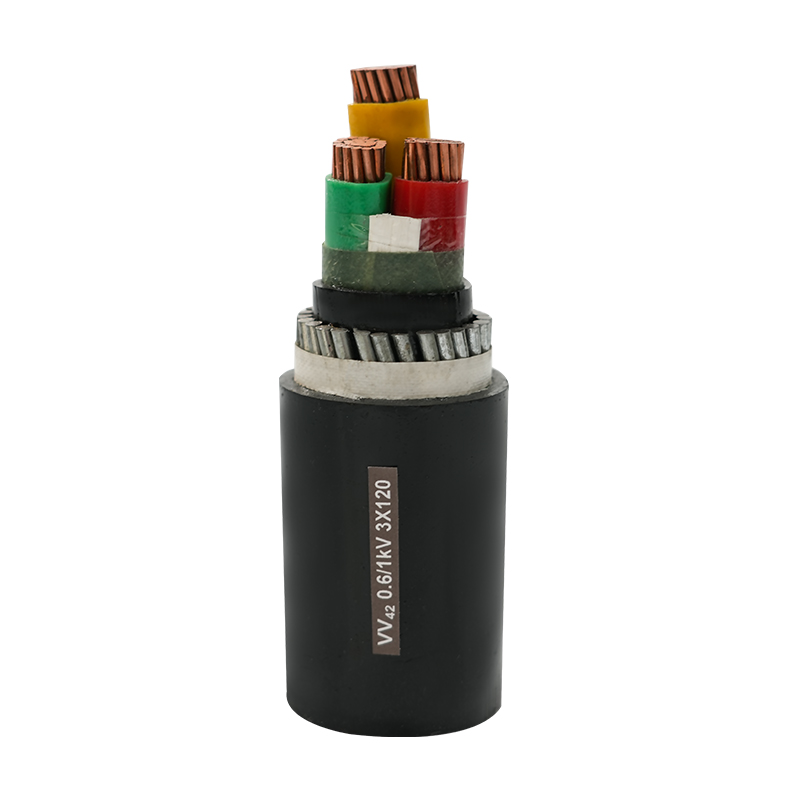
Types of Electrical Cabling
Electrical cabling is not a single product category but a broad family of constructions, each optimized for a specific combination of voltage class, installation method, environmental exposure, and mechanical demand. The most important cable types in power distribution and building wiring are described below.
Non-Armored PVC or XLPE Cables (NYY / N2XY)
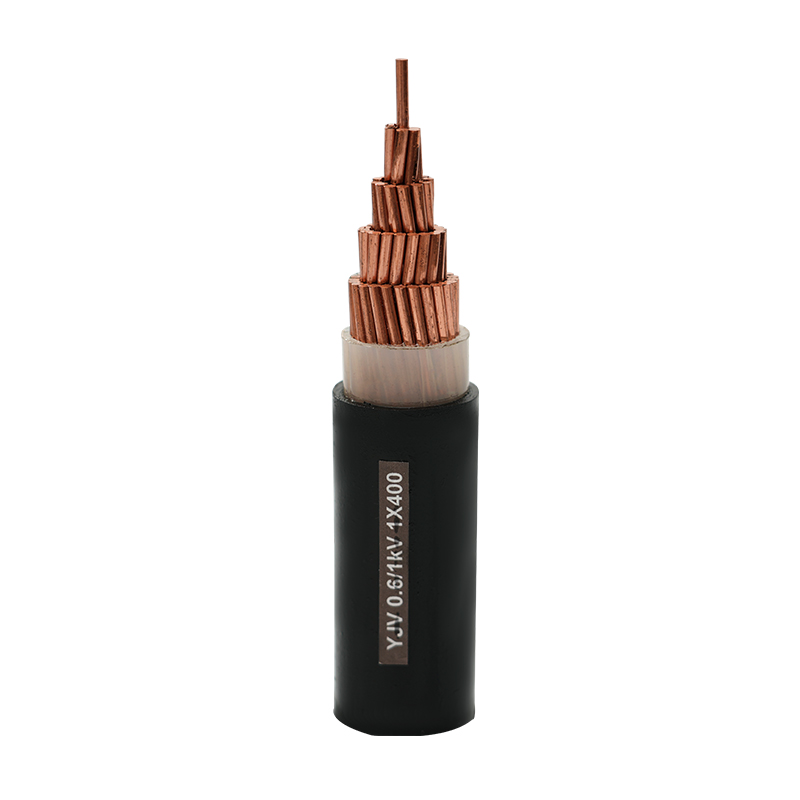
Non-armored low voltage cables with PVC or XLPE insulation and a PVC outer sheath are the most widely installed cable type in building services, light industrial wiring, and direct-burial applications in conduit. The NYY designation (PVC insulated, PVC sheathed) and N2XY designation (XLPE insulated, PVC sheathed) follow IEC naming conventions used across Europe and most international markets. These cables are available in single-core and multicore configurations, with conductor cross-sections from 1.5 mm² to 300 mm² or larger. XLPE-insulated variants carry higher current ratings than PVC equivalents at the same conductor size, owing to the superior thermal performance of cross-linked polyethylene insulation.
Armored Cables (SWA and AWA)
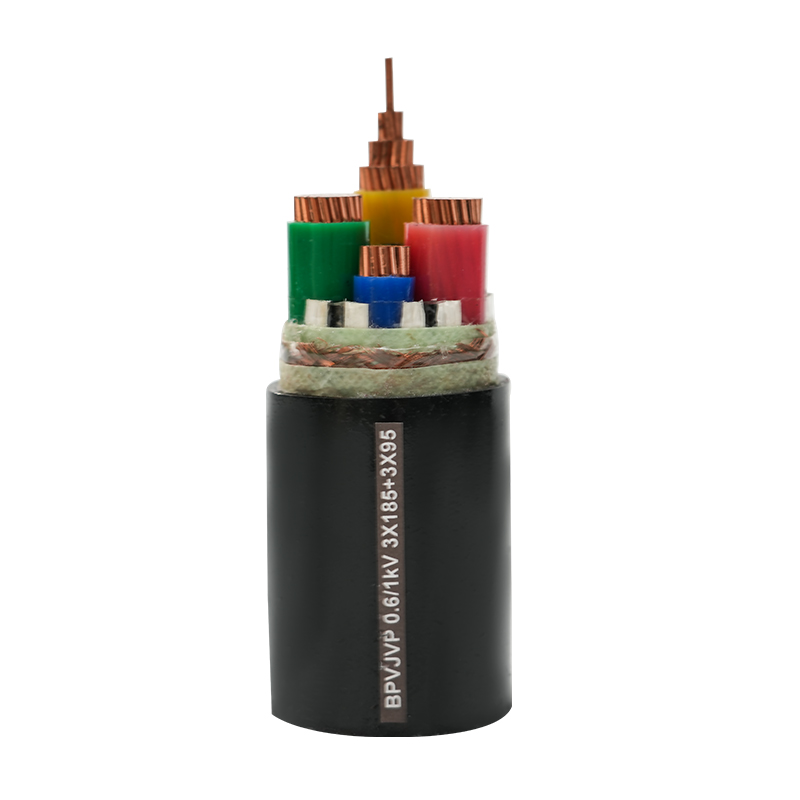
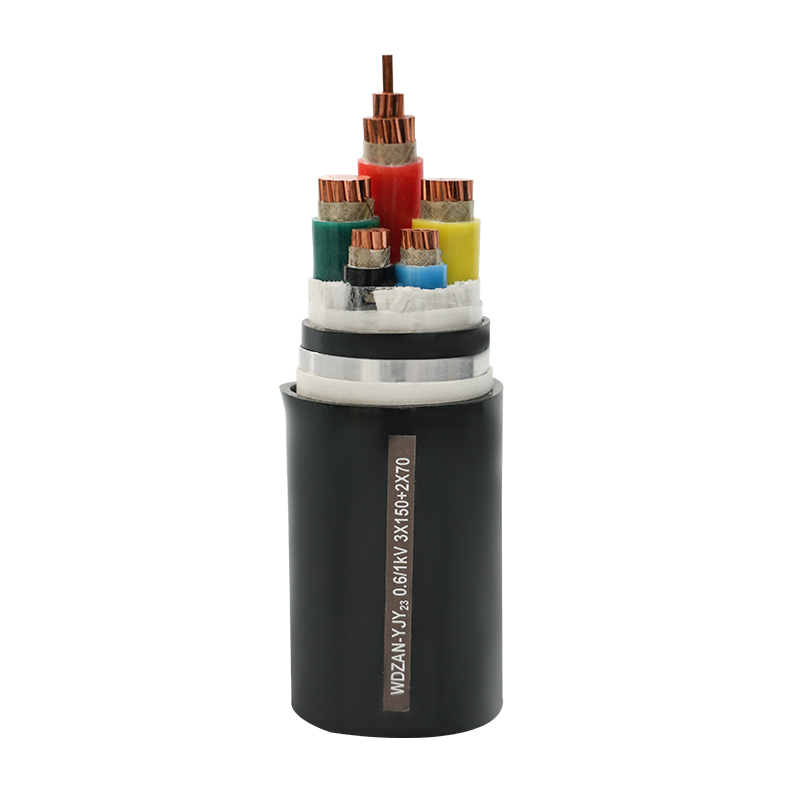
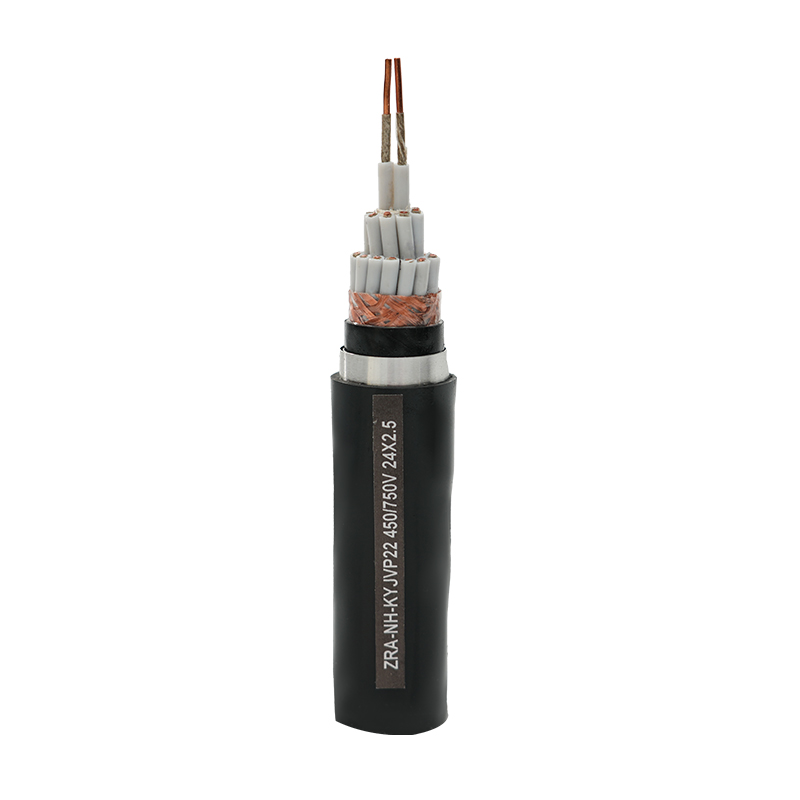
Armored cables incorporate a layer of mechanical protection between the insulation and outer sheath. Steel wire armored (SWA) cables use a layer of galvanized steel wires wound helically around the insulated core assembly, providing resistance to crushing, rodent attack, and accidental impact. SWA is the standard choice for direct burial without conduit, underground distribution, and surface-mounted runs in industrial environments subject to mechanical damage. Aluminum wire armored (AWA) cables use aluminum wires in place of steel, reducing weight and eliminating the risk of galvanic corrosion in aluminum-conductor cables — making them preferred for underground single-core cables where steel armor would create unacceptable eddy current losses in AC systems.
Mineral Insulated Cables (MICC / MI Cable)
Mineral insulated cables use compressed magnesium oxide (MgO) powder as the insulation material, packed between copper conductors and a seamless copper or stainless steel outer sheath. The result is a cable with exceptional fire resistance — MgO is incombustible, and the metal sheath will not burn or emit toxic fumes under any fire conditions. MI cables maintain circuit integrity at temperatures exceeding 1,000°C and are mandated for fire alarm circuits, emergency lighting, smoke extract systems, and other life-safety wiring in many building codes. Their limitations are higher cost, limited flexibility, and susceptibility to moisture ingress at cut ends, which requires sealed terminations.
Flexible and Trailing Cables
Flexible cables use finely stranded conductors — constructed from dozens to hundreds of individual thin wires twisted together — to achieve the bending radius and flex-cycle endurance required for movable connections: appliance cords, portable tools, extension leads, and machine trailing leads. The stranding class determines flexibility: Class 5 (fine stranded) and Class 6 (extra-fine stranded) conductors per IEC 60228 are used for frequently flexed applications, while Class 2 (stranded) is standard for fixed wiring. Flexible cable insulation and sheaths are formulated for resistance to abrasion, oils, and repeated flexing rather than optimized purely for thermal performance.
Medium and High Voltage XLPE Cables
Above 1 kV, cable construction becomes significantly more complex. MV and HV cables require conductor screens and insulation screens — thin layers of semiconducting material applied directly over the conductor and over the outer surface of the insulation — to smooth out electric field concentrations at the conductor surface and at the insulation-sheath interface. Without these screens, the non-uniform geometry of stranded conductors would create local field intensification sufficient to cause insulation degradation over time. XLPE is the dominant insulation material for MV and HV cables worldwide, having largely displaced paper-oil insulated cables (PILC) over the past 30 years due to its superior moisture resistance, lighter weight, and ability to operate at higher conductor temperatures (90°C continuous vs 70°C for PVC).
Data and Signal Cables with Power Conductors (Hybrid Cables)
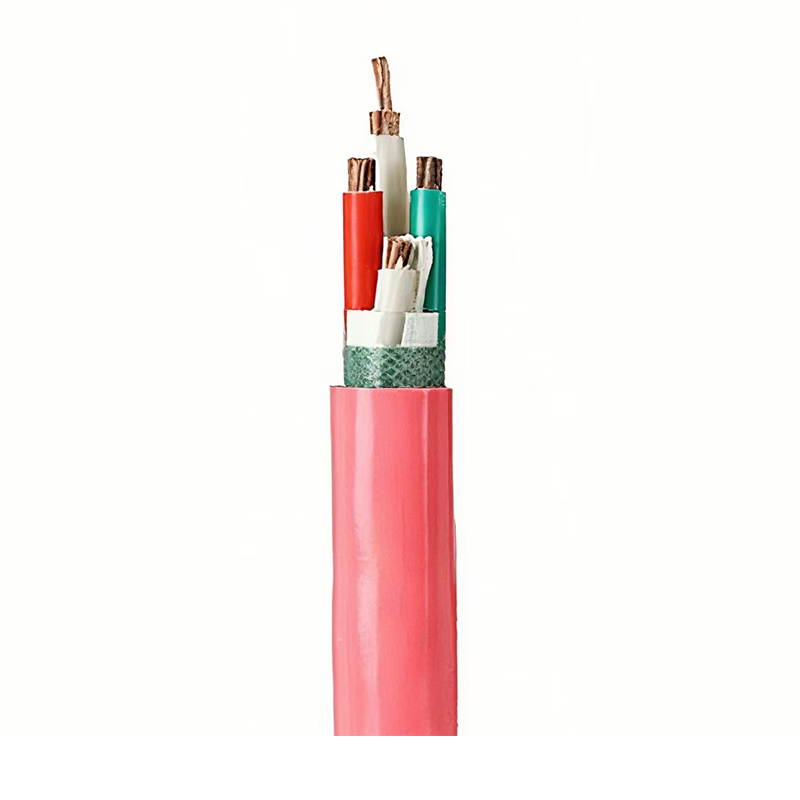
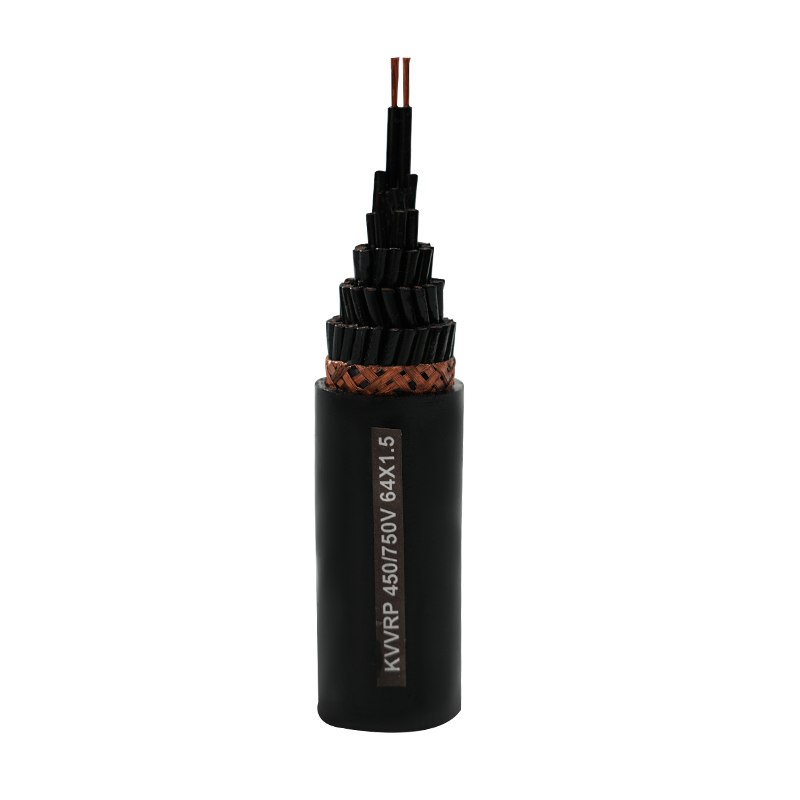
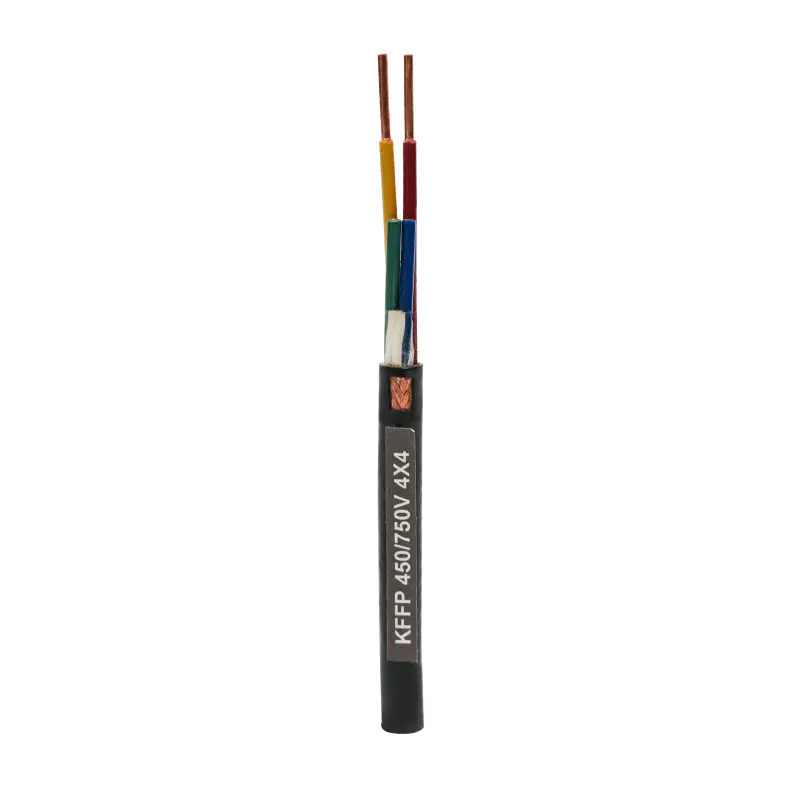
Hybrid cables combine power conductors and signal or data conductors within a single sheath, reducing installation complexity in applications where both power and communications must reach the same endpoint — industrial machinery, CCTV systems, building automation, and renewable energy monitoring. The power and signal elements are physically separated and often individually screened within the cable to prevent electromagnetic interference from the power conductors corrupting the signal circuits.
| Cable Type | Voltage Range | Typical Application | Key Feature |
|---|---|---|---|
| NYY / N2XY (non-armored) | Up to 1 kV | Building wiring, conduit runs | Cost-effective; wide size range |
| SWA armored | Up to 1 kV | Direct burial, industrial | Mechanical protection; crush-resistant |
| Mineral insulated (MI) | Up to 1 kV | Fire safety circuits | Circuit integrity in fire; zero smoke/toxicity |
| Flexible cable | Up to 1 kV | Appliances, portable tools | Fine stranding for flex-cycle endurance |
| MV XLPE screened cable | 1–36 kV | Industrial distribution, utility feeders | Semiconducting screens; field grading |
| HV XLPE transmission cable | 36–500+ kV | Grid transmission, subsea links | Lead sheath; laminated moisture barrier |
Types of Wire Insulation
Wire insulation is the material layer surrounding the conductor that prevents current from escaping the intended path. The insulation must withstand the electrical stress of the operating voltage, the thermal stress of the conductor temperature under load, and any mechanical or chemical stresses imposed by the installation environment. The choice of insulation material is one of the most consequential decisions in cable specification — it determines operating temperature rating, current-carrying capacity, chemical resistance, fire behavior, and service life.
PVC (Polyvinyl Chloride)
PVC is the most widely used cable insulation and sheathing material globally, accounting for the majority of low voltage cable production by volume. Its dominance comes from a favorable combination of properties at low cost: adequate dielectric strength, good resistance to moisture and many chemicals, reasonable mechanical toughness, and ease of processing on standard extrusion equipment. Standard PVC insulation is rated for continuous conductor temperatures of 70°C, with specialized formulations available for 90°C and 105°C applications.
The primary limitation of PVC is its fire behavior. PVC combustion releases hydrogen chloride gas and other toxic halogenated compounds, and PVC cables produce dense black smoke in fire conditions. This is why PVC is increasingly restricted or banned from use in buildings with high occupancy, confined spaces, tunnels, and public transport infrastructure — particularly in Europe, where Low Smoke Zero Halogen (LSZH) requirements have displaced PVC in many specification categories.
XLPE (Cross-Linked Polyethylene)
XLPE is produced by cross-linking the polymer chains of polyethylene, converting a thermoplastic material into a thermoset. Cross-linking creates a three-dimensional polymer network that does not melt or flow at elevated temperatures — unlike standard polyethylene or PVC, which soften progressively as temperature rises. The result is an insulation material rated for continuous conductor temperatures of 90°C (power cables) and short-circuit temperatures up to 250°C, compared to PVC's 70°C continuous and 160°C short-circuit limits.
XLPE's higher temperature rating directly increases the current-carrying capacity of a cable at a given conductor size — a 95 mm² XLPE-insulated cable carries approximately 15–20% more current than the same conductor size with PVC insulation in equivalent installation conditions. XLPE also offers superior dielectric properties, making it the insulation of choice for all medium and high voltage cables. Its limitations include higher material and processing cost compared to PVC, and the fact that cross-linking is irreversible — XLPE cable offcuts and scrap cannot be recycled by remelting.
LSZH / LS0H (Low Smoke Zero Halogen)
LSZH insulation and sheathing compounds are formulated from halogen-free thermoplastic or thermosetting polymers — typically based on polyolefin blends filled with aluminum trihydrate (ATH) or magnesium hydroxide as flame retardants. When exposed to fire, LSZH materials release minimal smoke and produce no halogenic acid gases. This dramatically improves survivability and evacuation conditions in enclosed spaces: hydrogen chloride from burning PVC cables is a major cause of incapacitation in building fires, independent of the heat and flame themselves.
LSZH cables are mandated in tunnels, airports, railway stations, data centers, naval vessels, and high-occupancy buildings across most developed markets. The trade-off versus PVC is higher cost and, in some formulations, reduced flexibility at low temperatures — relevant for installations in cold climates or refrigerated environments.
EPR (Ethylene Propylene Rubber)
EPR is a synthetic rubber insulation material offering excellent flexibility across a wide temperature range (typically −40°C to +90°C continuous), outstanding resistance to ozone, UV radiation, and weathering, and good dielectric properties. EPR cables maintain flexibility in cold conditions where PVC and XLPE stiffen considerably, making EPR the preferred insulation for mining cables, offshore and marine applications, welding cables, and any installation requiring repeated flexing in outdoor or harsh environments. EPR is also used as insulation in medium voltage cables where its flexibility simplifies installation in congested cable routes.
Silicone Rubber
Silicone rubber insulation operates across an exceptional temperature range — typically −60°C to +180°C continuously, with some grades rated to 200°C or beyond. It remains flexible at cryogenic temperatures where most other insulation materials become brittle, and retains its electrical properties at temperatures that would degrade PVC or EPR. Silicone-insulated cables are used in furnace wiring, heating elements, aerospace and defense applications, and high-temperature industrial equipment. Silicone has relatively low mechanical strength compared to harder insulation materials and requires careful handling to avoid surface abrasion, but in high-temperature applications it is frequently the only viable insulation option.
PTFE (Polytetrafluoroethylene)
PTFE offers the highest chemical resistance of any common wire insulation material — it is essentially inert to all acids, bases, and solvents at temperatures up to 260°C. PTFE-insulated wires are used in laboratory instruments, chemical processing equipment, aerospace wiring, and any application where exposure to aggressive chemicals or extreme temperatures would destroy other insulation materials. PTFE is expensive and difficult to process, which limits its use to specialist applications where its unique property combination cannot be replicated by lower-cost alternatives.
Magnesium Oxide (Mineral Insulation)
As described in the cable types section above, compressed MgO powder serves as the insulation medium in mineral insulated cables. It is the only truly incombustible cable insulation in common use — it does not burn, does not emit gases, and does not degrade in fire conditions that would destroy every other insulation type. Its application is specialized but critical wherever circuit integrity under fire conditions is a life-safety requirement.
How Installation Environment Determines Cable and Insulation Selection
No single cable type or insulation material is universally optimal — the correct specification is always determined by the combination of electrical requirements and the physical environment the cable must survive over its service life.
- Direct burial without conduit requires armored cables (SWA or AWA) with robust outer sheaths resistant to ground moisture, soil chemicals, and occasional mechanical disturbance. XLPE insulation is preferred over PVC for its moisture resistance and higher current capacity.
- Enclosed buildings and public spaces increasingly require LSZH cables under fire safety regulations, particularly in escape routes, plant rooms, and areas above suspended ceilings where cables run in quantity.
- Outdoor exposed runs demand UV-stabilized sheaths (black polyethylene or UV-resistant PVC) and, for cables subject to mechanical damage risk, armoring or conduit protection.
- High-temperature environments — near furnaces, engines, or exhaust systems — require cables rated for the ambient temperature plus the conductor temperature rise under load. Silicone or EPR insulation is typically specified where ambient temperatures exceed 70°C.
- Chemical exposure — in pharmaceutical, petrochemical, or food processing plants — may require PTFE insulation or specially compounded sheaths resistant to the specific chemicals present, as standard PVC or XLPE can swell, crack, or lose dielectric integrity when exposed to certain solvents and oils.
Understanding these relationships between installation environment, cable construction, and insulation material is the foundation of correct cable specification. Selecting a cable rated for the wrong environment is one of the most common causes of premature cable failure — and in power distribution applications, cable failure means unplanned downtime, costly replacement in inaccessible routes, and potential safety incidents.
 Email:
 Telephone:+86-0514-85086085
 FAX:+86-0514-85086085
 Phone:+86-15861389306