 Email:
  Telephone: +86-0514-85086085
 FAX: +86-0514-85086085
 English
 中文简体
中文简体 русский
 عربى
عربى
Content
Kinds of Cable Wire: A Functional Overview
Cable and wire products span a wide range of constructions, each engineered for a specific combination of electrical, mechanical, and environmental requirements. At the broadest level, cables are classified by their primary function: power transmission, signal transmission, data communication, or control. Within each category, conductor material, insulation type, shielding, and jacket compound are specified to match voltage rating, current capacity, frequency range, installation environment, and regulatory requirements.
The distinction between wire and cable is a useful starting point. A wire is a single electrical conductor — solid or stranded — with or without insulation. A cable is an assembly of two or more insulated conductors, or a single insulated conductor with an outer protective jacket, bound together in a common sheath. In everyday usage the terms are often used interchangeably, but in technical specification and procurement contexts the difference matters.
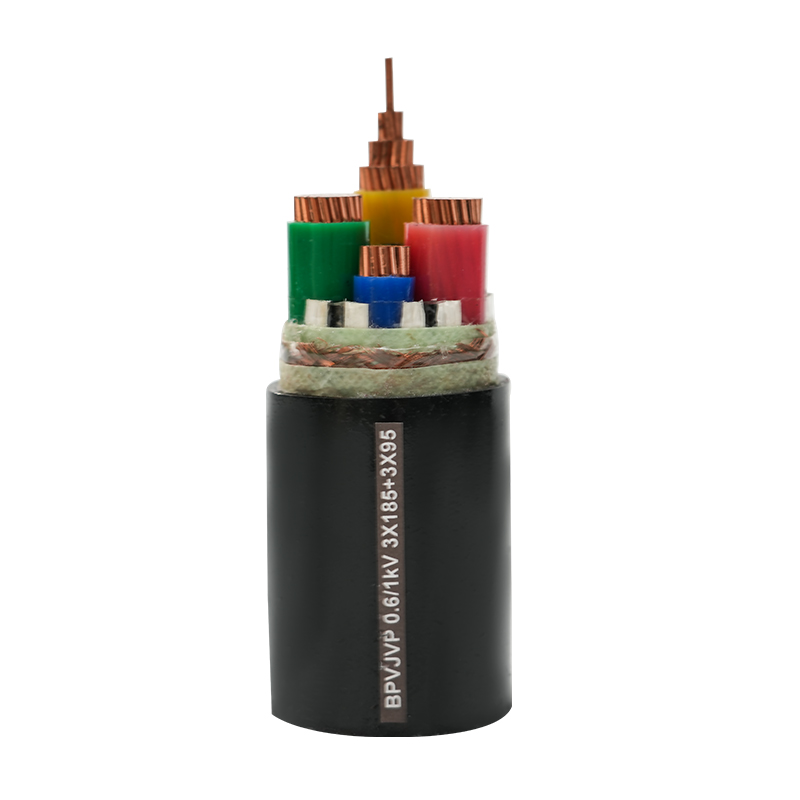
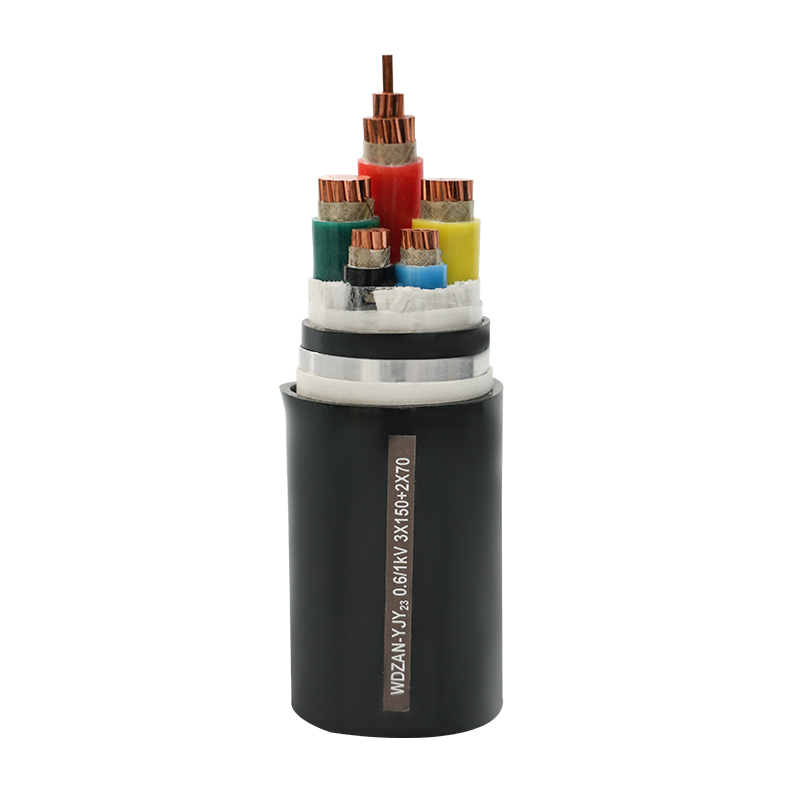
- Power cables: Carry electrical energy from supply to load. Range from low-voltage residential wiring to high-voltage transmission cables rated at tens of thousands of volts.
- Data and network cables: Carry digital signals between devices. Include twisted pair (Ethernet, telephone), coaxial, and fiber optic constructions.
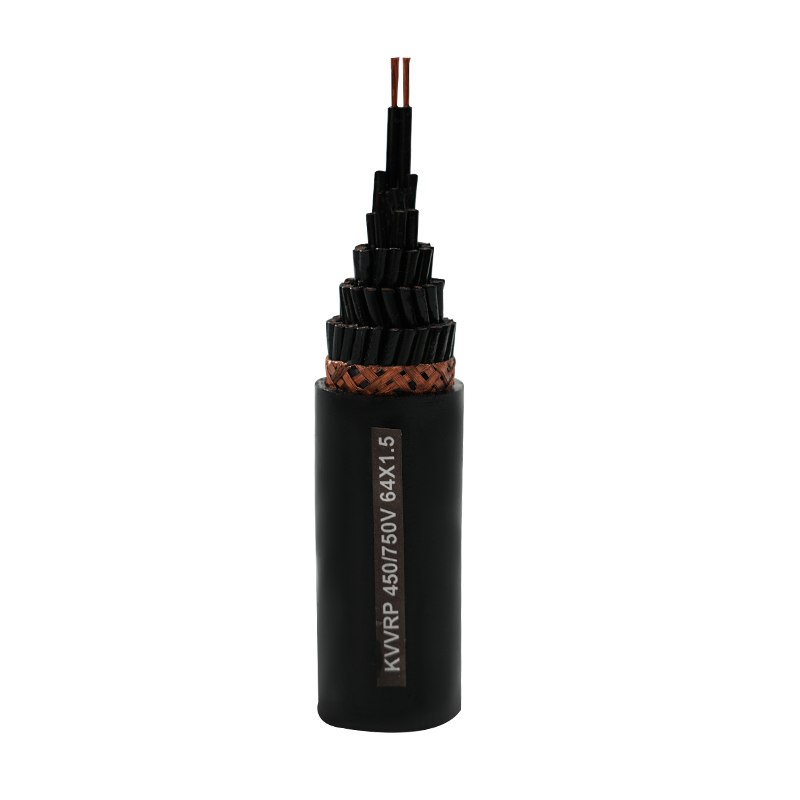
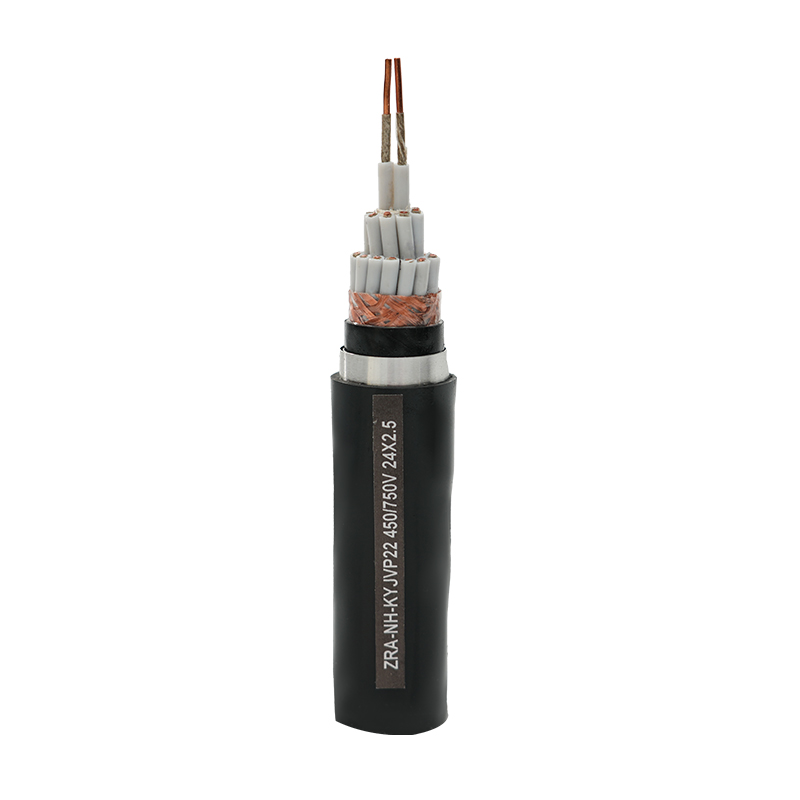
- Control and instrumentation cables: Carry low-level signals (4–20 mA, 0–10 V) between sensors, controllers, and actuators in industrial automation systems. Typically multi-conductor with overall or individual pair shielding.
- Coaxial cables: A central conductor surrounded by a dielectric and a braided or foil shield, used for RF signal transmission in broadcast, telecommunications, and antenna applications.
- Fiber optic cables: Carry data as light pulses through glass or plastic optical fibers rather than electrical current. Used where high bandwidth, long distance, or immunity to electromagnetic interference is required.
- Specialty cables: Include fire-resistant, halogen-free, armored, submersible, high-temperature, and mineral-insulated constructions for specific regulatory or environmental requirements.
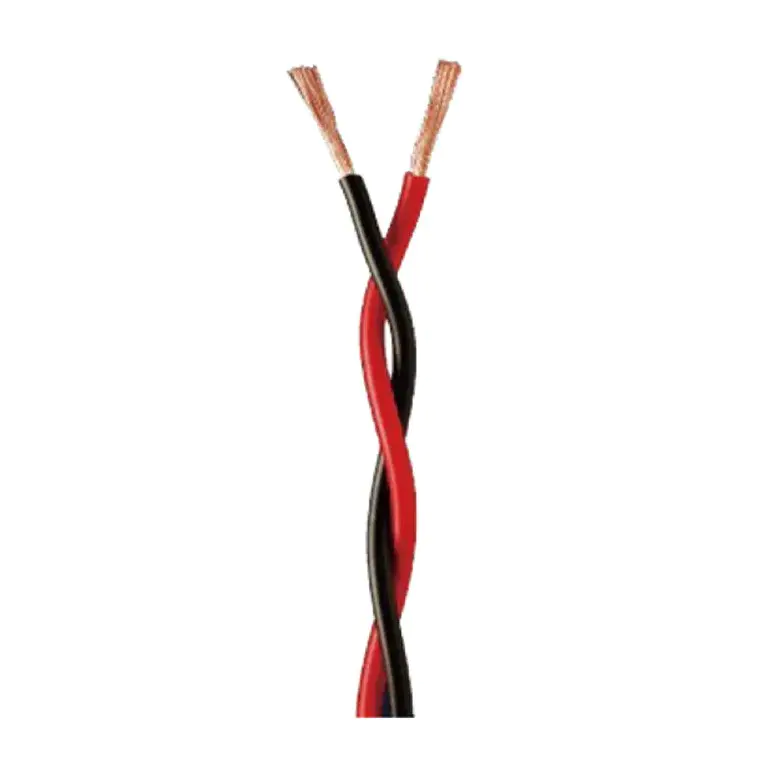
Types of House Wire: Residential Electrical Wiring Explained
Residential electrical wiring uses several standardized cable types, each assigned to specific circuit types and installation locations by national wiring codes. In North American construction, the NEC (National Electrical Code) governs wiring practices; IEC standards and national equivalents (BS 7671 in the UK, AS/NZS 3000 in Australia) apply elsewhere. Knowing which wire type is correct for a given circuit prevents code violations, fire risk, and costly rework.
NM-B Cable (Non-Metallic Sheathed Cable / Romex)
NM-B is the most common house wiring cable in North American residential construction. It consists of two or three individually insulated copper conductors plus a bare copper ground wire, all enclosed in a thermoplastic outer jacket. NM-B is rated for dry interior locations only — it is not suitable for wet areas, underground runs, or exposed exterior installations. Standard circuit sizes use 14 AWG wire for 15-amp circuits and 12 AWG for 20-amp circuits. The "B" designation indicates 90°C conductor temperature rating.
UF-B Cable (Underground Feeder Cable)
UF-B cable is constructed similarly to NM-B but with conductors encased directly in a solid PVC compound rather than individually jacketed inside a loose outer sheath. This solid construction provides moisture and sunlight resistance, making UF-B suitable for direct burial in the ground without conduit for outdoor lighting, outbuildings, and landscape circuits. It can also be installed in wet or damp locations above ground where NM-B is prohibited.
THHN/THWN Wire
THHN (Thermoplastic High Heat-resistant Nylon-jacketed) and THWN (Thermoplastic Heat and Water-resistant Nylon-jacketed) are single-conductor wires designed to be pulled through conduit rather than used as self-contained cables. They are the standard choice for conduit wiring in garages, basements, and any installation where conductors run inside EMT, rigid conduit, or PVC conduit. THHN/THWN conductors are available in a range of color-coded insulation colors to identify circuit function. The dual THHN/THWN-2 rating is most common today, covering both dry (90°C) and wet (75°C) conduit installations.
Armored Cable (AC) and Metal-Clad Cable (MC)
AC cable (commonly called BX) and MC cable both use a flexible metallic armor — either interlocked steel or aluminum strips — as the outer sheath rather than plastic. The armor provides mechanical protection against physical damage and, in MC cable, serves as a ground path when combined with an internal ground wire. Both types are used in commercial construction and in residential applications where code requires additional protection — such as exposed runs in unfinished basements or garages.
Service Entrance Cable (SE and USE)
SE (Service Entrance) cable carries power from the utility meter to the main distribution panel. It uses large-gauge aluminum or copper conductors — typically 2 AWG to 4/0 AWG — with a moisture-resistant outer jacket. USE (Underground Service Entrance) is the direct-burial variant for underground service feeds from pad-mounted transformers or underground utility connections.
| Cable Type | Typical Application | Wet Locations | Direct Burial |
|---|---|---|---|
| NM-B | Interior branch circuits | No | No |
| UF-B | Outdoor / underground circuits | Yes | Yes |
| THHN/THWN | Conduit wiring | Yes (THWN) | In conduit only |
| MC / AC | Exposed runs, commercial | MC only (listed type) | No |
| SE / USE | Service entrance, panels | SE: No / USE: Yes | USE only |
PVC Insulated Electrical Wire: Construction and Properties
Polyvinyl chloride (PVC) is the most widely used insulation and jacketing material in electrical wire and cable globally. Its combination of electrical insulation performance, mechanical toughness, chemical resistance, flame retardancy, and low raw material cost makes it the default choice across residential, commercial, and industrial wiring applications.
Why PVC Is Used for Wire Insulation
PVC compound for wire insulation is formulated with plasticizers, stabilizers, and flame retardant additives to achieve the required electrical and mechanical properties. Key performance characteristics include:
- Dielectric strength: Standard PVC insulation withstands electric field strengths of 10–20 kV/mm, more than adequate for the 600 V rating of most building wire.
- Temperature rating: Standard PVC is rated for 70°C continuous conductor temperature (PVC/A grade). Higher-performance formulations reach 90°C (used in THHN and NM-B conductors). Above 105°C, cross-linked polyethylene (XLPE) or silicone rubber is preferred over PVC.
- Flame retardancy: The chlorine content in PVC naturally suppresses flame propagation. Most standard PVC wire compounds self-extinguish when the ignition source is removed, meeting IEC 60332 or UL flame test requirements.
- Oil and chemical resistance: PVC resists a broad range of oils, acids, and alkalis, making PVC-insulated wire suitable for industrial environments where incidental chemical contact is expected.
- Moisture resistance: PVC has low water absorption, maintaining its insulating properties in damp and wet locations when properly formulated.
Limitations of PVC Insulation
PVC insulation has two significant limitations in safety-critical applications. First, when it burns, PVC releases hydrogen chloride gas and dense black smoke, which are highly toxic and corrosive to electronics in enclosed spaces. This has driven adoption of LSZH (Low Smoke Zero Halogen) compounds in tunnels, airports, data centers, and public buildings where smoke toxicity in a fire evacuation scenario is a primary concern. Second, PVC becomes brittle at temperatures below −15°C to −30°C depending on the plasticizer formulation, limiting its use in outdoor installations in very cold climates without additional protection.
Common PVC-Insulated Wire Types
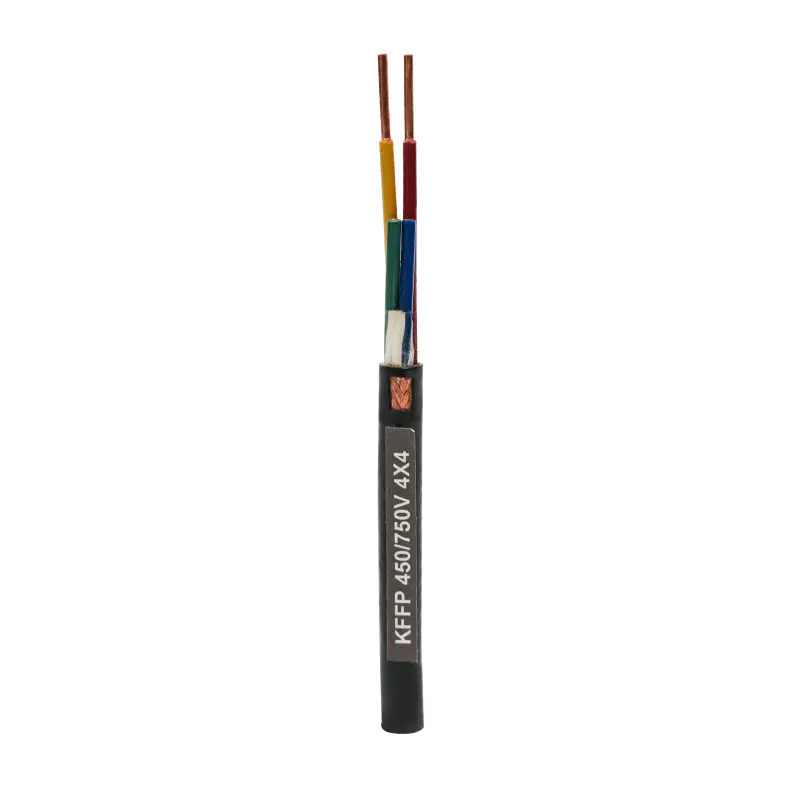
- H07V-U / H07V-R / H07V-K (IEC): Single-core PVC-insulated building wire in solid (U), stranded (R), and flexible stranded (K) conductor variants. Rated 450/750 V. The pan-European standard equivalent to North American THHN.
- NYM / NYY (German/European): PVC-insulated, PVC-sheathed multi-core cables for fixed installation. NYY is the heavier outer-sheathed version approved for direct burial.
- BV / RV (Chinese standard): Single-core PVC-insulated wire widely used in Asian residential and commercial construction. BV uses solid conductors; RV uses flexible stranded conductors for panel wiring and equipment connections.
Ethernet Cable vs. Telephone Cable: Key Differences
Ethernet cables and telephone cables are both twisted pair constructions, and they look nearly identical from the outside — both use small-diameter copper conductors, PVC or LSZH insulation, and similar overall jacket diameters. The differences lie in conductor count, twist rate, connector type, electrical specifications, and the frequency range each is engineered to support.
Telephone Cable (POTS / Structured Wiring)
Traditional telephone cable (also called station wire or twisted pair telephone cable) carries analog voice signals at very low frequencies — the standard POTS (Plain Old Telephone Service) voice band occupies 300 Hz to 3.4 kHz. A typical two-line telephone installation uses a 4-conductor cable (two twisted pairs) with conductors in the 22–26 AWG range, terminated with RJ11 or RJ14 connectors. The twist rate is loose compared to data-grade cable because low-frequency analog signals do not require tight twist rates to maintain signal integrity.
DSL (Digital Subscriber Line) telephone cable is a higher-specification variant of the same basic construction — still terminated with RJ11 connectors and using the existing telephone pair — but engineered to support frequencies up to 17 MHz (VDSL2) or higher on the same copper pair used for voice. The cable quality requirements for high-speed DSL overlap significantly with lower categories of data cable.
Ethernet Cable (Structured Cabling)
Ethernet cable is an 8-conductor (4 twisted pair) cable engineered to transmit data at high frequencies with tightly controlled electrical parameters. The key specifications are bandwidth (MHz), attenuation, crosstalk (NEXT, FEXT), and impedance — all of which must meet defined limits across the cable's rated frequency range. Category rating determines the supported data rate and maximum frequency:
- Cat5e: 100 MHz bandwidth, supports Gigabit Ethernet (1000BASE-T) up to 100 m. The minimum acceptable category for new installations.
- Cat6: 250 MHz bandwidth, supports 10 Gigabit Ethernet up to 55 m. Uses tighter twist rates and often a central spline separator to reduce crosstalk between pairs.
- Cat6A: 500 MHz bandwidth, supports 10 Gigabit Ethernet up to the full 100 m channel length. Requires a larger diameter cable and more stringent installation practices to achieve alien crosstalk performance.
- Cat8: 2,000 MHz bandwidth, supports 25/40 Gigabit Ethernet up to 30 m. Used in data center top-of-rack switch connections rather than general horizontal cabling.
Ethernet cables terminate with RJ45 connectors — physically wider than RJ11 telephone connectors and carrying 8 contacts rather than the 4 or 6 of telephone connectors. An RJ45 plug will not fit into an RJ11 socket, though an RJ11 plug can be inserted into an RJ45 socket — a common source of confusion when repurposing existing structured wiring.
Can Telephone Cable Be Used for Ethernet?
Standard telephone cable cannot support modern Ethernet. It has only 2 pairs (4 conductors) versus the 4 pairs (8 conductors) required for Gigabit Ethernet, and its electrical characteristics — attenuation, crosstalk, and impedance — are not controlled to data-grade specifications. Legacy 10BASE-T Ethernet (10 Mbps) technically uses only 2 pairs and could run on telephone cable over short distances, but no current network standard operates at speeds practical enough to justify repurposing telephone wiring instead of installing proper structured cabling.
| Property | Telephone Cable | Ethernet Cable (Cat5e/6) |
|---|---|---|
| Conductor count | 4 (2 pairs) | 8 (4 pairs) |
| Connector | RJ11 / RJ14 | RJ45 |
| Frequency range | Up to ~17 MHz (DSL) | 100–2,000 MHz (Cat5e–Cat8) |
| Max data rate (practical) | Up to ~100 Mbps (VDSL2) | 1–40 Gbps |
| Twist rate specification | Loose / unspecified | Tightly controlled per pair |
| Crosstalk specification | Not specified | NEXT / FEXT per TIA-568 / ISO 11801 |
Choosing the Right Cable for the Application
The single most common wiring mistake in residential and light commercial projects is specifying cable by appearance or approximate similarity rather than by the actual electrical and installation requirements of the circuit. A cable that looks correct on the shelf may be under-rated for voltage, unsuitable for the installation environment, or incompatible with the termination hardware — all of which create safety and compliance issues that are expensive to correct after installation.
For power wiring, the minimum specification requirements are voltage rating, current-carrying capacity (ampacity) at the installation's ambient temperature, suitability for wet or dry location, and whether the installation method is conduit, direct burial, or free air. NM-B covers the majority of North American residential interior circuits; THHN in conduit covers garage, basement, and commercial applications; UF-B handles direct-buried outdoor runs.
For data cabling, Cat6 is the practical baseline for any new structured cabling installation — the marginal cost over Cat5e is minimal, and the headroom for future network upgrades is significant. Cat6A is warranted in installations where 10 Gigabit connectivity at full 100-meter channel length is a current or near-term requirement, such as in commercial buildings, data-intensive workplaces, and server room patch cabling.
For PVC vs. LSZH insulation selection, the determining factor is the installation location and applicable building code. LSZH is mandatory in many jurisdictions for cables installed in air handling spaces (plenum), enclosed public spaces, transportation infrastructure, and anywhere smoke toxicity in a fire event poses an elevated risk. Standard PVC remains acceptable and cost-effective for the majority of general industrial and residential wiring not subject to these requirements.
 Email:
 Telephone:+86-0514-85086085
 FAX:+86-0514-85086085
 Phone:+86-15861389306