 Email:
  Telephone: +86-0514-85086085
 FAX: +86-0514-85086085
 English
 中文简体
中文简体 русский
 عربى
عربى
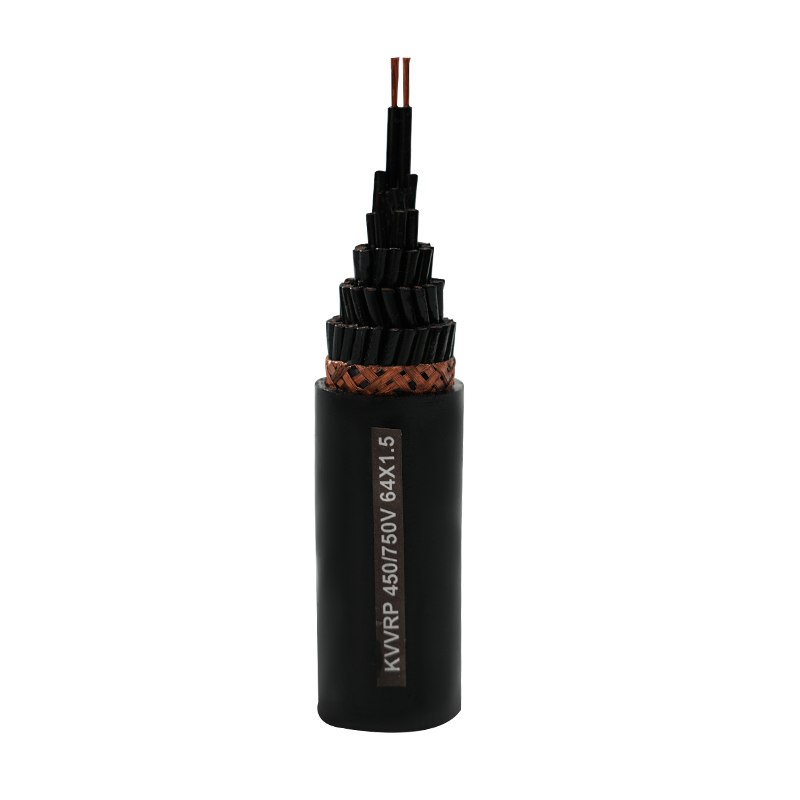
In the complex landscape of industrial automation, the Multi-core Flexible Control Cable serves as the vital nervous system for machinery, conveying precise signals and power to various components. As engineers design increasingly compact and dynamic systems, the demand for cables that can withstand repetitive flexing without signal degradation has peaked. Understanding the structural nuances of a multi-core flexible control cable is essential for ensuring system uptime and preventing premature fatigue failure in high-cycle environments.
Content
- 1 1. Core Construction and Material Science
- 2 2. Shielding and EMI Protection: CY vs. YY Configurations
- 3 3. Critical Bending Radius and Dynamic Fatigue
- 4 4. Voltage Ratings and Temperature Thresholds
- 5 5. Color Coding and Core Identification
- 6 Frequently Asked Questions (FAQ)
- 6.1 1. What is the difference between a multi-core flexible control cable and a standard power cable?
- 6.2 2. Can I use a PVC vs PUR jacket control cable for outdoor applications?
- 6.3 3. How to calculate bending radius for flexible cables in a drag chain?
- 6.4 4. When should I specify a shielded flexible control cable?
- 6.5 5. Is there a silicone flexible control cable for high heat available in multi-core versions?
- 7 Industry References
1. Core Construction and Material Science
The performance of a multi-core flexible control cable begins with its conductor strand count. Unlike static power cables, flexible control cables utilize high-purity, fine-stranded oxygen-free copper to enhance pliability. The insulation material must balance dielectric strength with physical flexibility. While PVC is the standard for general-purpose applications, polyurethane (PUR) is preferred for environments requiring superior abrasion and chemical resistance. When analyzing PVC vs PUR jacket control cable performance, engineers must consider the chemical exposure of the installation site, as PUR offers significantly better resilience against mineral oils and cooling lubricants.
Comparison: Jacket Material Characteristics
While PVC provides a cost-effective solution for fixed or occasional flexing, PUR is engineered for continuous motion and harsh industrial fluids.
| Property | PVC (Polyvinyl Chloride) | PUR (Polyurethane) |
| Flexibility Type | Fixed to Occasional Flexing | Continuous/Dynamic Flexing |
| Abrasion Resistance | Moderate | Excellent (Tear-resistant) |
| Oil Resistance | Limited (Standard Grade) | Superior (Industrial Grade) |
2. Shielding and EMI Protection: CY vs. YY Configurations
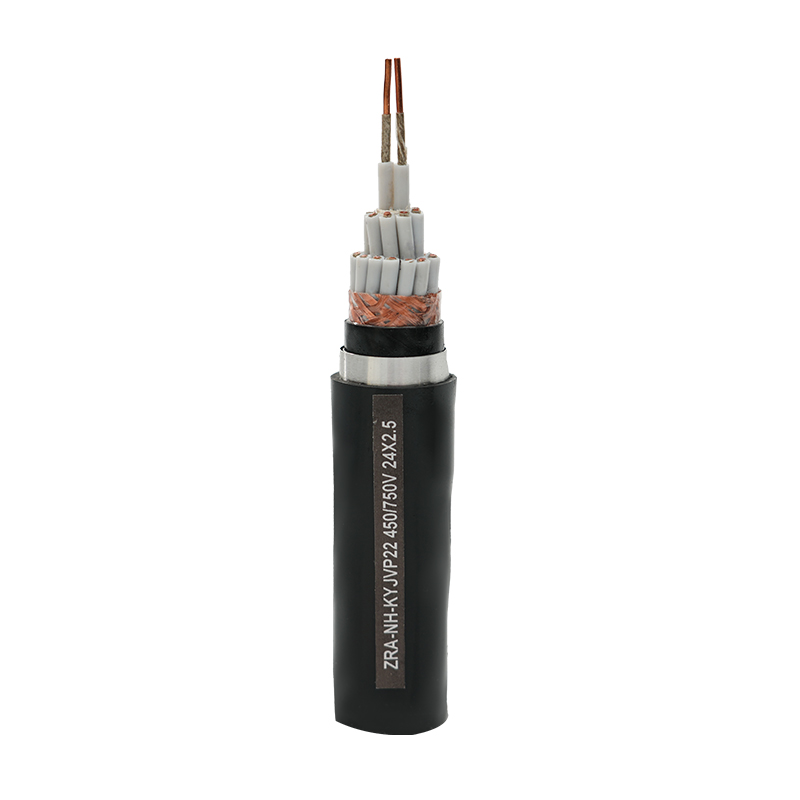
Electromagnetic Interference (EMI) is a persistent challenge in dense industrial panels. To mitigate this, engineers often specify shielded flexible control cables. The distinction between CY vs YY control cable is fundamental: YY cables are unshielded and suitable for environments with minimal interference, whereas CY cables feature a tinned copper wire braid (TCWB) and an internal sheath to protect signal integrity. For applications involving high-frequency noise from VFDs (Variable Frequency Drives), a shielded flexible control cable is mandatory to prevent cross-talk between adjacent cores.
Comparison: Shielded vs. Unshielded Performance
Unshielded cables offer a smaller outer diameter and tighter bending radius, while shielded variants provide the necessary electromagnetic compatibility for precision controls.
| Feature | YY Control Cable (Unshielded) | CY Control Cable (Shielded) |
| EMI Protection | None | High (Braided Shield) |
| Outer Diameter | Compact | Larger (Due to shielding layers) |
| Installation Area | Non-interfering zones | Near power lines/motors |
3. Critical Bending Radius and Dynamic Fatigue
One of the most frequent causes of failure in a multi-core flexible control cable is the violation of the minimum bending radius. For a high-flex control cable for drag chains, the bending radius is typically expressed as a multiple of the outer diameter (e.g., 7.5x OD or 10x OD). If the radius is too tight, the outer jacket will stress-crack, and internal conductors may undergo ""corkscrewing."" Understanding how to calculate bending radius for flexible cables is a prerequisite for any drag chain or robotic arm design to ensure a service life exceeding millions of flex cycles.
4. Voltage Ratings and Temperature Thresholds
The voltage rating of multi-core control cable is generally categorized as 300/500V or 450/750V. Using a cable below its rated voltage can lead to insulation breakdown. Furthermore, the temperature range for flexible control cables must be strictly monitored. Standard cables operate between -5°C to +70°C in flexible installations, but silicone flexible control cable for high heat environments can withstand temperatures up to +180°C. Conversely, for cold storage or outdoor arctic applications, specialized cold-resistant jackets are required to prevent the cable from becoming brittle.
Comparison: Temperature and Voltage Classifications
Operating temperature and voltage ratings must be matched to the specific environmental stress of the machine's operation cycle.
| Cable Type | Max Voltage | Temperature Range (Flexible) |
| Standard PVC Control | 300/500V | -5°C to +70°C |
| PUR Dynamic Control | 450/750V | -30°C to +80°C |
| Silicone High-Temp | 300/500V | -60°C to +180°C |
5. Color Coding and Core Identification
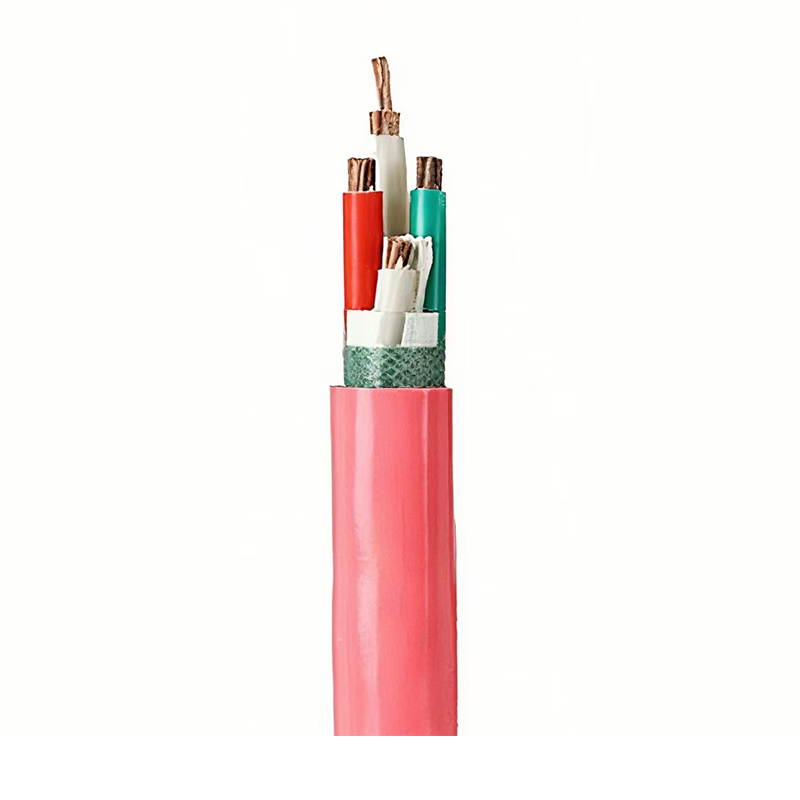
Efficient maintenance and troubleshooting rely on standardized core identification. Most multi-core flexible control cable products follow the VDE 0293 color code or utilize black cores with white numbering and a green/yellow earth core. Proper color coding for multi-core control cables ensures that technicians can quickly map signal paths in complex multi-axis CNC machines or automated assembly lines.
Frequently Asked Questions (FAQ)
1. What is the difference between a multi-core flexible control cable and a standard power cable?
Control cables are designed for signal transmission and low-power control circuits, featuring higher flexibility and often shielding. Power cables are built for high current loads and generally have thicker, less flexible conductors.
2. Can I use a PVC vs PUR jacket control cable for outdoor applications?
PUR is generally superior for outdoor use due to its better UV resistance and flexibility in low temperatures. Standard PVC may crack when exposed to prolonged sunlight and sub-zero temperatures.
3. How to calculate bending radius for flexible cables in a drag chain?
The formula is typically: Bending Radius = Cable Outer Diameter (OD) x Multiplier (specified by the manufacturer). For most dynamic applications, a multiplier of 10x to 12.5x is recommended for longevity.
4. When should I specify a shielded flexible control cable?
You should use a shielded cable whenever the control signal is likely to be affected by nearby electromagnetic noise, such as near electric motors, transformers, or high-voltage power lines.
5. Is there a silicone flexible control cable for high heat available in multi-core versions?
Yes, multi-core silicone cables are specifically engineered for applications in steel mills, glass factories, and aviation where ambient temperatures exceed the limits of PVC and PUR.
Industry References
- VDE 0295: Conductors of cables, wires and flexible cords.
- IEC 60227: Polyvinyl chloride insulated cables of rated voltages up to and including 450/750 V.
- DIN EN 50525: Railway applications - Railway rolling stock power and control cables.
- NFPA 79: Electrical Standard for Industrial Machinery.
 Email:
 Telephone:+86-0514-85086085
 FAX:+86-0514-85086085
 Phone:+86-15861389306