 Email:
  Telephone: +86-0514-85086085
 FAX: +86-0514-85086085
 English
 中文简体
中文简体 русский
 عربى
عربى
Content
TUV Certified Solar Cable
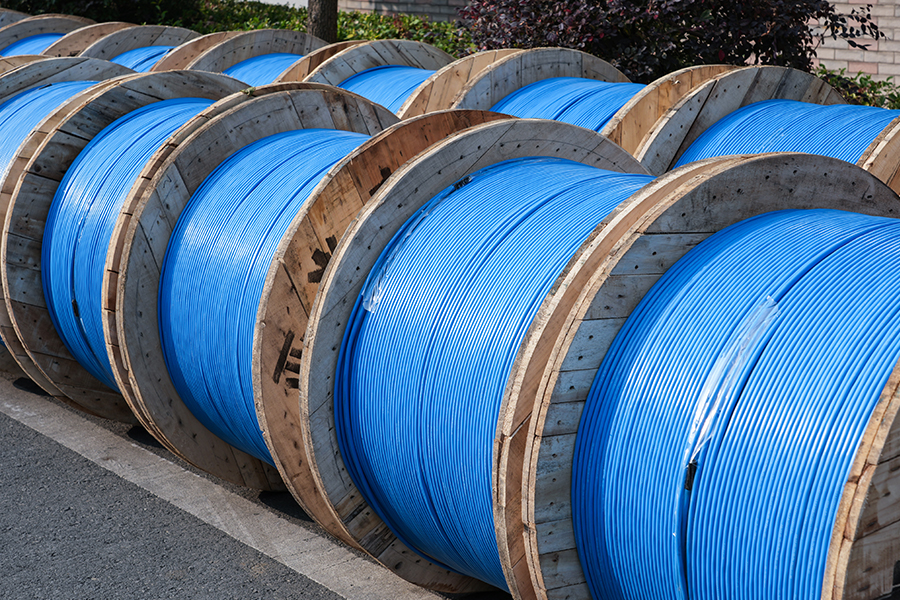
TUV certified solar cable is DC wiring specifically engineered and tested to connect solar panels, combiner boxes, and inverters, built to withstand decades of outdoor exposure to UV radiation, temperature extremes, moisture, and mechanical stress that standard building wire isn't designed to handle. TUV certification — issued by the German testing body TÜV Rheinland or TÜV SÜD — verifies that a cable meets specific construction, insulation, and performance requirements before it can be marketed as solar-grade in most international markets. Because a solar array's DC wiring sits exposed on a rooftop or ground mount for 25+ years, using uncertified cable is one of the most common causes of premature insulation failure and fire risk in field-installed systems.
TUV solar cable is typically constructed with fine-stranded tinned copper conductors for corrosion resistance, cross-linked polyolefin (XLPO) or ethylene propylene rubber (EPR) insulation for flexibility and heat resistance, and a double-insulated, halogen-free jacket that resists cracking under continuous sun exposure.
Solar Cable Certification Standards
Two standards dominate solar cable certification internationally, and while they overlap significantly, they aren't identical — buyers sourcing for different export markets should confirm which certificate a supplier actually holds rather than assuming the two are interchangeable.
TÜV 2PfG 1169
TÜV 2Pfg 1169 is the original and still widely referenced solar cable test specification, covering electrical, mechanical, and environmental performance requirements including UV resistance, ozone resistance, and long-term thermal aging. It remains a common certification requirement in many export markets outside the EU, particularly across Asia, the Middle East, and Latin America.
EN 50618
EN 50618 is the harmonized European standard for solar cable that has largely superseded 2PfG 1169 for installations within the EU, incorporating updated fire safety, flame retardancy, and mechanical performance requirements. Cable certified to EN 50618 is generally required for solar projects selling into European markets, and many manufacturers now certify to both standards simultaneously to cover a broader range of export destinations without maintaining two separate product lines.
Solar Cable Specifications
Beyond certification, several construction details separate solar-grade cable from general-purpose wire on a spec sheet:
- Conductor — fine-stranded, tinned copper for flexibility during installation and corrosion resistance in outdoor conditions
- Insulation and jacket — double-layer, halogen-free XLPO or EPR construction that resists UV degradation, ozone cracking, and abrasion over decades of outdoor exposure
- Flame rating — most certified solar cable meets low-smoke, zero-halogen (LSZH) flame retardancy standards, limiting toxic smoke output in the event of a fire
- UV and weather resistance — rated for direct, continuous outdoor sun exposure without the insulation embrittling or cracking within the panel's warranty period
Solar Cable Voltage Rating
Certified solar cable is typically rated for 1.5kV DC (some products up to 1.8kV DC), which comfortably covers the DC string voltages found in modern utility-scale and commercial solar arrays, where inverter input voltages have climbed well above the 1kV DC threshold common in older residential systems. Matching cable voltage rating to system design voltage matters most in long-string commercial and utility installations, where cumulative panel voltage across a series string can approach the cable's rated limit — undersizing here risks insulation breakdown over the system's operating life, not just at initial commissioning.
Solar Cable Temperature Rating
Solar cable is typically rated for a continuous operating temperature range of roughly -40°C to +90°C, sometimes higher, since panel-mounted cable can sit in direct sun on a hot rooftop where surface temperatures regularly exceed ambient air temperature by 20–30°C. This wide range needs to cover both extremes: cold-climate flexibility so the jacket doesn't crack in sub-zero winter installation or operation, and sustained high-temperature performance so the insulation doesn't degrade prematurely under years of rooftop heat buildup. Cable rated only for standard building-wire temperature ranges (often 60–75°C) is not a safe substitute in these conditions, even if the ampacity looks adequate on paper.
Solar Cable Size Chart
Solar cable is sized in mm² cross-sectional area rather than AWG in most international markets, with 4mm² and 6mm² being the most common sizes for residential and small commercial string wiring.
| Cross-Section | Approx. Current Rating | Typical Use |
|---|---|---|
| 2.5mm² | ~30A | Short residential string runs |
| 4mm² | ~40A | Standard residential panel wiring |
| 6mm² | ~55A | Longer residential runs, small commercial arrays |
| 10mm² | ~75A | Combiner box to inverter runs, commercial arrays |
Sizing shouldn't stop at ampacity alone: longer cable runs also need a voltage drop check, since even a cable with adequate current rating can lose enough voltage over a long run to measurably reduce system energy output — a common reason installers size up from 4mm² to 6mm² on longer string or combiner-to-inverter runs even when the shorter cable's ampacity would technically suffice.
 Email:
 Telephone:+86-0514-85086085
 FAX:+86-0514-85086085
 Phone:+86-15861389306