 Email:
 Telephone: +86-0514-85086085
 FAX: +86-0514-85086085

 English
 中文简体
 русский
 عربى

Inside a turbine engine nacelle, a fire-warning loop runs centimeters from case surfaces that reach beyond 200 C. When that loop loses continuity, the crew loses engine status information at exactly the moment they need it most. High temperature aircraft cable reliability is not a marketing phrase; it is a calculation of material limits, construction quality, and test discipline.
Yangzhou Yaguang Cable Co., Ltd. has manufactured specialty power, control, instrumentation, and high temperature cable for more than 25 years from a 56,000-square-meter facility in Jiangsu, China. Its irradiation-crosslinked ETFE high temperature cable and fluoroplastic-insulated control cable apply the same material logic that governs flight-critical wiring: choose the right polymer chemistry, protect the conductor, and prove performance with data. Every reliability factor discussed here is something an engineer should verify before a wire is approved for an extreme aerospace environment.
High temperature aircraft cable reliability is the probability that a wire maintains electrical continuity and insulation integrity throughout its certified thermal, mechanical, and chemical exposure profile.
Content
- 1 Why Rated Temperature Alone Does Not Define High Temperature Aircraft Cable Reliability
- 2 Three Construction Layers That Set High Temperature Aircraft Cable Reliability
- 3 Crosslinked ETFE: The Workhorse Behind Modern High Temperature Aircraft Cable Reliability
- 4 Certification and Test Methods That Prove High Temperature Aircraft Cable Reliability
- 5 Six Specification Mistakes That Shorten High Temperature Aircraft Cable Life
- 6 How to Qualify a Supplier for High Temperature Aircraft Cable
- 7 Frequently Asked Questions About Aircraft Cable Reliability
Why Rated Temperature Alone Does Not Define High Temperature Aircraft Cable Reliability
A datasheet temperature rating is an entrance qualification, not a lifetime guarantee. Rated temperature describes continuous service in free air; real harnesses bundle wires, trap heat, and expose insulation to vibration and fluid.
Three thermal realities drive failures. First, hotspots concentrate heat where wires pass near bleed-air ducts or turbine cases, so a 150 C rated cable may locally see 165 C. Second, overload transients push the conductor well above the steady-state value; a short-circuit event can raise conductor temperature toward 250 C, and the insulation must survive that excursion without melting or creating a carbonized fault path. Third, polymer aging is cumulative. For most insulation families, service life roughly halves for every 10 C sustained rise above the design temperature.
This is why aerospace specifications distinguish continuous rating, overload rating, and short-circuit rating. Verifying all three numbers against the actual harness environment is the first step in defining high temperature aircraft cable reliability.
Three Construction Layers That Set High Temperature Aircraft Cable Reliability
Conductor, insulation, and jacket each set a distinct limit, and the weakest layer decides the cable's real rating. Design starts with the conductor, then matches the polymer system to the thermal class, then protects the whole structure against mechanical and chemical attack.
Conductor plating sets the oxidation ceiling
High-purity copper is the standard conductor, but bare copper oxidizes rapidly in hot air, and oxide layers raise contact resistance and temperature. Plating extends the ceiling: tin-plated copper operates to about 150 C, silver-plated copper to about 200 C, and nickel-plated copper to about 260 C continuous. In engine zones above 200 C, nickel plating is the norm.
Insulation must survive both heat and aging
The polymer family determines continuous temperature capability and signal behavior. Crosslinked ETFE carries about 150 C continuous; FEP, PTFE, and PEEK constructions reach 200 to 260 C. Crosslinking is what separates a stable wire from one that melts, drips, or cracks under thermal cycling.
Jacket design decides survival in the real harness
The jacket absorbs abrasion, cut-through, fuel, and hydraulic fluid exposure. A heat-stable insulation with a jacket that softens in phosphate ester hydraulic fluid will fail. Crosslinked ETFE jacketing balances flame resistance, fluid resistance, and flexibility, which is why it appears on both the insulation and the outer jacket layers of high temperature aircraft cable.
Crosslinked ETFE: The Workhorse Behind Modern High Temperature Aircraft Cable Reliability
Irradiation crosslinking transforms ETFE from a melt-prone thermoplastic into a heat-stable network polymer that keeps its shape at 150 C and beyond. Electron-beam processing creates carbon-to-carbon crosslinks between polymer chains; the material no longer melts when overheated, resists cut-through better, and maintains mechanical strength through repeated thermal cycling.
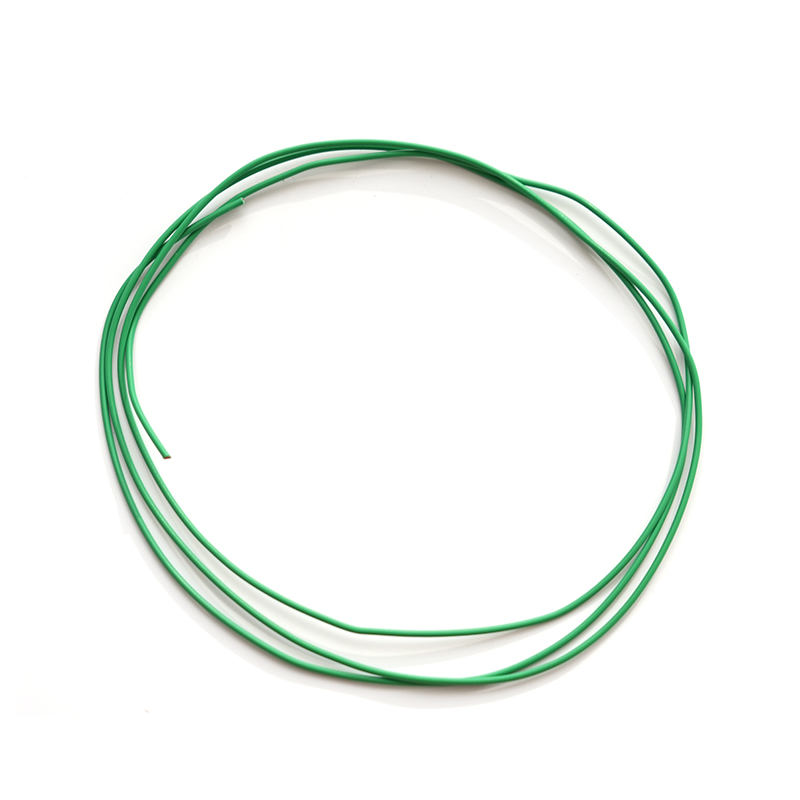 Irradiation Cross-linked ETFE Aerospace Cable with High Temperature ResistanceThis C55 series cable uses irradiated cross-linked ETFE for insulation and jacket, offering reliable performance from -65°C to 200°C. Its low smoke and firm construction suit fire-prone engine compartments, making it a strong choice for demanding aerospace wiring.View Product →
This behavior is why the highest-reliability cables pair crosslinked ETFE insulation with a crosslinked ETFE jacket. The construction stays firm in a fire, produces low smoke, and protects the conductor while engine compartments flex and vibrate.
Thermoplastic ETFE behavior
- Softens near its crystalline melt point
- Creeps under sustained mechanical pressure
- Loses strength faster in hot zones
Crosslinked ETFE behavior
- Maintains shape beyond the melt point
- Resists cold flow and cut-through
- Retains mechanical integrity in service
Certification and Test Methods That Prove High Temperature Aircraft Cable Reliability
An aerospace-grade cable earns its reliability rating in the test lab, not on the datasheet. Assembly specification AS22759, the commercial successor to military specification MIL-W-22759, defines conductor, insulation, and performance requirements for high temperature aircraft cable.
Procurement should request the exact test reports behind each claimed rating. The table below lists the tests that matter most in extreme aerospace environments.
| Test | What it verifies | Typical expectation |
| Vertical flame propagation | Self-extinguishing behavior after burner removal | Flame travel within spec limit |
| Thermal cycling | Insulation integrity under repeated temperature swings | No cracking or dielectric loss |
| Wet arc tracking | Resistance to current tracking under moisture | No sustained arc |
| Fluid immersion | Resistance to jet fuel and hydraulic fluids | Tensile retention and mark legibility |
Specifications alone do not make a cable reliable; consistent manufacturing does. A qualified supplier documents material certificates, dimensional inspection, and lot traceability from raw material to finished spool. When you need a full decision framework, review our high temperature aircraft cable selection guide.
Six Specification Mistakes That Shorten High Temperature Aircraft Cable Life
Most in-service failures trace back to specification errors, not manufacturing defects. Auditing the cable choice against the real environment prevents the most common problems.
- Exceeding the plating limit. Tin-plated conductors above 150 C oxidize, raising resistance and creating hotspots.
- Confusing peak and continuous ratings. A 200 C short-term rating does not make a 150 C cable suitable for continuous 200 C duty.
- Ignoring fluid compatibility. Cable insulated for heat but not for phosphate ester hydraulic fluid will swell, crack, and short.
- Forcing a tight bend radius. Sharp bends fracture conductor strands and stress the insulation into premature cracking.
- Skipping traceability. Without lot records, a field failure cannot be traced back to material, process, or batch conditions.
- Substituting PVC in hot zones. PVC softens, deforms, and emits dense smoke well below engine compartment temperatures.
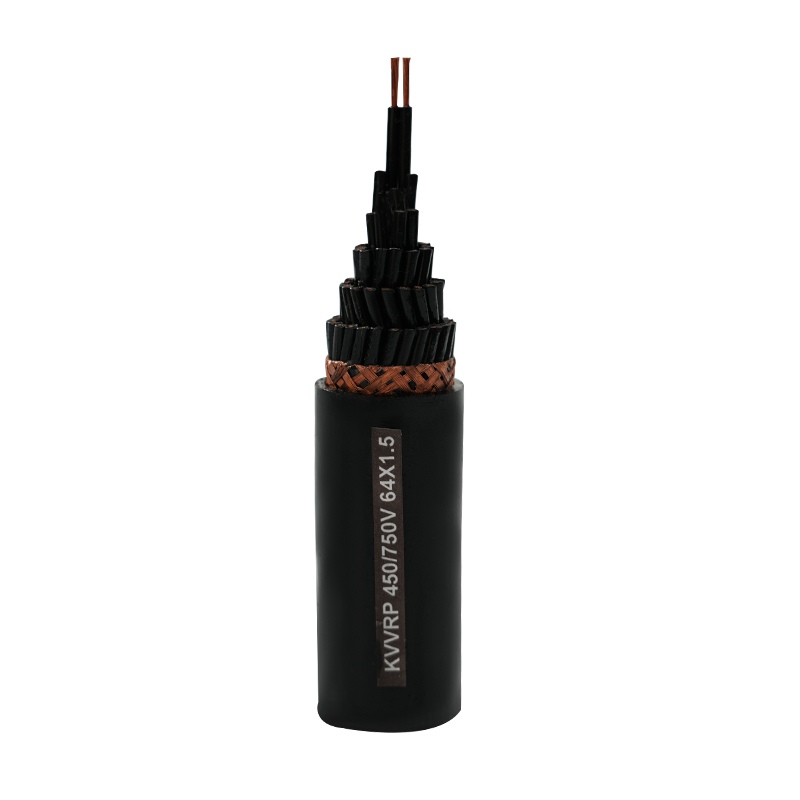
Control and signal wiring in the same compartments must obey the same thermal discipline. Fluoroplastic-insulated control cable uses the same high-temperature polymer logic, so a harness stays coherent when one zone feeds a motor and the neighboring wire carries a sensor signal.
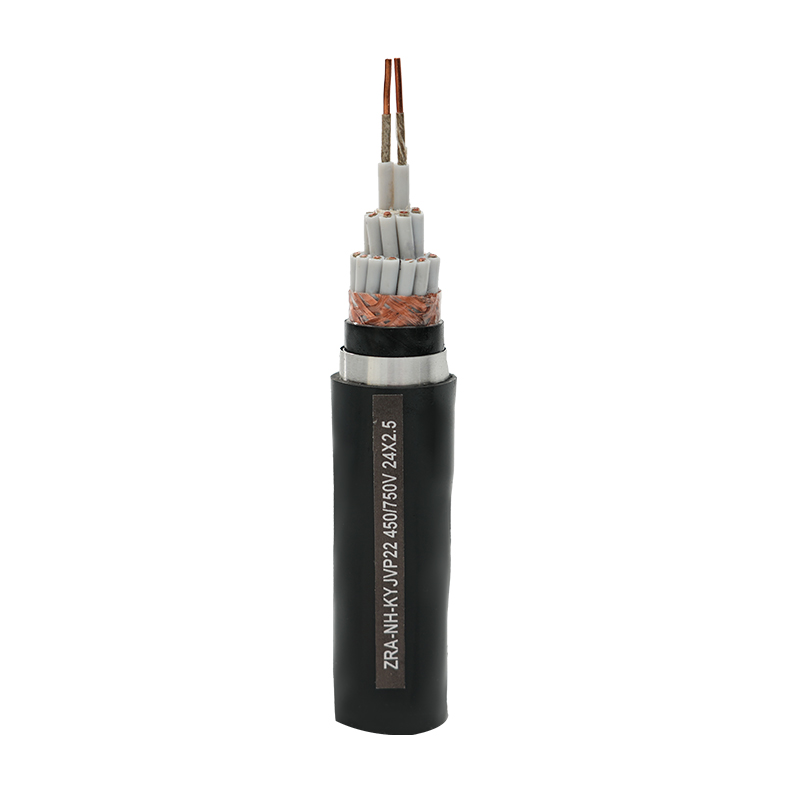
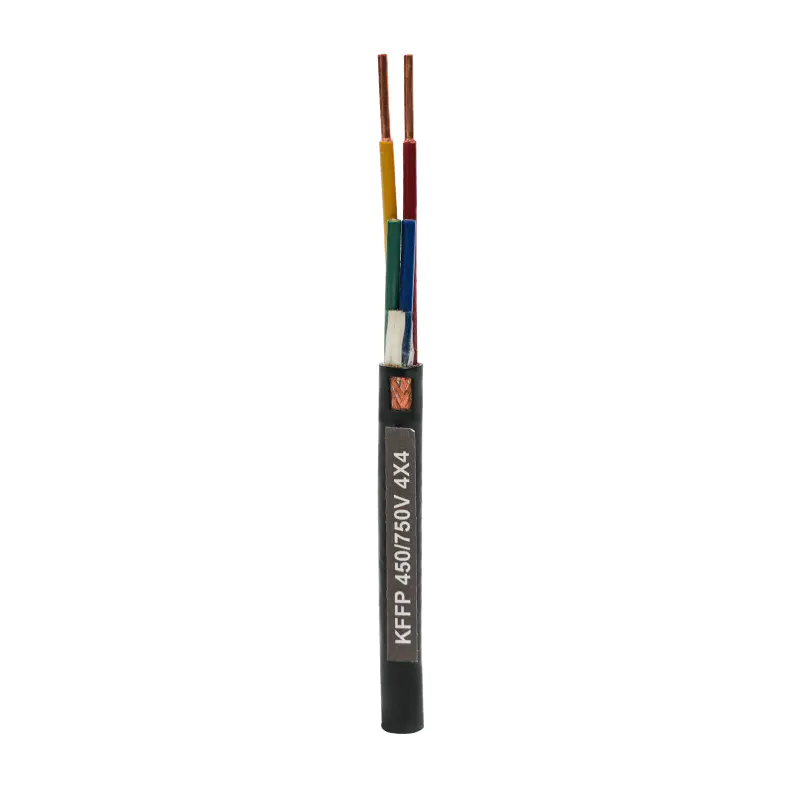 Fluoroplastic Insulated Control Cable for Harsh EnvironmentsDesigned for control and signal circuits up to 450/750V, this fluoroplastic-insulated cable withstands extreme temperatures, corrosion, and flame. It maintains electrical stability in tough conditions, ideal for aerospace, nuclear, and petrochemical systems where reliability is critical.View Product →
How to Qualify a Supplier for High Temperature Aircraft Cable
Qualify the supplier the same way you qualify the cable: demand documented material certificates, process control, and test traceability. A supplier that cannot produce batch-level documentation cannot support an airworthiness file.
Yangzhou Yaguang Cable Co., Ltd. operates 480 production and testing equipment sets, maintains ISO 9001 quality management, and manufactures to international standards including UL and TUV, with CCS, ABS, and BV certifications for marine and offshore product families. The same disciplined process covers high temperature cable, control cable, and instrumentation cable lines. For the full manufacturing scope, see the Yangzhou Yaguang Cable company profile before requesting a quote.
Frequently Asked Questions About Aircraft Cable Reliability
What continuous temperature rating should an aerospace cable have?
Select a cable whose continuous rating exceeds the worst-case sustained harness temperature with margin. Crosslinked ETFE handles 150 C continuous; PEEK, PTFE, and polyimide constructions reach 260 C continuous. Above 200 C, pair the polymer with nickel-plated conductors.
Why does conductor plating matter for high temperature aircraft cable reliability?
Plating prevents copper oxidation, which increases resistance and accelerates insulation aging. Tin plating is limited to about 150 C, silver to about 200 C, and nickel to 260 C. Nickel plating is the standard choice for engine fire zones.
Can a commercial PVC wire replace a high temperature aircraft cable?
No. PVC softens well below engine compartment temperatures, produces dense smoke in a fire, and has poor resistance to aviation fluids. Use wire built and tested to aerospace specifications such as AS22759.
What documentation should arrive with an aerospace-grade cable?
Material certificates, dimensional inspection records, and test reports for flame, thermal cycling, and dielectric performance. Full traceability from raw material lot to finished spool is required for airworthiness documentation.
 Email:
 Telephone:+86-0514-85086085
 FAX:+86-0514-85086085
 Phone:+86-15861389306
