 Email:
  Telephone: +86-0514-85086085
 FAX: +86-0514-85086085
 English
 中文简体
中文简体 русский
 عربى
عربى
On a recent platform supply vessel newbuild in Yangzhou, the purchase order specified ABS-certified marine cable for the main power circuit. The lowest bidder offered a BV certificate instead. The technical review took three days, and the change order required a class-surveyor waiver. The ABS vs. BV certified marine cables decision is not a paperwork debate; it is a compliance choice that affects the class survey, the flag-state acceptance, and the handover date.
Content
- 1 ABS vs. BV Certified Marine Cables: What the Two Marks Cover
- 2 ABS vs. BV Marine Cable Certification: Core Differences
- 3 Which Do You Need: ABS or BV Certified Marine Cables for Your Project
- 4 What to Verify Beyond the ABS or BV Mark
- 5 Frequently Asked Questions About ABS and BV Marine Cable Certification
ABS vs. BV Certified Marine Cables: What the Two Marks Cover
ABS and BV certified marine cables both prove that a cable design meets the rules of a specific classification society, but the two certificates are not general substitutes for each other.
ABS is the American Bureau of Shipping, a classification society founded in 1862 and headquartered in Houston. BV is Bureau Veritas, the French classification society founded in 1828 and headquartered in Paris. Both are full members of the International Association of Classification Societies (IACS), and both issue type-approval certificates for marine cables after reviewing construction drawings, testing samples, and auditing the manufacturing site.
A marine cable type approval is a documented verification that a cable construction satisfies the rules of one classification society. It covers the cable family, the rated voltage, the insulation and sheath system, and the fire-performance class.
A certificate is not a general quality score. A cable with ABS approval is accepted by the American Bureau of Shipping; a cable with BV approval is accepted by Bureau Veritas. Unless the two societies have an agreement that applies to your project, one certificate cannot be swapped for the other without an approved equivalency process.
What the approval process covers
- Design review: conductor, insulation, bedding, and sheath materials are checked against the society's rule requirements.
- Type testing: samples run through the IEC 60092 electrical tests, flame propagation tests, smoke release tests, and cold-hot impact tests.
- Factory audit: the production line and quality system are inspected before the certificate is issued.
- Surveillance: periodic factory audits or manufacturer declarations keep the certificate valid.
ABS vs. BV Marine Cable Certification: Core Differences
The core differences sit in the additional rule requirements, the testing emphasis, and the market where each certificate carries the most weight.
Both societies reference the IEC 60092 series as the baseline for marine cable construction and testing. The practical differences show up in project acceptance: the U.S.-influenced offshore segment tends to accept ABS certificates without extra questions, while European yards and flag states often reach first for BV. The table below summarizes the contrasts that matter to a purchasing engineer.
| Factor | ABS | BV |
| Founded | 1862 | 1828 |
| Headquarters | Houston, USA | Paris, France |
| Baseline standard | IEC 60092 series plus ABS rules | IEC 60092 series plus BV rules |
| Market strength | Offshore, US-flag vessels, Gulf of Mexico | European yards, global merchant fleet |
| Typical validity | 5 years with surveillance | 5 years with surveillance |
Illustrative relative rating for marine cable projects
Which Do You Need: ABS or BV Certified Marine Cables for Your Project
The certification you need is determined by the class rule written into the shipbuilding contract, not by the supplier's stock or the salesperson's preference.
When a specification sheet states "ABS class," the default position is that all equipment under ABS scope, including marine cable, must hold an ABS type-approval certificate. The same logic applies to BV class. Deviating from that baseline requires a formal equivalency acceptance from the attending surveyor, which is rarely free and never fast.
Choose ABS-certified cable when
- The vessel will be classed with ABS
- The project targets the US offshore segment
- The owner's approved manufacturer list shows ABS-certified suppliers
- Existing sister vessels already run ABS-approved cable
Choose BV-certified cable when
- The vessel will be classed with BV
- The flag state is European or the yard is European
- The owner contract explicitly names BV type approval
- You need broad acceptance across a mixed global fleet
A BV certificate can be presented on an ABS-classed vessel only through an equivalency evaluation accepted by the ABS surveyor. That evaluation costs time and adds schedule risk. Buy the certificate the specification asks for.
What to Verify Beyond the ABS or BV Mark
A certificate number printed on a datasheet is not enough; the certificate's scope must match the cable family, the rated voltage, and the factory where the cable is produced.
When a manufacturer holds ABS or BV product certification, the certificate names the specific cable series. Confirm that the series ordered is the exact one listed on the certificate, not a similar product in the same catalog.
- Certificate number and issuing office: the number should lead to a verifiable entry in the society's online database.
- Cable series and voltage rating: 0.6/1 kV power cable and 250 V control cable are separate approvals.
- Insulation and sheath material: XLPE, EPR, and PVC each appear on a different type-approval line.
- Fire class and smoke performance: IEC 60332-3-22, IEC 60754, and IEC 61034 details must match the specification.
- Factory audit validity: the certificate covers a named production site; another plant is not automatically included.
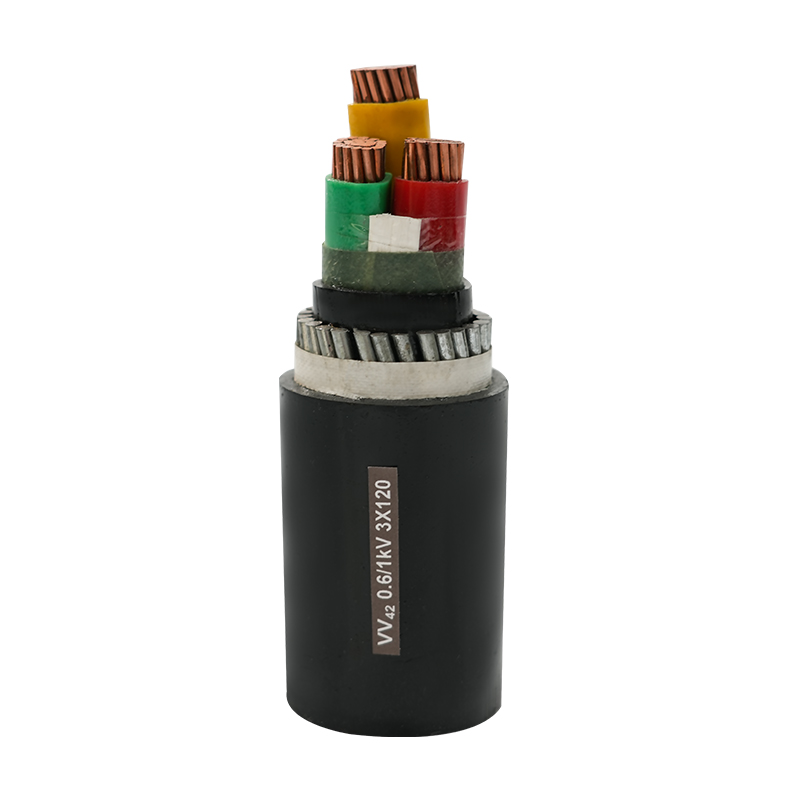
For main power distribution, the common selection is an XLPE-insulated marine power cable rated 0.6/1 kV, because XLPE offers better thermal endurance and moisture resistance than PVC under sustained load.
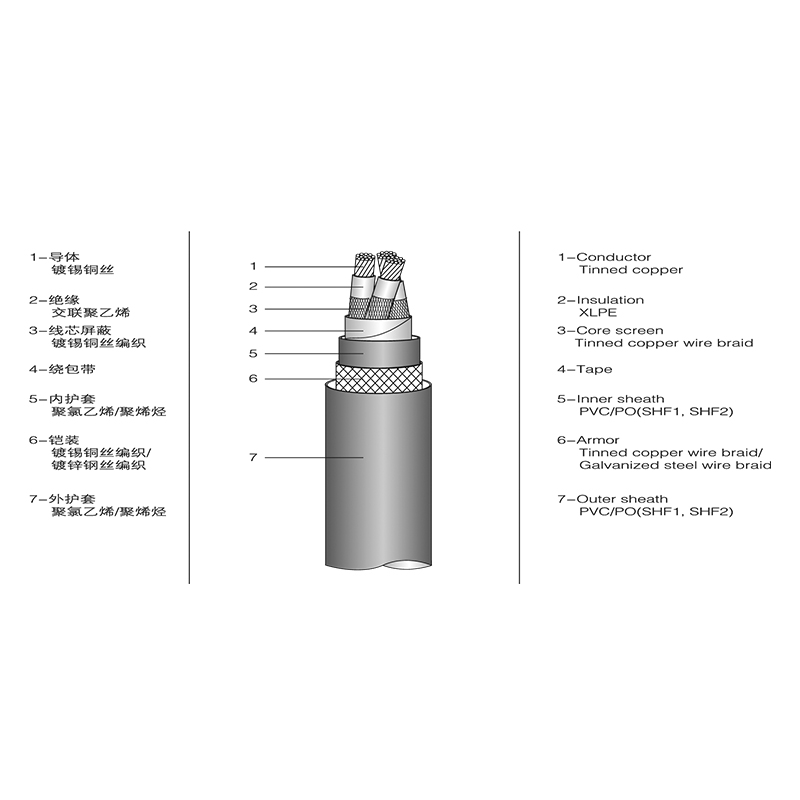 XLPE Insulated Marine Power Cable for Shipboard DistributionThis 0.6/1 kV cable suits main power distribution on vessels, with XLPE insulation offering better heat and moisture resistance than PVC under sustained load, making it a dependable choice for switchboard connections.View Product →
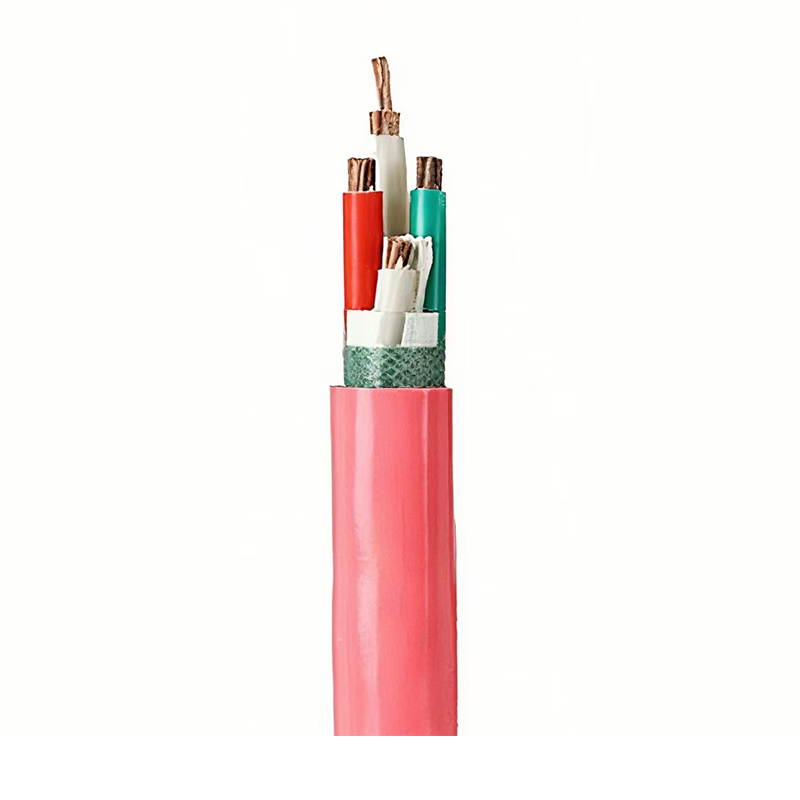
For engine-room control and instrumentation loops, certified marine control cable with collective screening reduces EMI and protects signal integrity.
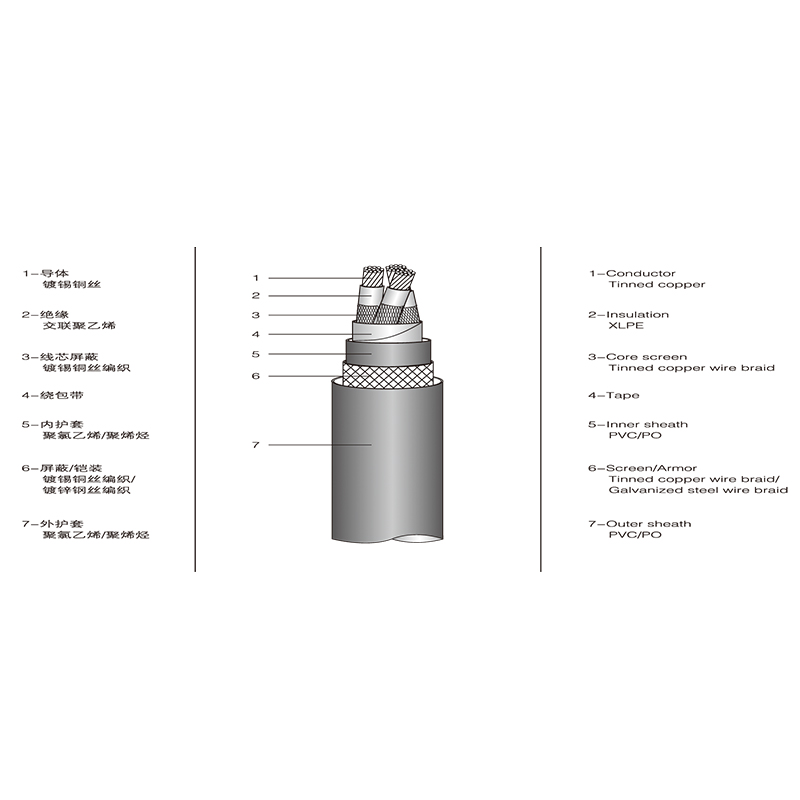 XLPE Insulated Marine Control Cable with Collective ScreeningDesigned for engine-room control and instrumentation loops, this certified cable with collective screening reduces EMI and protects signal integrity, ensuring reliable operation in demanding marine environments.View Product →
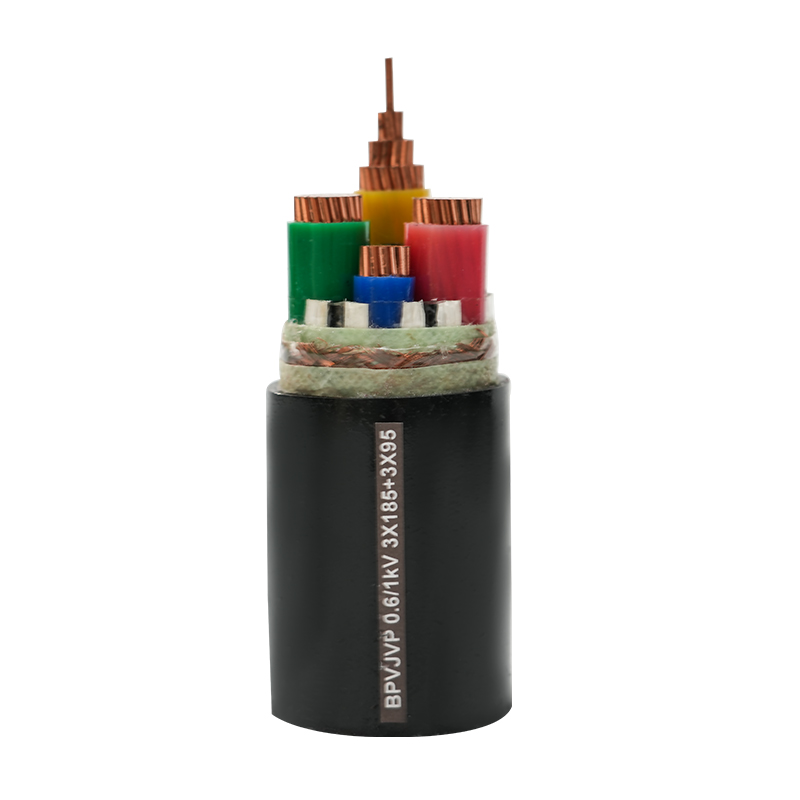
For propulsion and thruster drives fed by variable-frequency converters, a class-approved marine frequency-conversion cable is the recommended choice because standard power cable cannot suppress inverter harmonics and standing-wave stress.
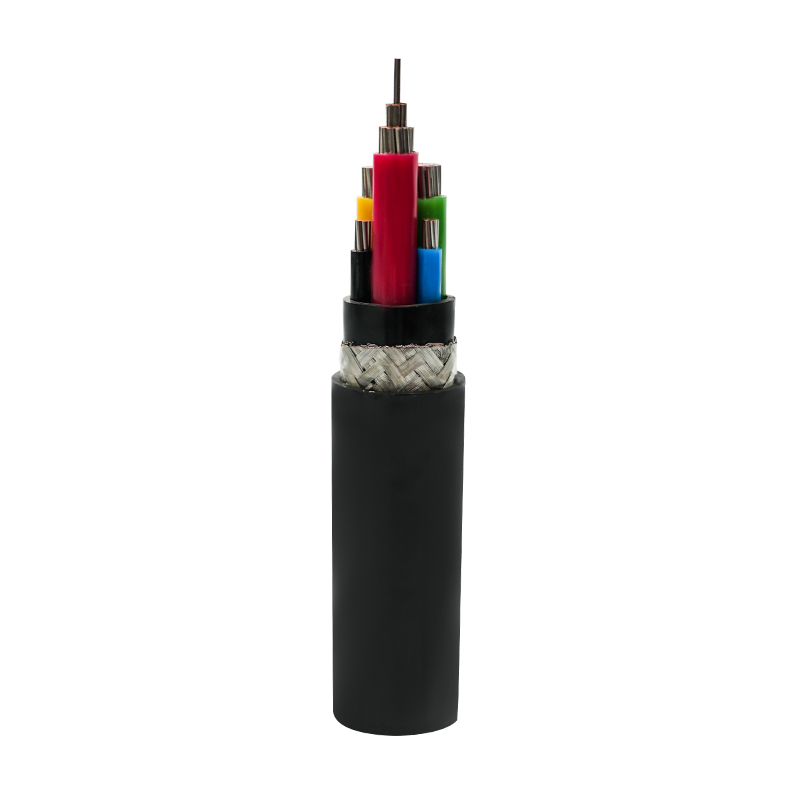 XLPE Insulated Marine Frequency Conversion Cable for VFD DrivesRecommended for propulsion and thruster drives fed by variable-frequency converters, this cable suppresses inverter harmonics and standing-wave stress, supporting stable performance where standard power cable falls short.View Product →
As a practical benchmark, a certified manufacturer such as Yangzhou Yaguang Cable Co., Ltd. holds ABS and BV product certificates for its marine cable series and operates under ISO 9001, ISO 14001, and ISO 45001 management systems. Read the full company profile and compare it against your approved vendor list.
Frequently Asked Questions About ABS and BV Marine Cable Certification
Fast answer: match the certificate to the classification society named in the contract and verify the certificate scope before placing the order.
Can a BV-certified cable be used on an ABS-classed vessel?
Only if the attending ABS surveyor accepts an equivalency evaluation of the BV certificate. This is handled case by case and usually applies to emergency replacement or ship repair, not to a newbuild when the contract specifies ABS-certified cable.
Is ABS marine cable certification stricter than BV?
Both societies follow the IEC 60092 series and require type tests, factory audits, and surveillance. Stricter or more lenient depends on the cable type and the project location; for a global merchant vessel, the two certificates carry similar practical weight.
What documents should the supplier provide with ABS or BV certified marine cable?
The supplier should provide the type-approval certificate, the test summary, the mill test certificate for the conductor, the material declaration, and a statement of conformity covering the exact cable series and voltage rating in your order.
How long is an ABS or BV marine cable type approval valid?
Typical validity is five years, subject to annual surveillance audits or a manufacturer declaration confirming that the approved construction has not changed. Always check the expiry date before the project starts.
Order the certificate the specification names, verify its scope, and keep the class surveyor informed. That discipline removes most ABS vs. BV conflicts before they reach the delivery schedule.
 Email:
 Telephone:+86-0514-85086085
 FAX:+86-0514-85086085
 Phone:+86-15861389306