 Email:
  Telephone: +86-0514-85086085
 FAX: +86-0514-85086085
 English
 中文简体
中文简体 русский
 عربى
عربى
Content
How Many Amps Can 6 Gauge Wire Carry?
6 AWG wire is rated for 55 amps at 60°C and 65 amps at 75°C under standard NEC conditions for copper conductors. These figures apply to a single insulated conductor in free air or conduit with no more than three current-carrying conductors bundled together, as outlined in NEC Table 310.15(B)(16). For aluminum 6 AWG wire, the ampacity drops to 40 amps at 60°C and 50 amps at 75°C — a meaningful difference that matters when selecting wire for high-current circuits.
In practice, most residential and light commercial installations use 75°C-rated conductors with 75°C-rated terminals, which is why 65 amps is the most commonly cited ampacity for copper 6 AWG. However, some older equipment terminals are only rated for 60°C, in which case the lower 55-amp figure must be used regardless of the wire's own temperature rating.
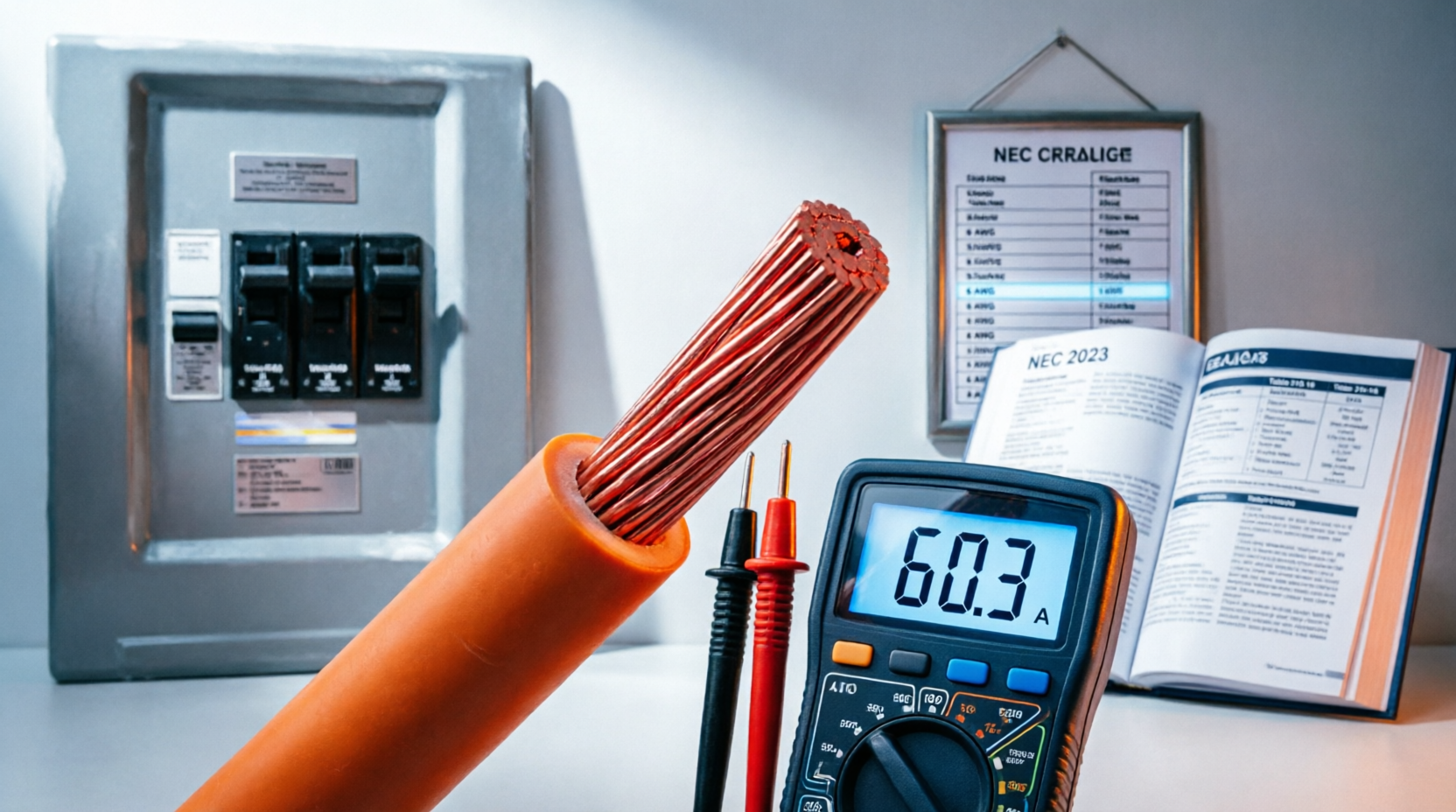
6/2 and 6/3 Wire Amp Ratings Explained
The notation "6/2" or "6/3" describes a cable assembly rather than a single wire. The first number is the AWG gauge of each individual conductor; the second number is the count of insulated conductors inside the cable jacket — not counting the bare ground wire, which is included in most cables.
- 6/2 cable contains two insulated 6 AWG conductors (typically black and white) plus a bare copper ground. It is commonly used for 240V two-wire circuits such as electric water heaters or large air conditioning units. Each conductor carries up to 55–65 amps depending on temperature rating.
- 6/3 cable contains three insulated 6 AWG conductors (black, red, and white) plus a bare ground. It is used for 240V circuits that also require a neutral — such as electric ranges, dryers, or subpanels — allowing both 120V and 240V loads to be served from a single cable run.
In both cases, the ampacity of each conductor is governed by the same 55/65-amp figures for copper 6 AWG. The cable designation tells you the circuit configuration, not a different current capacity.
6 AWG vs. 8 AWG: Ampacity Comparison
8 gauge wire is rated for 40 amps at 60°C and 50 amps at 75°C for copper conductors — a full step down from 6 AWG. This makes the choice between the two gauges straightforward for most applications: circuits requiring a 50-amp breaker should use 6 AWG, while 40-amp circuits can use 8 AWG.
| Wire Gauge (AWG) | Conductor Material | Ampacity @ 60°C | Ampacity @ 75°C | Typical Breaker Size |
|---|---|---|---|---|
| 6 AWG | Copper | 55 A | 65 A | 50–60 A |
| 6 AWG | Aluminum | 40 A | 50 A | 40–50 A |
| 8 AWG | Copper | 40 A | 50 A | 40 A |
| 8 AWG | Aluminum | 30 A | 40 A | 30–40 A |
A common real-world scenario where 6 AWG is preferred over 8 AWG is the EV charging circuit. A Level 2 EVSE on a 50-amp circuit typically requires 6 AWG copper wiring for the full run from panel to outlet, whereas an 8 AWG run would limit the circuit to a 40-amp breaker and reduce maximum charging power.
Derating Factors That Affect 6 AWG Ampacity
The standard 55–65-amp figures assume specific installation conditions. Several factors require the ampacity to be derated — meaning the wire can safely carry less current than the base rating suggests.
Bundling and Conduit Fill
When more than three current-carrying conductors share the same conduit or cable bundle, heat builds up and the ampacity must be reduced. NEC Table 310.15(C)(1) specifies correction factors: four to six conductors in the same raceway require a 0.80 derating, reducing 6 AWG copper to 52 amps at 75°C. Seven to nine conductors require 0.70, bringing it down to approximately 45 amps.
Ambient Temperature
Standard ampacity tables assume an ambient temperature of 30°C (86°F). In hotter environments — such as attics, rooftop conduit runs, or industrial spaces — a correction factor must be applied. At an ambient of 40°C (104°F), a 75°C-rated conductor requires a correction factor of 0.88, reducing 6 AWG copper capacity to about 57 amps. At 50°C ambient, the factor drops to 0.75, yielding roughly 49 amps.
Continuous Loads
NEC 210.19(A)(1) requires that a conductor supplying a continuous load — one that runs for three or more hours — be sized at 125% of the load current. A 6 AWG circuit at 65 amps therefore has an effective continuous-load limit of 52 amps (65 ÷ 1.25). This is why a 60-amp breaker paired with 6 AWG copper is common: the wire handles fault current up to 65 amps while the circuit is protected at 60 amps for normal operation.
Common Applications for 6 Gauge Wire
The 55–65-amp capacity of 6 AWG copper makes it the go-to wire size for a range of high-demand residential and light commercial circuits. Typical uses include:
- Electric ranges and cooktops — Most household ranges draw 40–50 amps at full load, and a 50-amp circuit wired with 6 AWG copper provides appropriate headroom.
- EV charging stations — A 50-amp Level 2 EVSE circuit requires 6 AWG from the panel to the outlet, enabling charging rates up to 11.5 kW on a 240V supply.
- Hot tubs and spas — These typically require a dedicated 50-amp, 240V GFCI-protected circuit, which calls for 6 AWG copper wiring.
- Subpanel feeder runs — Small garage or workshop subpanels up to 60 amps are frequently fed with 6 AWG copper or 6 AWG aluminum in conduit.
- Large air conditioning units — Central AC compressors with a minimum circuit ampacity between 40 and 55 amps are sized for 6 AWG wiring.
For any installation, always verify local code requirements and confirm that terminal ratings, conduit fill, ambient temperature, and load type are accounted for before selecting a wire gauge and breaker size. When in doubt, consult a licensed electrician — undersized wiring is one of the leading causes of electrical fires.
 Email:
 Telephone:+86-0514-85086085
 FAX:+86-0514-85086085
 Phone:+86-15861389306