 Email:
  Telephone: +86-0514-85086085
 FAX: +86-0514-85086085
 English
 中文简体
中文简体 русский
 عربى
عربى
A packaging line has a drag chain that advances 300 mm every two seconds, and forty meters away a fixed junction box holds the same 24 V DC control signals. The two runs look equivalent on a schematic, but they do not need the same multi-core flexible control cable.
A multi-core flexible control cable is defined by two independent specifications: the number of insulated cores inside the common sheath, and the conductor flexibility class. Core count comes from the circuit map. Flexibility comes from the motion profile. Mixing up the two is the most common selection error in industrial control cabling.
Content
- 1 How Many Cores Does Your Multi-Core Flexible Control Cable Need?
- 2 Flexibility Class: What Makes a Multi-Core Flexible Control Cable Move
- 3 Jacket and Insulation Materials for Multi-Core Flexible Control Cable Duty
- 4 A Five-Step Selection Sequence for Core Count and Flexibility
- 5 Frequently Asked Questions About Core Count and Flexibility
How Many Cores Does Your Multi-Core Flexible Control Cable Need?
Core count follows the circuit map, not the other way around. Count the independent circuits that have to pass through the cable, round up to a standard core count, then apply a spare policy.
Do the count in this order:
- List every device that consumes power, including solenoids, contactors, and small motors.
- List every discrete signal that needs a return path, such as limit switches and proximity sensors.
- Group commons and returns that can safely share one core.
- Add two positions for every shielded pair, because the drain wire occupies one core position.
Standard core counts in multi-core flexible control cables are 2, 3, 4, 5, 7, 8, 10, 12, 14, 16, 19, 24, 30, and 37 cores. A non-standard count extends lead time and raises unit price, so avoid it unless the terminal layout leaves no way around it.
| Core count | Typical circuit layout | Common application |
| 2 | One power circuit with return | Valve or damper actuator |
| 3 | Single phase plus protective earth | Small fan or pump motor |
| 4-5 | Three phase plus PE, or two independent signals | Conveyor segment, reversing contactor |
| 7-12 | Sensor group with shared commons | Short automation cell wiring |
| 14-24 | Multiple actuator groups | Distribution to a machine zone |
| 30+ | Centralized marshalling | IO cabinets and control panels |
Flexibility Class: What Makes a Multi-Core Flexible Control Cable Move
Flexibility is set by the stranding class of the conductor, defined in IEC 60228. Class 2 is standard stranded for fixed installation, Class 5 is flexible, and Class 6 is extra flexible, which is the starting point for continuous or high-acceleration movement.
Finer wires bend more easily and survive repeated flexing without work-hardening, but they increase conductor resistance by a few percent. On a short drag chain the difference is negligible; on a run longer than 100 meters, use the datasheet resistance in the voltage-drop calculation.
The deciding question is simple: does the cable move, and if it does, how fast and how often? For a full comparison of constructions, see this engineering guide to multicore flexible control cable standards.
Jacket and Insulation Materials for Multi-Core Flexible Control Cable Duty
The conductor class decides whether a cable can flex; the insulation and jacket decide whether it still flexes after a year of oil, heat, and abrasion. Three material families cover the practical spectrum: PVC for general duty, XLPE for higher operating temperature, and fluoroplastic for continuous flex in hot or chemically aggressive environments.
| Property | PVC | XLPE | Fluoroplastic (ETFE) |
| Continuous temperature | -20 to 70 C | Up to 90 C | -60 to 150 C |
| Relative flexibility | Good | Moderate | Good with thin walls |
| Oil and chemical resistance | Good | Good | Excellent |
| Typical flexing duty | Occasional | Industrial, semi-fixed | Continuous and high-temperature |
| Relative cost per core | Lowest | Moderate | Higher |
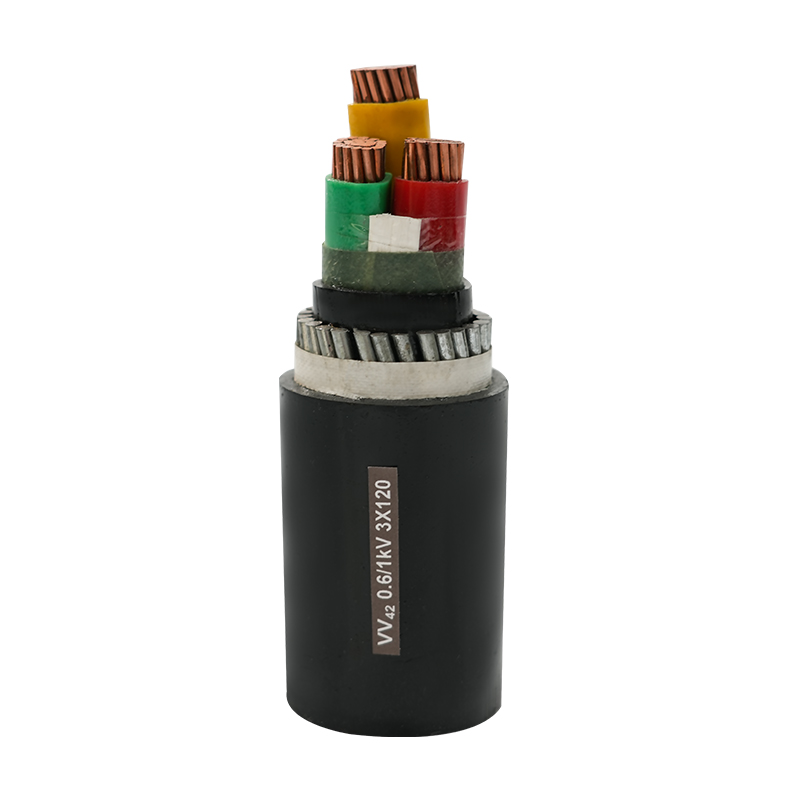
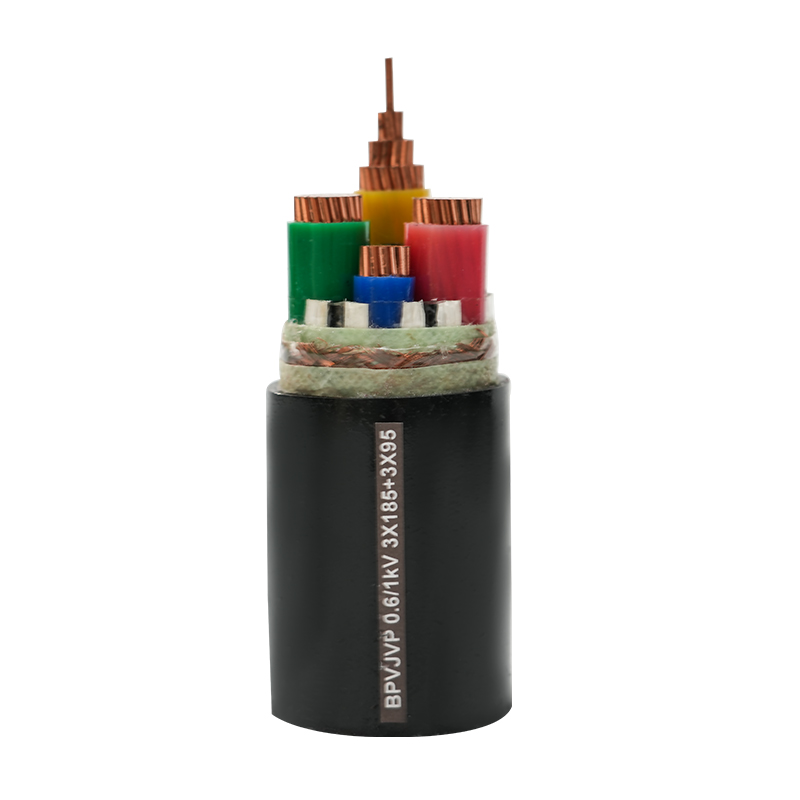
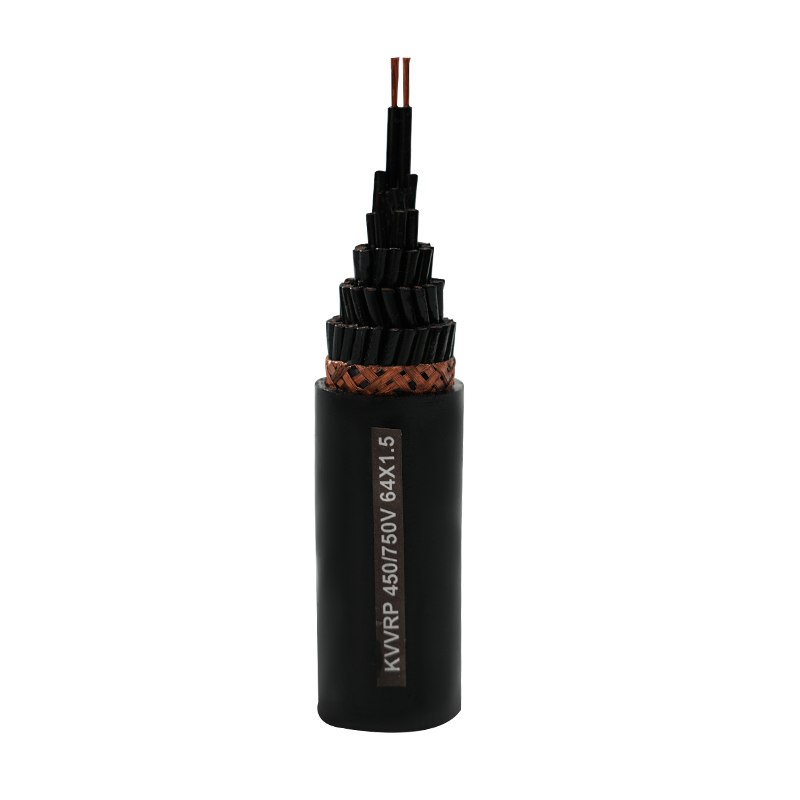
Yangzhou Yaguang Cable Co., Ltd. (Yaguang Cable), a control cable manufacturer serving machine building, marine, and stage-lighting industries, produces control cables in all three insulation families. The PVC-insulated control cable range covers general cabinet wiring at the lowest cost per core and is the default choice for dry indoor panels.
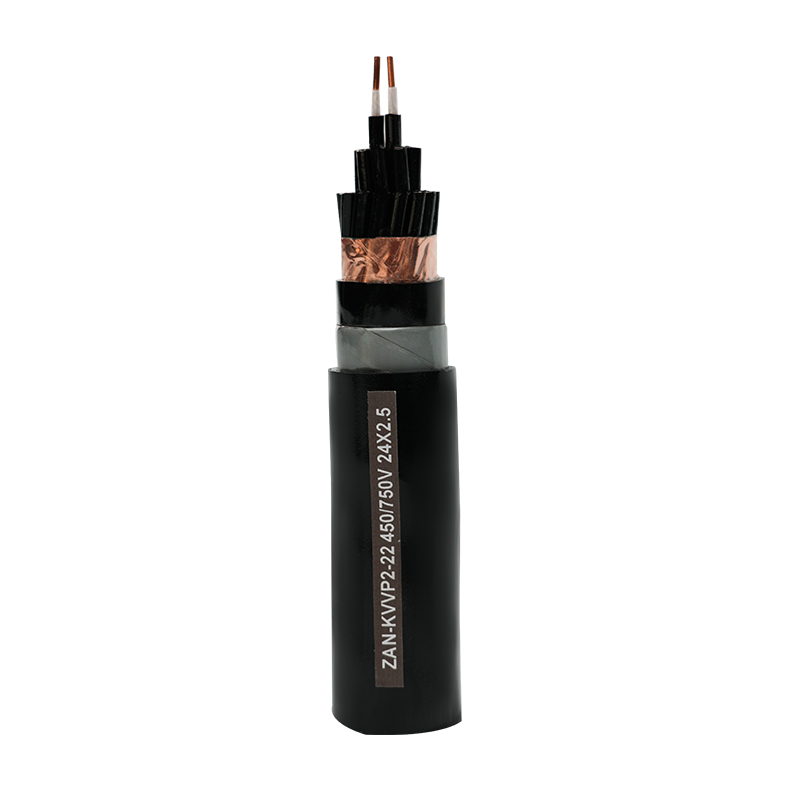 PVC Insulated Control Cable from Yaguang Cable for Industrial Control SystemsThis economical PVC-insulated control cable suits dry indoor cabinet wiring in machine building and automation, offering stable insulation performance and resistance to oil and chemicals at a moderate cost per core.View Product →
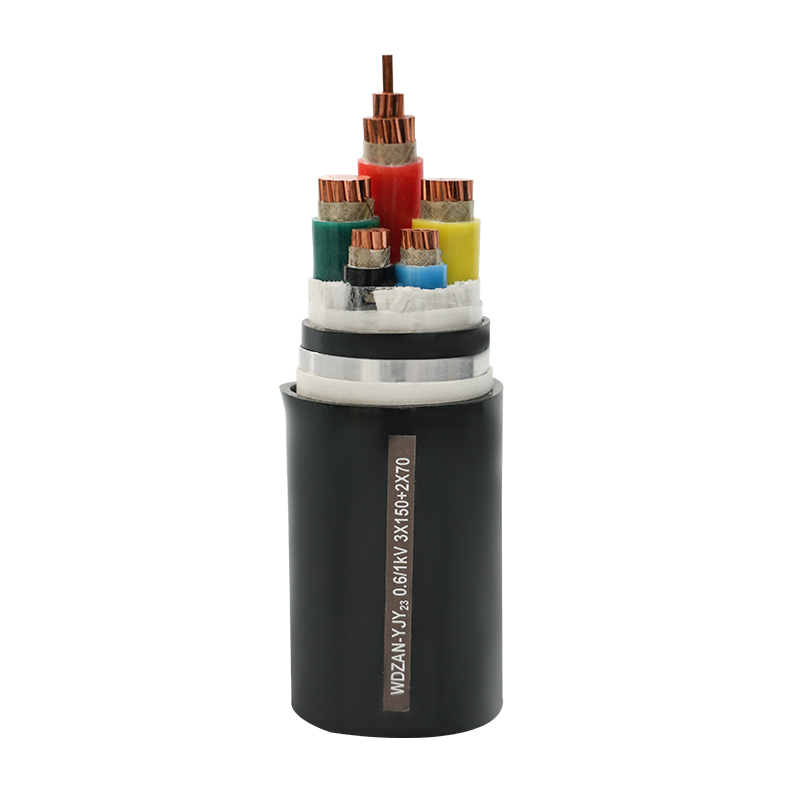
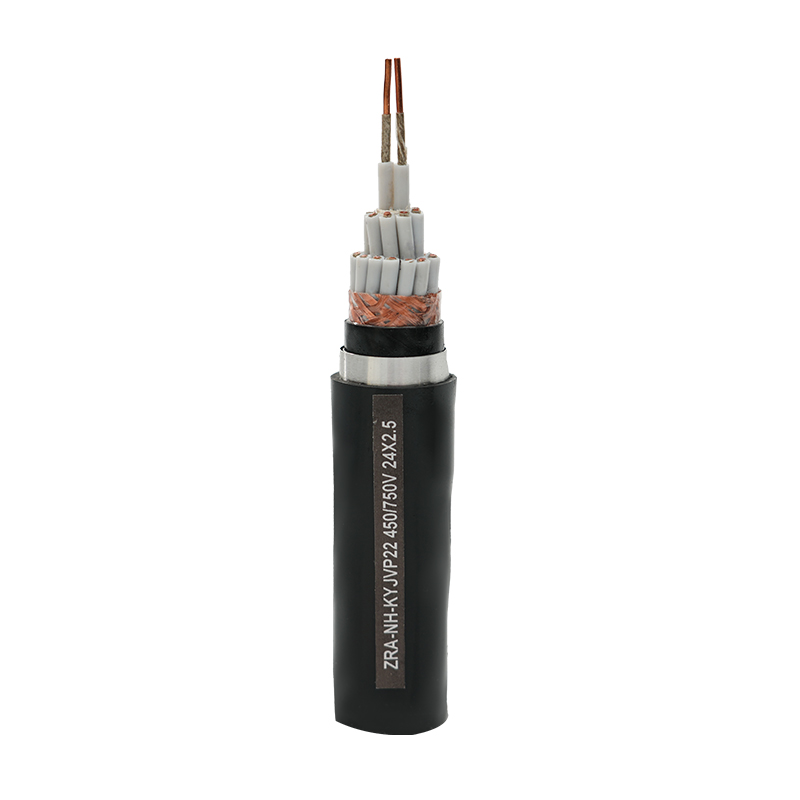
When the ambient temperature at the machine frame exceeds the PVC limit, XLPE-insulated control cable keeps the mechanical margin without changing the core count. Cost per core stays moderate, and the temperature headroom protects the system during summer line stops.
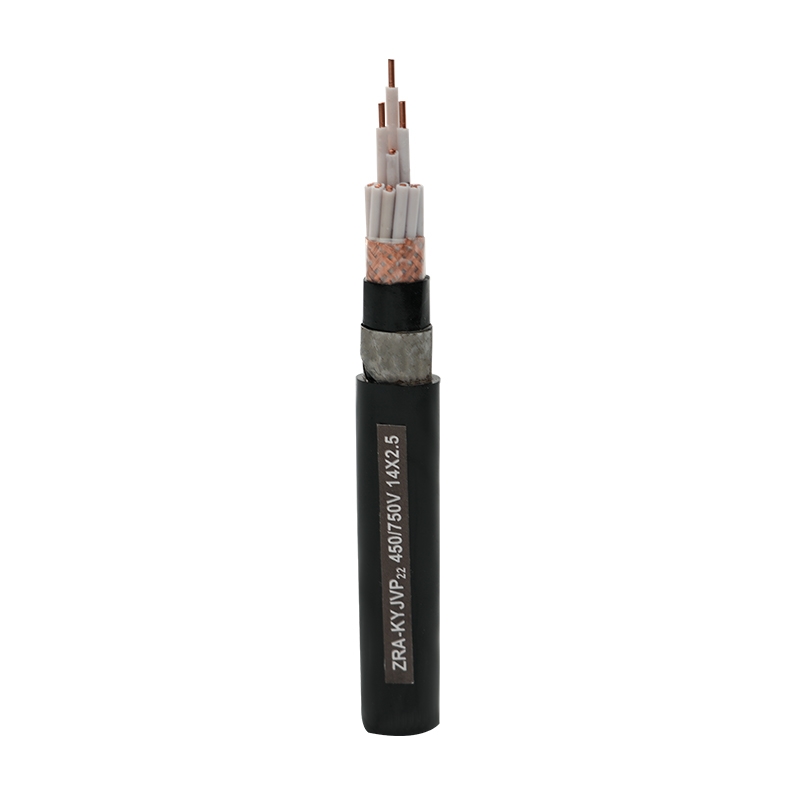 XLPE Insulated Control Cable with High Heat Resistance for Harsh EnvironmentsCross-linked polyethylene insulation raises the continuous working temperature to 90°C and improves aging and mechanical strength, making it a reliable upgrade when ambient heat exceeds PVC limits.View Product →
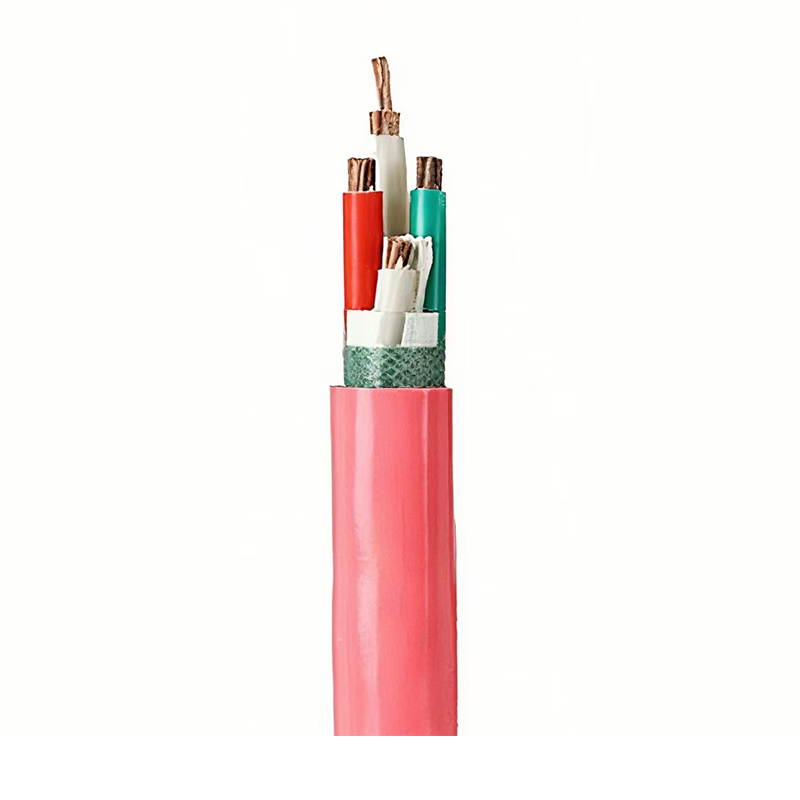
For a multi-core flexible control cable that has to run inside a hot enclosure or a wash-down zone, fluoroplastic-insulated constructions keep thin-wall flexibility and extend the temperature range far beyond PVC and XLPE.
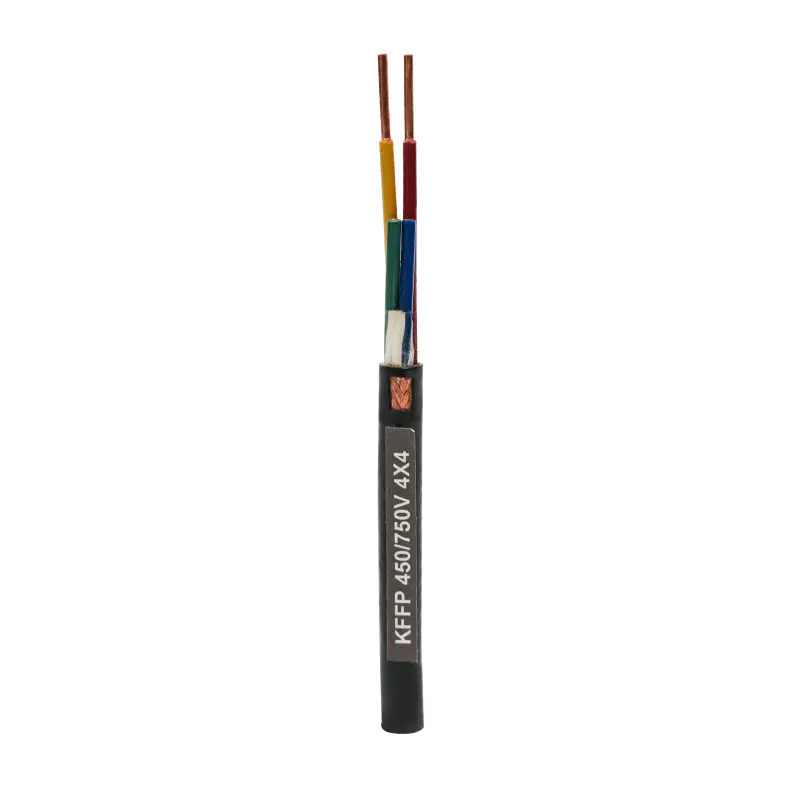 Fluoroplastic Insulated Control Cable for Extreme Temperature and Corrosion ResistanceWith PTFE or FEP insulation, this cable withstands very high and low temperatures, acids, alkalis, and oils, making it ideal for demanding settings like aerospace and petrochemical plants.View Product →
A Five-Step Selection Sequence for Core Count and Flexibility
Use the same sequence on every control system, from a single machine to a full production line, and the selection becomes a repeatable process instead of a debate.
Frequently Asked Questions About Core Count and Flexibility
Can a Class 2 control cable be used in a drag chain?
No. The larger wire strands in a Class 2 conductor work-harden under repeated bending and fracture at the termination point. Use a Class 5 or Class 6 conductor for a drag chain, and take the actual flex rating from the datasheet.
What is the minimum bending radius for a multi-core flexible control cable?
For occasional flexing, plan for 6x the cable outer diameter; for continuous flexing, plan for 10x to 12x. The manufacturer's published radius is the authoritative value, since the cable outer diameter after jacketing determines the real number.
How many spare cores should a control cable specification include?
A practical starting point is one spare core per ten active cores, with a minimum of two spares on any cable feeding a process-critical subsystem. Spares are inexpensive at design stage and expensive after the cable is pulled.
Does fluoroplastic insulation reduce cable flexibility?
No. Thin-wall ETFE insulation keeps the cable flexible and removes the temperature limit that forces a heavier jacket in PVC designs. Final flexibility is a combination of wall thickness, lay length, and jacket compound.

 Email:
 Telephone:+86-0514-85086085
 FAX:+86-0514-85086085
 Phone:+86-15861389306