 Email:
  Telephone: +86-0514-85086085
 FAX: +86-0514-85086085
 English
 中文简体
中文简体 русский
 عربى
عربى
A 180 MW solar plant in the Gulf region lost about four percent of its DC-side output by the third year of operation. The modules tested fine; the inverters tested fine. The failure was in the string cables between module rows: jackets cracked under UV exposure, and insulation resistance collapsed as humidity reached the conductors. None of those cables were TUV-certified.
That failure pattern explains why TUV-certified solar cable is the global standard for PV installations. TUV certification, verified against TUV 2PfG 1169 and its successor EN 50618, is a third-party type-approval process that tests a DC cable against the full set of solar-specific stresses: heat, sunlight, ozone, moisture, flame, and mechanical abuse. Without that verification, a cable can look correct on paper and still fail within five years.
For EPC firms, plant owners, and procurement engineers, the question is not whether TUV certification is nice to have. It is whether the DC side of the plant can reach its 25-year design life without a cable-led failure.
Content
- 1 What a TUV-Certified Solar Cable Must Survive in the Field
- 2 Why TUV 2PfG 1169 and EN 50618 Became the Global Baseline
- 3 What Fails First in a Non-TUV-Certified Solar Cable
- 4 How to Verify a Genuine TUV-Certified Solar Cable
- 5 Sourcing TUV-Certified Solar Cable from a Certified Manufacturer
- 6 Frequently Asked Questions About PV Solar Cable Certification
What a TUV-Certified Solar Cable Must Survive in the Field
A TUV-certified solar cable is defined by what it survives: 120 °C continuous conductor temperature, accelerated aging equivalent to decades of rooftop heat, direct UV exposure, and the mechanical stress of pulling and wind loading.
Certification bodies do not just inspect samples. They run type tests on a cable design, then audit the production line that will manufacture it. EN 50618 and TUV 2PfG 1169 force the cable to endure desert sun, coastal salt, industrial humidity, and sustained current near its conductor temperature limit at the same time.
Each test exists because a failure in that area has caused real plant losses. The core test areas are summarized below.
| Test area | Field condition simulated | Typical requirement |
| Thermal aging and hot set | Sustained conductor heat in rooftop and desert runs | No cracking; cross-linked compound stays dimensionally stable |
| UV and weathering | Direct sunlight for 25 years | Retains required tensile strength and elongation |
| Ozone and humidity | Coastal, industrial, and high-moisture sites | No cracking after ozone exposure |
| Flame retardancy | Electrical faults and nearby fire sources | Self-extinguishing per EN 60332-1-2 |
| Mechanical stress | Pulling, bending, wind movement | Insulation stays intact; no short circuit |
For example, the hot-set test in EN 50618 exposes the insulation to 200 °C under a defined load and checks that a cross-linked compound does not deform permanently. A PVC insulation fails that test immediately, which is why PVC is not accepted in a certified solar cable construction.
Why TUV 2PfG 1169 and EN 50618 Became the Global Baseline
TUV 2PfG 1169 and EN 50618 became the global baseline because European solar markets made them a de facto entry condition, and export-driven projects worldwide adopted the same certificate to simplify procurement and risk control.
Germany's early PV boom created the PV1-F type of photovoltaic cables in the 1990s. As inverter and connector manufacturers standardized around it, developers in other countries asked for the same certificate instead of building local test regimes. EN 50618 later absorbed PV1-F into the harmonized H1Z2Z2-K type, with stricter fire behavior, a wider conductor range, and higher mechanical demands.
Today, projects from Saudi Arabia to Chile to Vietnam reference the same document family. EPC contracts routinely write TUV or EN 50618 compliance into the DC cable specification clause by clause, turning a German certification scheme into a single global benchmark.
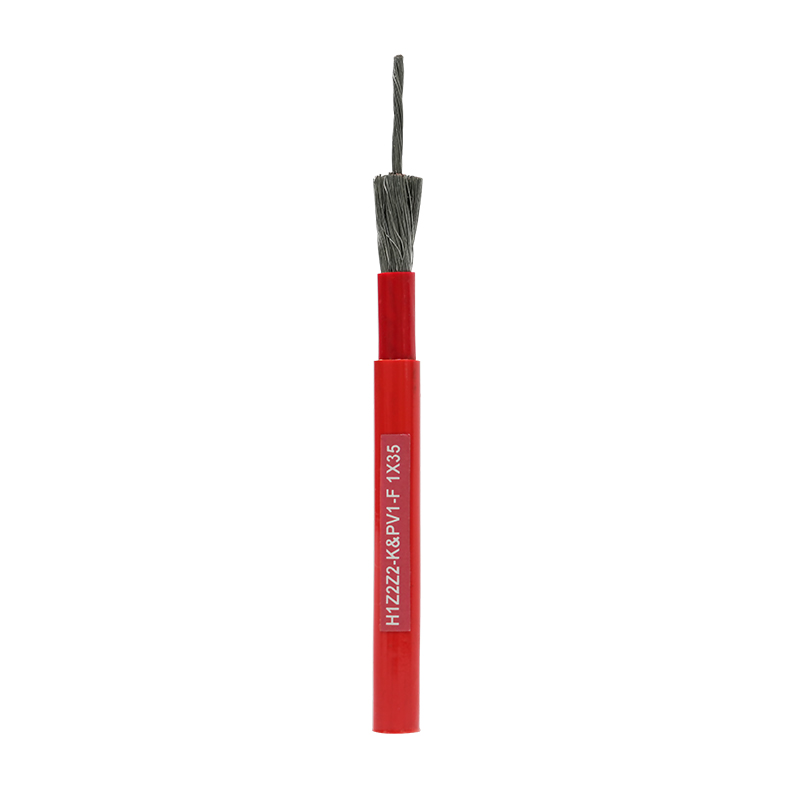 Certified New Energy Cable Manufacturer with Global StandardsThis supplier offers solar, marine, and control cables with TUV, UL, and other certifications. Their compliance with EN 50618 ensures reliable performance in demanding photovoltaic projects.View Product →
What Fails First in a Non-TUV-Certified Solar Cable
In a non-certified DC cable, the jacket and insulation fail before the conductor, in a predictable sequence: UV cracks, moisture ingress, insulation-resistance drop, then leakage current, ground faults, or a DC arc fault.
Generic building wire and "solar lookalike" cables are usually PVC or plain XLPE rated for 70-90 °C. They are not tested for ozone, not tested for 1.5 kV DC stress, and their jackets degrade within a few years in strong UV. Once water reaches the conductor, leakage current raises the operating temperature, which accelerates further degradation.
Measurable consequences include string-level power loss, inverter trips that reduce yield, and DC arc faults that are hard to extinguish because a DC arc has no natural zero-crossing.
| Property | TUV-certified H1Z2Z2-K | Generic PVC "solar" cable |
| Continuous conductor temperature | 120 °C | 70-90 °C |
| Insulation system | Cross-linked, halogen-free | PVC or non-cross-linked |
| DC voltage rating | 1500 V DC | Often only 450/750 V AC |
| UV weathering test | Mandatory per EN 50618 | Usually not tested |
| Flame behavior | Self-extinguishing | Can propagate flame |
| Realistic DC-side service life | 25+ years | 5-10 years in strong UV |
A 100 MW plant contains roughly the equivalent of 1,500-2,500 km of DC cable. Replacing even five percent of that length after year six costs more than the certification premium on the entire project.
How to Verify a Genuine TUV-Certified Solar Cable
Verification takes minutes if you check the jacket marking and the certificate number, because the printed TUV logo alone proves nothing.
- Read the full jacket imprint. A genuine H1Z2Z2-K cable shows the cable type, the 1.5 kV DC voltage rating, the manufacturer name, and a certificate reference.
- Note the certificate number and search it in the certifying body's public directory. The listed plant address should match the factory on your inspection report.
- Measure the conductor with a micrometer. A 4 mm² flexible class 5 tinned-copper conductor has a defined diameter range; smaller copper is a common substitution defect.
- Cut a sample and check that the insulation grips the conductor and that the wall thickness is uniform around the circumference.
- Request the type-test report and the factory inspection certificate at the sample-approval stage, together with the ISO 9001 quality certificate.
Counterfeit TUV marks are common in commodity cable markets. If the supplier cannot provide a certificate number that resolves in the certification body's online directory, treat the product as non-certified regardless of what is printed on the jacket.
A certificate number that cannot be traced in the certifier's public database is the single fastest red flag in a solar cable inspection.
Sourcing TUV-Certified Solar Cable from a Certified Manufacturer
The most reliable way to secure TUV-certified solar cable is to buy from a manufacturer whose production line itself holds the certification, because a plant-level certificate covers the cable design you actually receive, not just a sample batch.
Yangzhou Yaguang Cable Co., Ltd. (Yaguang Cable) manufactures its new-energy line at a certified manufacturing base in Yangzhou, China, with a 56,000 m² plant and 480 production and testing machines. The company's photovoltaic cables carry TUV product certification, and its management system is certified to ISO 9001, ISO 14001, and ISO 45001. With more than two decades of cable manufacturing and export experience, it supplies OEM cable configurations for international PV integrators and EPC contractors.
When evaluating a supplier, ask for three documents before order placement: the TUV certificate, the matching type-test report, and the factory inspection certificate. A certificate covers manufacturing discipline, not a sample batch.
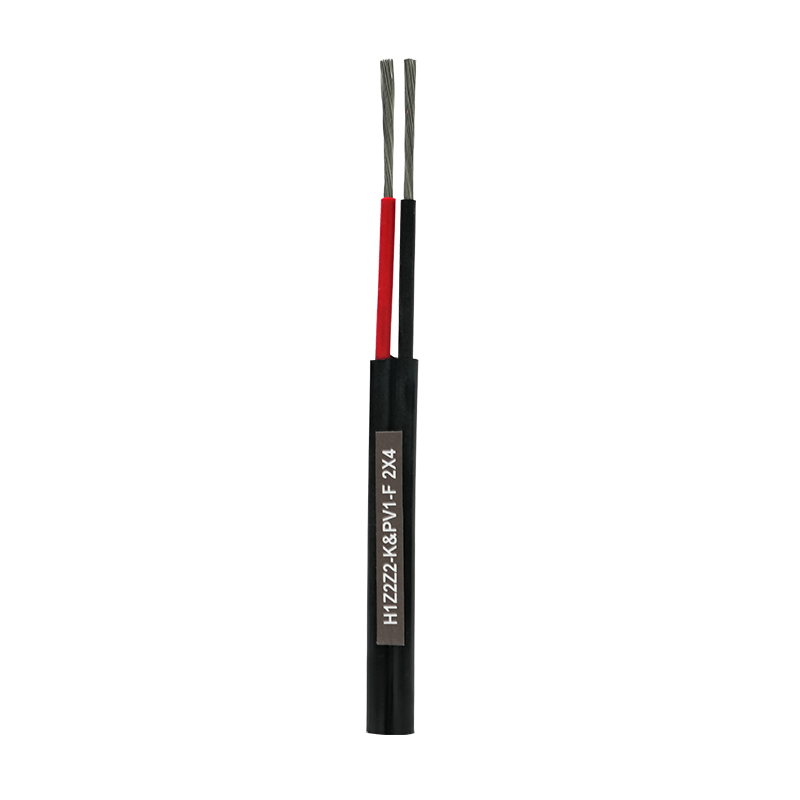 Weather-Resistant Photovoltaic Cables for Harsh EnvironmentsThese cables meet PV1-F, H1Z2Z2-K, and IEC 62930 standards. They are low-smoke, halogen-free, and UV-resistant, making them ideal for desert, coastal, and high-altitude solar installations. Verified certifications support procurement decisions.View Product →
Frequently Asked Questions About PV Solar Cable Certification
Short, decision-ready answers for engineers, procurement teams, and EPC reviewers.
Is TUV certification mandatory for solar cables?
Not a universal legal requirement, but in practice it is mandatory for projects with European financing, inverter warranties, or 25-year yield guarantees. Most engineering consultants specify EN 50618 compliance as the default DC-side requirement.
What is the difference between PV1-F and H1Z2Z2-K?
PV1-F is the earlier cable type from TUV 2PfG 1169. H1Z2Z2-K, defined by EN 50618, is the current-generation type with stricter flame behavior and a wider cross-section range. New projects should specify H1Z2Z2-K.
Can ordinary AC power cable be used on the DC side?
No. Ordinary AC power cable is rated for 70-90 °C, lacks UV and ozone resistance, and its insulation can crack under sustained DC voltage stress, leading to leakage current, ground faults, and fire risk.
How long does a TUV-certified solar cable last?
TUV-certified solar cable is designed for 25 or more years of service. EN 50618 accelerated thermal and UV aging tests simulate that service life before a cable type is approved, which is why the certificate is the accepted proxy for long-term reliability.
 Email:
 Telephone:+86-0514-85086085
 FAX:+86-0514-85086085
 Phone:+86-15861389306