 Email:
  Telephone: +86-0514-85086085
 FAX: +86-0514-85086085
 English
 中文简体
中文简体 русский
 عربى
عربى
A 1,500 V DC string fault can sustain an electric arc at temperatures above 1,900°C. Standard PVC building wire, rated for a continuous 70°C conductor temperature, will soften and ignite long before the protection device opens the circuit. That is why PV1-F solar panel cable exists: it is the DC cabling type engineered for the combination of UV exposure, damp heat, and arc-fault stress that modern photovoltaic arrays deliver.
DC arcs have no natural current zero-crossing, so they do not self-extinguish the way AC arcs partially do. Cable insulation is the first line of defense on the DC side, and this report explains what PV1-F cable is, which standards govern it, and how to specify and install it for a 25-year service life.
Content
- 1 What Exactly Is PV1-F Solar Panel Cable and Which Standard Defines It?
- 2 Why PV1-F Cable Matters for PV System Safety and Annual Energy Yield
- 3 PV1-F vs Ordinary PVC or XLPE Cable: A Side-by-Side Comparison
- 4 How to Select the Right PV1-F Cable Size and Rating for Your Array
- 5 Installation Practices That Keep PV1-F Cable Reliable for 25 Years
- 6 Frequently Asked Questions About PV1-F Solar Panel Cable
What Exactly Is PV1-F Solar Panel Cable and Which Standard Defines It?
PV1-F is a single-core, cross-linked, halogen-free DC cable for photovoltaic systems, qualified under TUV 2PfG 1169/08.2007 and now widely superseded by the European harmonized standard EN 50618. The designation itself is a specification: PV stands for photovoltaic duty, 1 means a single core, and F denotes a flexible, finely stranded conductor.
Its construction follows a strict sequence:
- Conductor: tinned copper with Class 5 flexible stranding, which survives repeated bending during installation and thermal cycling over decades.
- Insulation: electron-beam cross-linked polyolefin, which keeps mechanical integrity at conductor temperatures up to 120°C during fault conditions.
- Sheath: UV-stabilized, ozone-resistant, halogen-free polyolefin jacket, tested for long-term outdoor exposure without cracking or tracking.
There is no PVC and no thermoplastic that softens under summer rooftop heat. The cross-linked chemistry is exactly what separates PV1-F from commodity building wire, and it is the reason the cable can be left exposed to direct sunlight for more than two decades.
Why PV1-F Cable Matters for PV System Safety and Annual Energy Yield
DC-side cable selection determines two numbers that owners care about: the probability of a fire and the kilowatt-hours delivered to the inverter. PV1-F is designed to move both numbers in the right direction.
On safety, a cracked jacket on an ungrounded 1,500 V DC string creates a series-arc risk that can ignite combustible roofing material. The cross-linked insulation of PV1-F is flame-retardant, halogen-free, and tested to resist electrical tracking, so a fault is contained rather than propagated. On yield, low-resistance tinned copper and stable connectors keep the string voltage inside the inverter's MPPT window, where conversion efficiency is highest.
Voltage drop is the quieter loss. A string that loses 2 percent of its DC voltage to undersized cabling hands that 2 percent directly to the inverter input on every sunny hour. On a 500 kW ground-mount array with roughly 1,000 full-load hours per year, a persistent 2 percent DC loss equals about 10,000 kWh of lost production annually.
PV1-F vs Ordinary PVC or XLPE Cable: A Side-by-Side Comparison
PV1-F costs more per meter than general-purpose building wire, and the premium is justified only when the technical gap is real. The table below compares the properties that actually matter on a PV array.
| Property | PV1-F | PVC | XLPE |
| Conductor | Tinned copper, Class 5 flexible | Plain copper, solid | Plain copper, stranded |
| Max continuous conductor temperature | 90°C | 70°C | 90°C |
| Short-circuit conductor temperature | 120°C | 160°C | 250°C |
| UV and weather resistance | High, certified | Low | Moderate |
| Flexibility | High | Rigid | Moderate |
| Halogen-free jacket | Yes | No | Depends on compound |
| PV DC certification | TUV / EN 50618 | None | None for DC use |
| Typical outdoor life | 25+ years | 10-15 years | 15-20 years |
How to Select the Right PV1-F Cable Size and Rating for Your Array
Size the conductor so it carries 125 percent of the module short-circuit current per NEC 690.8, and keep the DC voltage drop below 2 percent at the end of the string. Both conditions must hold simultaneously; ampacity alone or voltage drop alone is not enough.
For a 500 W module with a short-circuit current of 13.2 A, one string conductor needs an ampacity of at least 13.2 x 1.25 = 16.5 A before temperature derating. On a 60 m string run, a 4 mm2 PV1-F conductor typically holds voltage drop below 1.5 percent, while a 2.5 mm2 conductor can pass the ampacity check but miss the voltage-drop target. For factory-direct PV1-F cable with full TUV documentation and custom lengths, review the photovoltaic cable range.
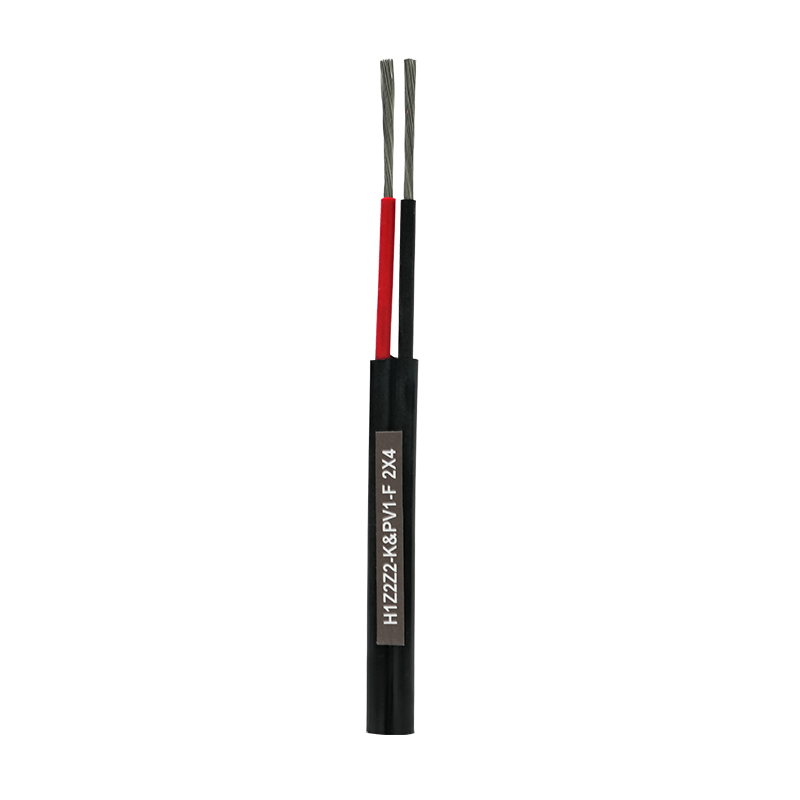 PV1-F and H1Z2Z2-K Photovoltaic Cables with TUV CertificationFactory-direct solar cables in PV1-F and H1Z2Z2-K types, available in custom lengths. Their documented ampacity and low voltage drop suit string runs needing derating calculations for ambient conditions.View Product →
Typical values from TUV 2PfG 1169 ampacity tables for a single cable in free air; derate for bundling and higher ambient temperatures.
When procurement reviews the cable, verify each point:
A capable supplier, such as Yangzhou Yaguang Cable Co., Ltd., provides certificate copies, date-coded jackets, and datasheets that match the delivered drums. Do not accept a datasheet that describes the insulation as plain PVC or PE.
Installation Practices That Keep PV1-F Cable Reliable for 25 Years
Cable choice sets the ceiling; installation decides whether you reach it. Field failures in PV systems are concentrated in DC cabling and connectors, and most of them are mechanical rather than electrical.
Uncoil without twisting. Respect the minimum bending radius of 5 times the cable outer diameter during installation. Tighter bends stress the cross-linked insulation and can crack the sheath years later.
Support the run. Fix cables every 0.8 m on horizontal rooftop runs and every 1.2 m on vertical runs. Keep them off standing water and away from sharp roof edges.
Terminate with rated connectors. Use PV-specific connectors and tighten them to the manufacturer's torque specification. A loose contact is the classic source of a DC arc fault.
Separate DC and AC runs. Route PV1-F in a dedicated tray or conduit away from AC feeders to reduce current coupling and simplify troubleshooting later.
Frequently Asked Questions About PV1-F Solar Panel Cable
Is PV1-F the same as H1Z2Z2-K?
Both are cross-linked, halogen-free solar cables, but they follow different standards. PV1-F was qualified under TUV 2PfG 1169, while H1Z2Z2-K meets EN 50618, the newer European harmonized standard with a 1.5 kV DC rating and harsher UV and flame tests. For new projects, EN 50618-certified cable is the safer procurement target.
Can PV1-F cable be buried or run indoors?
PV1-F is weather-resistant, not rated for direct burial. It can be used indoors for short exposed runs near the inverter, but it should be routed in conduit or a cable tray. For underground sections, protect the cable with rigid conduit or select an armored PV cable design.
How long does PV1-F cable actually last outdoors?
Certified PV1-F insulation is tested for decades of UV and damp-heat exposure, and a 25-year design life is the default assumption in system modeling. In practice, connector corrosion and mechanical damage from wind-induced movement fail first, so support and protection matter more than insulation aging.
What ampacity does a 4 mm2 PV1-F cable carry?
A single 4 mm2 PV1-F conductor in free air carries roughly 55 A at 60°C ambient under typical TUV tables. When cables are bundled in a tray or exposed to higher ambient temperatures, apply the manufacturer's derating factors, and always confirm that the selected size also meets the voltage-drop limit for the string length.
 Email:
 Telephone:+86-0514-85086085
 FAX:+86-0514-85086085
 Phone:+86-15861389306