 Email:
 Telephone: +86-0514-85086085
 FAX: +86-0514-85086085

 English
 中文简体
 русский
 عربى

Content
- 1 Continuous Conductor Rating: The 20 deg C Gap That Sets Cable Life
- 2 Short-Circuit Withstand: 250 deg C vs 160 deg C Safety Margin
- 3 Total Cost of Ownership: Where the PVC Price Advantage Disappears
- 4 Specification Snapshot: 6/1kV XLPE vs PVC Power Cable
- 5 When a PVC Power Cable Remains the Rational Choice
- 6 Installation and Termination: Two Places Where Cable Value Is Won or Lost
- 7 FAQs: XLPE vs PVC Power Cable Decisions for Low Voltage Systems
Continuous Conductor Rating: The 20 deg C Gap That Sets Cable Life
XLPE is the higher-value choice for any feeder that carries sustained load, because the 90 deg C continuous conductor rating allows roughly 10-12% more ampacity than a PVC-insulated cable of the same conductor cross-section. The material science behind that gap is direct: XLPE is crosslinked polyethylene, so its molecular network holds its shape at 90 deg C, while PVC is a thermoplastic that begins to soften and lose dielectric margin near 70 deg C.
Thermal aging follows the Arrhenius model: every 10 deg C of sustained overtemperature roughly halves the remaining insulation life. A PVC feeder loaded to 85% of its rating in a 35 deg C plant ambient runs at its thermal ceiling all year, and its insulation can become brittle in 12-15 years. An XLPE feeder at the same load runs 20 deg C below its ceiling, which is why it routinely passes insulation resistance tests past year 25. For a feeder buried in a concrete trench or routed above a suspended ceiling, that difference is the difference between a permanent asset and a scheduled re-pull.
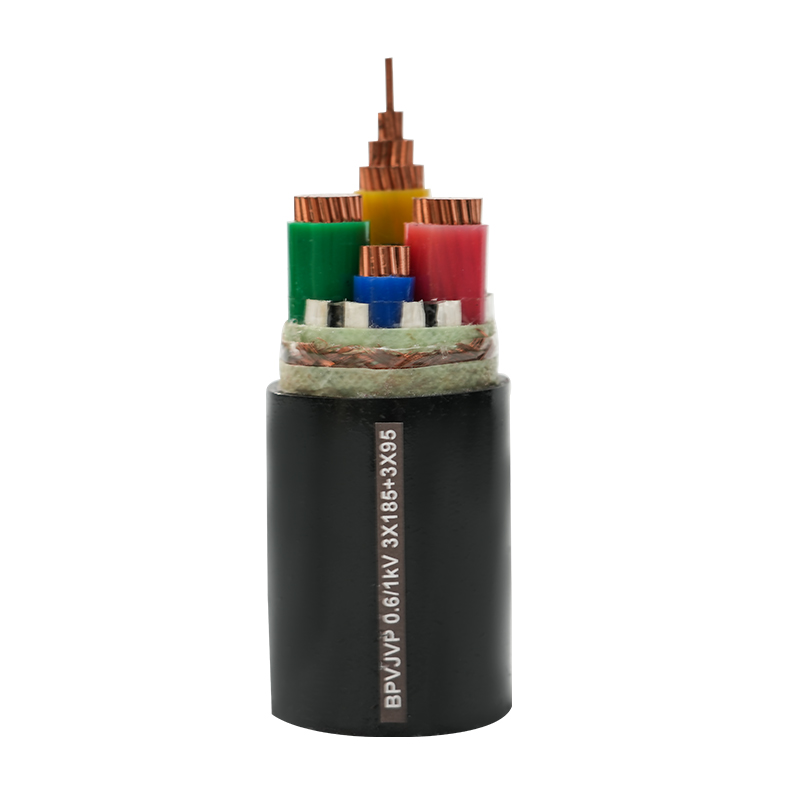
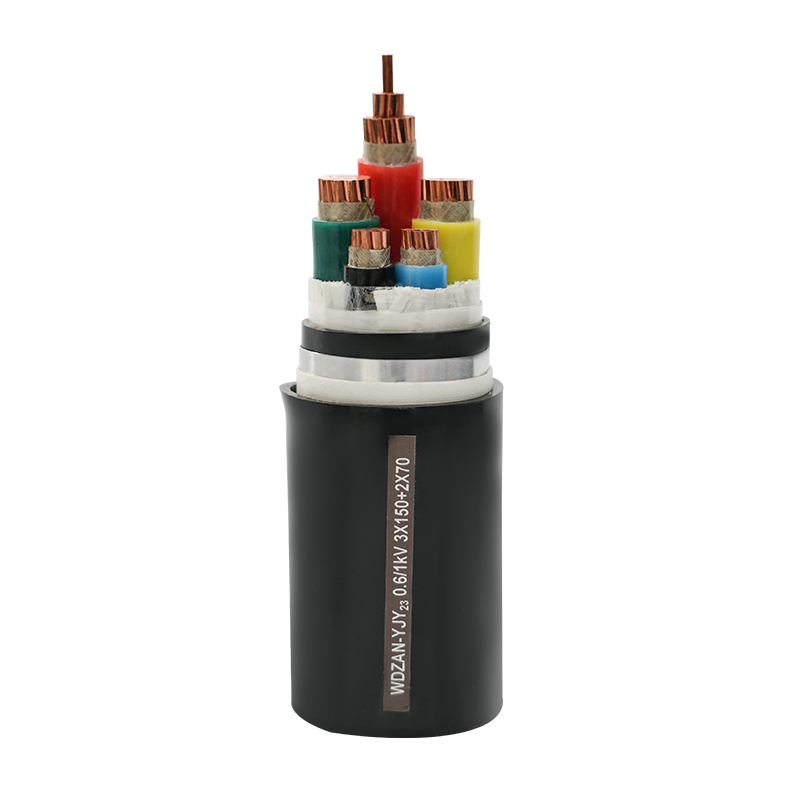
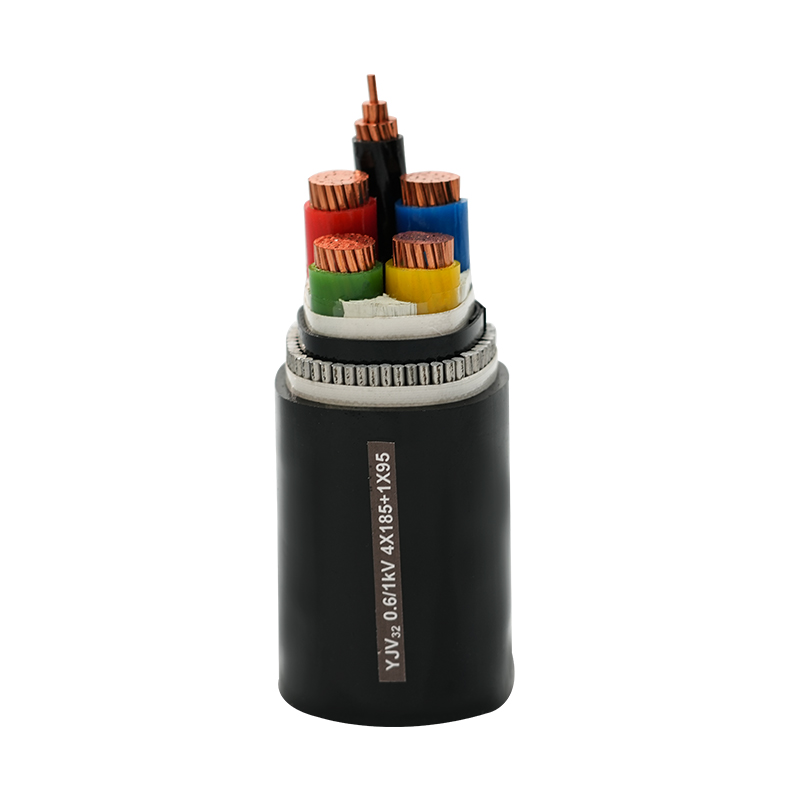 0.6/1kV XLPE Insulated Power Cable for Thermal EnduranceThis XLPE-insulated cable withstands sustained high loads and offers a 90°C continuous rating, making it a durable choice for long-life feeders in hot plant environments.View Product →
Short-Circuit Withstand: 250 deg C vs 160 deg C Safety Margin
XLPE insulation protects a 6/1kV feeder under fault conditions because its 250 deg C short-circuit conductor limit leaves far more damage margin than the 160 deg C limit of PVC. During a bolted fault, conductor temperature can rise by more than 100 deg C per second, and the insulation must remain intact until the protective device clears the circuit.
In practice, XLPE can carry a larger fault current for the same clearing time, or tolerate a clearing time roughly 1.4 times longer at the same fault current before insulation damage begins. XLPE also does not melt: because the polymer is crosslinked, it holds its structural form under heat, whereas PVC softens, deforms, and can flow away from the conductor. For installations behind delayed protection, or on switchboards with high prospective fault levels, this margin is real insurance.
Total Cost of Ownership: Where the PVC Price Advantage Disappears
The decision rule is simple: the 10-15% lower material price of PVC cable only wins when the feeder is short, lightly loaded, and expected to be replaced within 15 years. On any continuous industrial feeder, the PVC option loses because its lower ampacity forces a larger conductor, its higher operating temperature accelerates aging, and its replacement cycle adds labor and downtime.
A food-processing plant near Yangzhou replaced a 500-meter PVC feeder twice between 2013 and 2023; each re-pull cost more in crane hire, production stops, and re-termination than the original cable. The XLPE feeder on the same bus has never been touched. Count that material saving against two unplanned outage events, and the comparison stops being about chemistry and starts being about cash flow.
Specification Snapshot: 6/1kV XLPE vs PVC Power Cable
The practical envelope of a 6/1kV power cable is defined by eight parameters, and the differences between the two insulation systems show up in every one. Values below are typical published figures for 6/1kV class cables; the test certificate from the manufacturer, such as Yangzhou Yaguang Cable Co., Ltd., should be the final reference for a specific project.
| Parameter | XLPE insulated cable | PVC insulated cable |
| Continuous conductor temperature | 90 deg C | 70 deg C |
| Short-circuit conductor temperature | 250 deg C | 160 deg C |
| Dielectric constant at 20 deg C | 2.2-2.4 | 3.5-5.0 |
| Halogen content (insulation) | Halogen-free | Halogenated |
| Relative ampacity, same conductor | Base | Approx 10-12% lower |
| Typical service life at rated load | 25-30 years | 12-15 years |
| Relative cable material cost | Higher | Lower by 10-15% |
| Minimum bending radius, multi-core | Approx 12-15D | Approx 8-10D |
The halogen row changes fire behavior: PVC releases hydrogen chloride gas and dense smoke when burned. In enclosed plant rooms or public buildings, the smoke load of a PVC feeder has to be weighed into evacuation design and fire suppression, which adds cost that never appears on the cable price list.
When a PVC Power Cable Remains the Rational Choice
PVC cable is not a bad product; it is a less thermally capable product, and that matters only when the duty demands capability. For short branch circuits inside a climate-controlled panel, feeders with load factors below 40%, or temporary power runs scheduled for removal within five years, PVC delivers dependable service at a genuinely lower cost.
- Indoor branch circuits running below 40% load factor with generous derating
- Temporary site power and construction feeders pulled for one project cycle
- Control and instrumentation spurs where handling ease and mechanical flexibility outweigh continuous rating
The engineering rule is to match the insulation to the duty cycle, not to the catalog page. When the duty is continuous, specify a 6/1kV XLPE cable and verify its short-circuit rating against the protection curve before you approve the order.
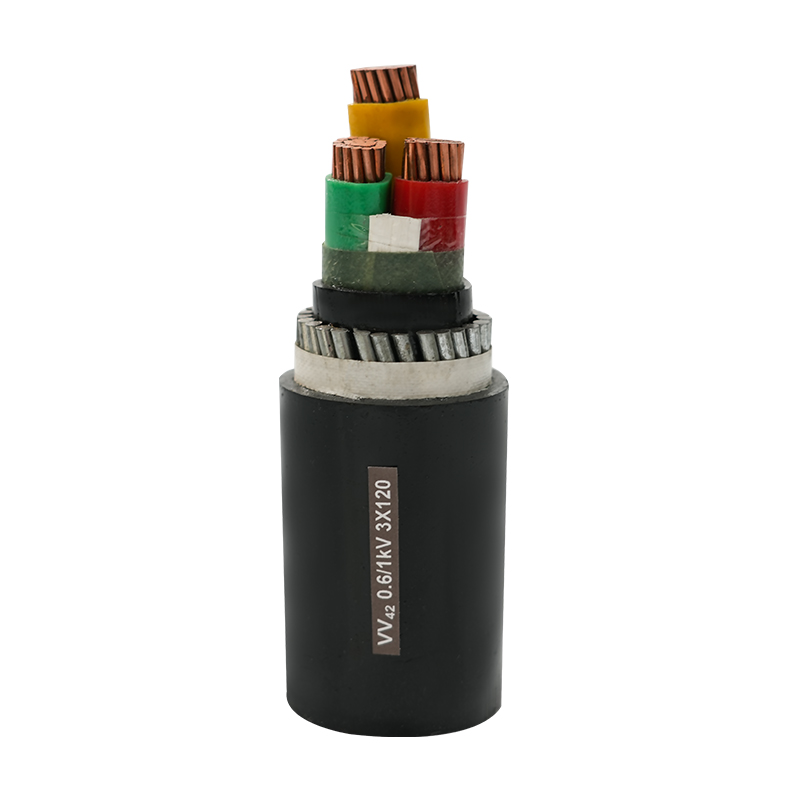 0.6/1kV PVC Insulated Power Cable for Flexible LayoutsWith softer insulation and competitive cost, this PVC cable suits lighter duty cycles and tighter bending radii, ideal where installation space is constrained.View Product →
Installation and Termination: Two Places Where Cable Value Is Won or Lost
Cable value is finally decided on site, because poor pulling and sloppy terminations reduce the life of any material. XLPE cables have a stiffer insulation system and typically need a minimum bending radius around 12-15D, so sharp bends in conduit runs must be planned before pulling. PVC's softer insulation allows tighter radii, but that softness is exactly why PVC conductors can shift under repeated thermal cycling and loosen at terminations.
Termination quality matters equally. Compression lugs must match the conductor class, insulation should be stripped with controlled-depth tools, and unsealed cut ends allow moisture to creep along the conductor and turn a 30-year XLPE feeder into a 5-year problem. For underground or outdoor duct runs, moisture-sealing terminations and correct cable support spacing are non-negotiable for both types.
To build a complete specification, follow the selection workflow in our low voltage XLPE power cable selection guide, and cross-check the load and protection design with the engineering guide for 6/1kV XLPE power cable selection.
FAQs: XLPE vs PVC Power Cable Decisions for Low Voltage Systems
Why is XLPE rated 90 deg C while PVC is rated 70 deg C?
XLPE is crosslinked polyethylene: chemical crosslinks between polymer chains stop the material from softening at elevated temperature, so it keeps mechanical and dielectric strength at 90 deg C continuous. PVC is a thermoplastic; above 70 deg C it softens, deforms under pressure, and loses dielectric performance.
Does the cheaper PVC cable ever make financial sense over 20 years?
Only for lightly loaded or temporary circuits. On a continuously loaded feeder, the 10-15% initial saving is typically consumed by conductor upsizing, earlier replacement, and one unplanned re-pull. Total-cost-of-ownership calculations favor XLPE on any feeder expected to serve more than 12 years.
Can XLPE and PVC cables be terminated with the same lugs?
Yes. Both use compression lugs sized to the conductor cross-section. The differences come in stripping and jointing: XLPE insulation is harder and benefits from controlled-depth strippers, and both types need moisture exclusion at the cut end to prevent corrosion and tracking.
Which standard governs 6/1kV XLPE and PVC power cables?
IEC 60502-1 covers extruded insulated power cables up to 6/1kV and sets the construction, test voltage, and maximum conductor temperature requirements used in this comparison. Most national power cable standards are harmonized with it, so the same rating framework applies across export markets.

 Email:
 Telephone:+86-0514-85086085
 FAX:+86-0514-85086085
 Phone:+86-15861389306
